• العربية
  • پښتو
  • فارسی
Brand
  • Afghanistan
  • Sport
  • Markets
  • Afghanistan
  • Sport
  • Markets
  • Theme
  • Language
    • العربية
    • پښتو
    • فارسی
  • Afghanistan
  • Sport
  • Markets
All rights reserved for Volant Media UK Limited
volant media logo

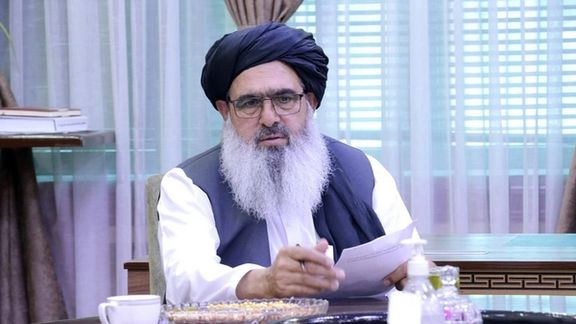
Taliban’s Health Minister Travels To Saudi Arabia to Attend Global Meeting

Nov 15, 2024, 09:35 GMT+0

The Ministry of Public Health of the Taliban announced on Friday that Noor Jalal Jalali, acting head of the Ministry, went to Jeddah, Saudi Arabia to participate in a global meeting on "antimicrobial resistance".

The Saudi Ministry of Health said that this meeting will begin today, Friday, November 15.

The Ministry of Health of the Taliban wrote in a statement, that in this meeting, there will be a discussion about "reducing the resistance of antimicrobial drugs, its effective use and ways out of this challenge".

The Ministry of Health of Saudi Arabia has also announced that the fourth global conference of interior ministers on "antimicrobial resistance" will begin with the slogan "from declaration to implementation".

Saudi Arabia, like other countries, has not yet recognised the government of the Taliban, but it has a relationship with it.

Most Viewed

Taliban Order Cut To Residential Fibre-Optic Internet In Kabul, Say Sources
1

Taliban Order Cut To Residential Fibre-Optic Internet In Kabul, Say Sources

2

Taliban Leader Adviser Arrested In Kandahar Over Alleged Bribery

3

Taliban Besieged TOLOnews Offices After Journalist Detentions, Say Sources

4

Taliban Urges Turkmenistan To Implement 24-Hour Operations At Torghundi Port

5

Exiled Media Watchdog Urges UN, EU To Seek Release Of Journalists Held By Taliban

•
•
•

More Stories

Chevening Scholarship For Afghan Students Resumed By UK Government

Nov 14, 2024, 15:12 GMT+0

After several months of suspension, the UK government has resumed offering Chevening Scholarships to Afghan students.

"We are pleased to announce that applications for the Chevening Scholarship in Afghanistan for the academic year 2025-2026 are now open," stated the official page of Chevening on social media platform X.

In an announcement published on the official website of the British "Chevening" scholarship, it has been stated that Afghan applicants can apply for master's degree studies in British universities from November 14, 2024 to January 2, 2025.

This scholarship had been suspended for Afghan students since September this year.

The arrival of the Taliban in Kabul in August 2021 greatly affected Chevening scholars.

Although Afghan students could not pursue their studies in Britain from Kabul after the Taliban took over, they had the possibility to travel to one of the neighbouring countries such as Pakistan and Iran to receive the Chevening scholarship and go through its administrative procedures.

However, this process was stopped this year. A number of Afghan graduates of the Chevening scholarship had previously written to the British government asking for the suspension of this scholarship for Afghanistan.

According to the information on the Chevening website, now students can also apply for the Chevening scholarship from Afghanistan.

The Chevening Scholarship, normally funded by the UK Foreign and Commonwealth Office, offers outstanding students from around the world the opportunity to study at UK universities every year.

This scholarship fully covers the cost of education, living and health insurance.

Taliban Publicly Flogs 11 People, Including A Woman, in Nangarhar

Nov 14, 2024, 14:01 GMT+0

The Supreme Court of the Taliban announced that it had publicly flogged 11 people, including a woman, in Ghanikhel district of Nangarhar province.

The court said that the men were punished with 30 to 39 lashes on charges of extramarital affairs and same-sex relations.

On Thursday, November 14, the Supreme Court of the Taliban released a newsletter on X social media platform, in which it has been stated that the Criminal Court of this group in Ghanikhel district of Nangarhar province flogged the accused in the presence of local authorities, court clients and the public.

With the return of the Taliban to power in August 2021, punishments such as execution and flogging have returned to Afghanistan. In the latest case, the Taliban, on Wednesday, executed an accused in Paktia province.

In its quarterly report, the United Nations Assistance Mission in Afghanistan (UNAMA) announced that the Taliban had physically punished 111 people, including 16 women, throughout Afghanistan in the last three months.

UNAMA said that the Taliban had flogged these people individually and sometimes in groups on various charges.

Human rights activists always consider corporal punishments such as flogging and execution as a violation of the basic principles of human rights and against human dignity.

Human rights activists believe that Taliban courts do not allow defendants to use services such as access to a defence lawyer. In many cases, defendants appear in court without legal advice and a defence attorney, which is a clear violation of the right to defence and does not allow the individual to exercise his rights in the trial process.

According to human rights activists, Taliban courts are held, in many cases, without transparency, and the media and independent institutions do not have access to information about the trial process and verdicts.

LGBTQIA+ Individuals Sexually Assaulted In Taliban Prisons

Nov 14, 2024, 12:35 GMT+0

Rainbow Afghanistan has published a report stating that LGBTQIA+ individuals are being tortured and sexually assaulted in Taliban prisons.

The report shows that over the past three years, at least 98 LGBTQIA+ individuals have been publicly punished on various charges in 14 provinces of Afghanistan.

LGBTQIA+ refers to a range of people with fluid sexual orientations and identities. The Taliban has imposed severe punishments for homosexuality in Afghanistan.

The investigative report, titled "Hidden Crimes", examines the situation of LGBTQIA+ individuals in Taliban-controlled Afghanistan between 2022 and 2024 and shows that Kabul, Kandahar and Khost recorded the highest number of punishments against these individuals with 15 cases.

"The Taliban regime does not recognise the gender of LGBTQIA+ individuals, so the exact gender identity of those convicted and punished is not known," the report said.

The report also emphasises that a number of LGBTQIA+ individuals in Afghanistan have faced death threats for rejecting the "sexual desires" of Taliban members, and some of them have disappeared from Taliban detention centres.

In this report, Rainbow Afghanistan interviewed 12 LGBTQIA+ individuals who have been victims of Taliban violence.

Jannat Gul (pseudonym), who spent eight months in a Taliban prison, told the organisation, "The Taliban wanted us to be with them and establish a relationship, and in return they promised money and support in prison. However, after these requests were rejected, they sexually assaulted us. I remember that four people sexually assaulted me in one night."

"The Taliban decided to make us a lesson for the youth of Herat," he added. They blackened our faces, paraded us around and stated that we should be punished. They drove us around the city from 11 am to 6 pm." The organisation also spoke to several men and women from Jalalabad, Herat, Baghlan, Kabul, Balkh and Logar provinces who recounted the Taliban's mistreatment of LGBTQIA+ individuals.

At the end of its report, Rainbow Afghanistan called for the formation of an international fact-finding committee, diplomatic pressure, monitoring and prosecuting the Taliban, supporting LGBTQIA+ individuals, and recognising sexual and gender apartheid.
Taliban Announce Visit of Iranian Delegation To Kabul To Discuss Prisoner Transfer

Nov 14, 2024, 11:06 GMT+0

Hamdullah Fitrat, the Taliban's deputy spokesman, said that a delegation from the Iranian Ministry of Justice had arrived in Kabul to discuss the transfer of prisoners.

Following these talks, Afghan prisoners are supposed to be transferred from Iran to Afghanistan to serve their sentences, Fitrat said.

On Thursday, November 14, Hamdullah Fitrat, the Taliban's deputy spokesman, released an audio tape announcing that an Iranian delegation is scheduled to meet with the group's officials in Kabul to discuss the transfer of prisoners from the two countries.

He expressed hope that as a result of these talks, Afghan prisoners will be able to serve the remainder of their sentences in Afghan prisons.

Earlier, Askar Jalalian, the deputy minister of justice of the Islamic Republic of Iran, announced on Wednesday, November 13, that 1,000 Afghan prisoners would be returned to Afghanistan within the next two months.

He also clarified that he plans to travel to Kabul to discuss with the Taliban about these prisoners as well as the transfer of Iranian prisoners from Afghanistan.

The Taliban has not yet provided details about the composition of the Iranian delegation and the number of Iranian prisoners in Afghanistan.

Iran's deputy justice minister put the number of Iranian prisoners in Afghanistan at less than 10 and said that efforts were underway to transfer them using a "logical and agreed-upon method”.

ISNA news agency reported on Wednesday that the agreement for the transfer of convicts with Afghanistan was signed in 2006 and that the Taliban is also committed to this official agreement.

Previously, some experts have expressed concern about the uncertain future of Afghan prisoners after being transferred to Afghanistan.

Reports say that some of the Afghan prisoners in Iran may be former Afghan government employees or opponents of the Taliban, and the group is likely to treat them in a vindictive manner. There have also been concerns about the release of criminals by the Taliban.

Ban On Images of Living Creatures Won't Stop Media Activity, Says Taliban Spokesman

Nov 14, 2024, 09:04 GMT+0

Coinciding with the ban on the publication of images of living creatures in some provinces, Taliban spokesman Zabihullah Mujahid said that this decision will not lead to the suspension of media activities.

Sources quoted Mujahid as telling Afghanistan International, "The Taliban has no decision to stop the activities of the media."

Following growing concerns over the implementation of Article 17 of the Law on the Promotion of Virtue and the Prevention of Vice, officials of organisations supporting journalists and media met with Taliban spokesman Zabihullah Mujahid in Kabul on Wednesday.

A participant in the meeting told Afghanistan International on Wednesday that media officials had expressed concern over the ban on the publication of images of living beings and photography and called for a review of the decision.

According to sources, Zabihullah Mujahid has assured media officials and journalists that "banning images of living beings will not lead to the cessation of the activity of visual media”.

He did not explain how the ban would not make it virtually impossible for television to operate and that television would not be converted into radio.

The Taliban-controlled government's Media Centre also said in a statement that Mujahid had assured media officials that "the Taliban is committed to freedom of expression and the free operation of the media within the framework of Islam”.

Zabihullah Mujahid also said that the Taliban is aware of the importance of the media in the present era and is fully committed to freedom of expression and media activity within the framework of Islamic principles.

The Taliban have detained several experts critical of the Taliban's policies. The group has often described these criticisms as contrary to national interests.

Mujahid said that the problems of the media in the field of access to information will be addressed.

At the same time, the Afghanistan Journalists Centre announced a new Taliban order banning photography and filming in Nangarhar province and warned of "intensifying repression" and "deteriorating the situation of the media”.

According to Article 17 of the Law on the Promotion of Virtue and the Prevention of Vice, the publication of images of living beings has been prohibited, and the Taliban has intensified its efforts to implement this law.

The ban is gradually being implemented in Afghanistan's provinces, but visual media is still active in Kabul.

Nangarhar is the fifth province where a ban on publication of living beings and video interviews is officially enforced. Previously, the order was fully implemented in Kandahar, Takhar, Badghis and Helmand provinces.