UNAMA Documents 336 Instances Of Human Rights Violations In Media Sector
The United Nations Assistance Mission in Afghanistan’s (UNAMA) documented instances of human rights violations affecting 336 journalists and media workers between 15 August 2021 to 30 September 2024.
As per its new report, UNAMA stated that it recorded 256 instances of arbitrary arrest and detention (249 men, seven women), 130 torture and ill-treatment (122 men, eight women) and 75 threats or intimidation (66 men, nine women) against media workers.
Women journalists and media workers were found to face particularly restrictive and discriminatory measures affecting their ability to undertake their professional work.
UNAMA stated in its report that Taliban authorities’ measures interfering with editorial content and internal operation of media outlets have substantially diminished media freedom. It asked the group to rescind and replace policies that restrict freedom of expression.
UNAMA asked the Taliban to refrain from the use of threats and intimidation, arbitrary arrests and detentions as well as court proceedings and imprisonment as a means to influence the independence of media outlets and their editorial content.
“For any country a free press is not a choice, but a necessity. Journalists and media workers in Afghanistan work under challenging conditions. They often face unclear rules on what they can and cannot report, running the risk of intimidation and arbitrary detention for perceived criticism,” said Roza Otunbayeva, Special Representative of the Secretary-General and head of UNAMA.
The report emphasised that the lack of transparent procedures in determining violations and the use of intimidation, arbitrary arrests and detentions on those who criticise the group create a culture of self-censorship and negatively impact freedom of expression.
As per the report, media outlets are often required to co-ordinate and seek approval from the de facto authorities prior to publishing a report, while news agendas are subjected to pre-vetting, which is tantamount to censorship.
UNAMA highlighted how media outlets are subject to a range of restrictions on their operations. They include a prohibition on broadcasting music or movies deemed against Sharia (including those showing women).
The report also explained how at offices of media outlets, men and women must work in segregated workspaces, and male and female broadcasters must not appear in a programme together. In some provinces, women are not allowed to call into radio programmes, with an exception for those on health or religious issues concerning women.
UNAMA stated that the publication of the Law on Promotion of Virtue and Prevention of Vice codified restrictions already in place, expanded on existing ones and added new restrictions, which includes the prohibition to create or display images of living beings, the voice of women is now considered private and should be concealed outside of a woman’s home, and drivers are not allowed to provide transportation to women without a mahram (male guardian).
‘Foreign media outlets’
The report stressed that some Afghan media outlets, while relocating their operations to outside Afghanistan after 15 August 2021, continue to produce media content for an audience inside Afghanistan. However, as per the report, these “media-in-exile” or “diaspora media” are considered by the Taliban to be operating illegally, which makes journalists working in the country for these outlets particularly vulnerable to arbitrary arrests and detentions.
‘Restrictions on women’
In addition to instructions that apply to all media workers, female journalists are subjected to additional restrictions on women in general. As per the report, in various instances, women are required to obtain an additional permission letter to access reporting sites, a procedure which is not always required for male journalists. UNAMA also noted instances when female journalists were not invited or not allowed to attend press conferences. Officials of the de facto authorities regularly refuse to be interviewed by a woman.
‘Main authority’
The report noted that even though the Taliban’s Ministry of Information and Culture is the main entity overseeing media issues in Afghanistan, however, the General Directorate of Intelligence and the Taliban’s Ministry for the Propagation of Virtue and the Prevention of Vice are frequently observed to be involved in media related matters.
The United Nations body in its report stressed that after 15 August 2021 when the Taliban took over the country, a large number of media outlets ceased their operations. This has been attributed to different factors, including loss of revenue stemming from the overall economic difficulties of the country, the withdrawal of donor support after the Taliban takeover, an exodus of journalists, as well as various restrictions imposed by the Taliban authorities.
It stated that the Taliban continues to create an extremely challenging operating environment for media, including but not limited to censorship and difficulties in accessing information.
As per UNAMA data, shortly before the Taliban takeover on 15 August 2021, Afghanistan had approximately 543 media outlets employing approximately 10,790 media workers. However, by November 2021, 43% of these outlets were closed, with only 4,360 media workers remaining.
Reportedly, more than 84% of female media workers lost their jobs in the media sector soon after the takeover.
Nevertheless, the report stressed that despite the challenges, by the end of 2023, the number of male journalists increased by 10% and female journalists by 17% as compared to 2022.
The United Nations body stated that freedom of expression is a necessary condition for the realization of the principles of transparency and accountability, which are essential for the promotion, protection and fulfilment of human rights.
It stated that while the Taliban has reiterated their commitment for media to operate freely, UNAMA has documented measures and incidents since its takeover that are contrary to Afghanistan’s human rights obligations.
UNAMA called on the Taliban to ensure that the laws on media and access to information, as well as measures against defamation and misinformation, meet international human rights standards on protecting the right of freedom of expression, with guarantee of an independent media sector.
It also stated that experts, media outlets, media support organisations and other relevant stakeholders should be consulted and involved in the drafting of laws affecting the media sector.
It also sought lifting of restrictive and discriminatory measures against female journalists and media workers and asked the Taliban to take steps to improve safety and security of journalists and media workers in performing their work, and to ensure they have access to information without fear of reprisal or attack.
It also asked the international community to continue advocacy with the Taliban on the importance of freedom of expression and provide technical and financial support to the media sector in Afghanistan.
UN High Commissioner for Human Rights Volker Türk said the findings of the report are very concerning, and called on the de facto authorities to bring its measures into line with Afghanistan’s commitments under international law, including the cornerstone International Covenant on Civil and Political Rights.
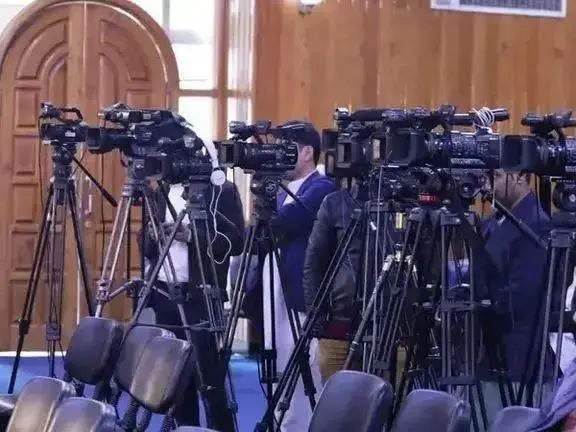
Local sources claimed that the Taliban's intelligence agency has arrested a number of its fighters and commanders who had joined the Tehrik-e Taliban Pakistan (TPP) over the past few weeks.
Most of the detainees are members of the Haqqani group and were active in Afghanistan's border districts.
In the most recent case, the Taliban arrested Eid Mohammad Sangari, one of the group's well-known commanders, in Ismail Khel district of Khost province.
A source close to Sangari told Afghanistan International that he had recently joined the ranks of the Pakistani Taliban and had returned after fighting in Waziristan, Pakistan.
"He used to be the commander of a group in Nadir Shah Kot District of Khost Province, but recently he was unemployed and joined the Pakistani Taliban," the source said.
The Taliban commander played an important role in the wars with the forces of the former Afghan government and NATO, in the districts of Ismail Khel-Mandozai and Nadir Shah Kot.
Eid Mohammad Sangari has been accused of selling weapons related to the Taliban administration and participating in the fights between Pakistani militants and Pakistani security forces.
However, sources close to the Taliban commander say that "many Taliban commanders have joined the ranks of Pakistani militants like Sangari due to the Taliban's refusal to perform their duties”.
In the past two weeks, the Taliban’s intelligence agency has arrested a number of Taliban fighters who were cooperating with the TTP against the Pakistani army in Paktia and Paktika provinces and sent them to Pul-e-Charkhi prison in Kabul. Some of the militants were arrested in the Gomal border district of Paktika province.
A source close to the TTP told Afghanistan International that the group "pays 14,000 afghanis a month for rent and expenses for their families". "These fighters also have health insurance," the source said.
The Taliban has banned the participation of its fighters and commanders in the battles of the TTP. If they join the ranks of the Pakistani Taliban, they are "imprisoned for three to six months".
According to Afghanistan International sources, former Taliban fighters and commanders in Logar provinces, Maidan Wardak, Khost, Paktia, Paktika, Ghazni, Kunduz and Baghlan provinces who have not been given jobs in the group's government have joined the ranks of the Pakistani Taliban, which has caused concern for the Taliban.
The Taliban, on Monday, claimed that Sergei Shoigu, secretary of the Russian National Security Council, in a meeting with the Taliban's deputy prime minister, wants Afghanistan to return as an observer member of the Shanghai Cooperation Organisation (SCO).
The Taliban’s deputy prime minister for political affairs has also called for the group's "meaningful presence” in regional meetings even though the Taliban had not been invited to the regional SCO meeting.
After the Taliban's return to power, Afghanistan was excluded from membership in all regional and global organisations, including the Shanghai Cooperation Organisation, which plays a key role in regional economic and security relations.
The secretary of Russia's National Security Council, headed a high-level Russian delegation and travelled to Kabul on Monday. He met with Taliban officials, including Abdul Kabir, the group's deputy prime minister for political affairs.
According to Abdul Kabir's office, Sergei Shoigu said during the meeting, "The Russian Federation wants Afghanistan to regain its seat as an observer member in the SCO."
In this meeting, the taliban deputy prime minister stated, "The Islamic Emirate, as a responsible system, wants a meaningful presence in regional formats and is ready to cooperate closely with the countries of the region."
He said that the Taliban considers Afghanistan's security, stability and economic growth to be linked to the security and prosperity of the region. "The Taliban will not allow Afghan soil to be used against any country," he added.
Russia is concerned about the threat posed by terrorist groups in Afghanistan to the security of Central Asian countries. Moscow believes that these groups, including ISIS, are tools of Western countries to create insecurity in Russia's backyard.
Although the visit of the secretary of the Russian Security Council and the former defense minister of this country is related to these concerns of Moscow, the Taliban tried in several statements to portray Shoigu's visit as normal and as part of Russia's efforts to improve relations with the group.
Afghanistan has been participating as a guest at SCO summits since 2004 and became an observer member of the SCO in 2012.
The SCO decision to grant an observer seat to Afghanistan was mainly due to the country's border with Central Asia and concerns about the threat of terrorism and the rise of ISIS.
None of the members of the Shanghai Cooperation Organisation (SCO) have officially recognised the Taliban, and the Taliban's invitation to the meetings of the member states has been limited.
Iran, which holds the presidency of the Economic Cooperation Organisation (ECO), announced on Tuesday that the Taliban's foreign minister has not been invited to the organisation's upcoming meeting in Mashhad.
Hassan Kazemi Qomi, Iran's special envoy for Afghanistan, who was recently dismissed from his position, had held talks with Yue Xiaoyong, China's special envoy for Afghanistan.
The Iranian embassy stated that the two sides discussed establishing peace and preventing divisive foreign interventions in Afghanistan.
On Monday, the Embassy of the Islamic Republic of Iran in Kabul wrote in a note on the X social media platform that Qomi and Xiaoyong also emphasised on the need to combat terrorism and the importance of strengthening the regional contact group initiative.
Qomi, who had served as Iran's special envoy for Afghanistan since October 2021, was dismissed from this role on Sunday, November 24.
The Iranian foreign ministry recently appointed Alireza Bikdeli as the ministry's new envoy for Afghanistan.
Iran and China maintain close relations with the Taliban government and have handed over Afghanistan's diplomatic missions in their countries to the Taliban.
Sergei Shoigu, Russia's National Security Council Secretary, met with Mullah Baradar, the Taliban's Deputy Prime Minister for Economic Affairs, during his visit to Kabul on Monday, November 25.
Shoigu is the highest-ranking official from Moscow to visit Kabul since the Taliban came to power in August 2021.
Baradar’s office announced that the discussions during the meeting focused on political relations, economic cooperation, trade, transit, and investment.
According to Mullah Baradar’s office, the Russian official visited Kabul "under the directive" of Vladimir Putin and was accompanied by Russia’s Deputy Prime Minister and Special Representative for Afghanistan.
Baradar emphasised during the meeting that Afghanistan’s foreign policy is centered on economic priorities. He highlighted that the country’s security and stability make it a hub for regional economic cooperation.
The Taliban reported that Shoigu promised to remove the Taliban from Moscow’s blacklist. Additionally, both parties agreed to establish a joint commission with various committees to enhance cooperation in trade, transit, and investment.
Relations between Russia and the Taliban have garnered attention since the group’s return to power. While Moscow has not formally recognised the Taliban as Afghanistan’s legitimate government, it has maintained relations with the group for strategic and security reasons. Russia is also one of the few countries that has kept its embassy in Kabul operational and continues diplomatic engagements.
The Afghan Journalists in Exile, in an open letter, called on Donald Trump, the President-elect of the United States, to officially annul the Doha Agreement.
They also demanded that individuals involved in signing the agreement be brought to justice.
A group of exiled Afghan journalists in North America and Europe, in a letter addressed to Trump on Sunday, described the Doha Agreement as a facilitator of the Taliban’s domination of Afghanistan.
They pointed to the suppression of media and journalists, stating that since the Taliban took power, over 1,000 cases of violence against journalists have been documented in Afghanistan.
According to them, more than 4,000 Afghan journalists and media workers have left the country, while female journalists and media workers in Afghanistan face "dangerous and tense conditions" in their workplaces.
In their letter to Trump, they emphasised on the need to annul the Doha Agreement, stating that its cancellation could pave the way for compelling the Taliban to establish an inclusive and democratic government.
The Afghan journalists in exile, without naming any specific individual, urged Trump to ensure those involved in the agreement are prosecuted in international courts under global law.
The Doha Agreement was signed in 2020 between the Trump administration and the Taliban, aimed at facilitating the withdrawal of US forces from Afghanistan. Zalmay Khalilzad signed the agreement on behalf of the United States. Prior to the signing, Mike Pompeo, the US Secretary of State, met with Abdul Ghani Baradar and shook hands with him.
Reports indicate that Trump had a phone conversation with Abdul Ghani Baradar, the head of the Taliban delegation in Doha, regarding the agreement and even considered inviting him to Camp David.
Under the Doha Agreement, the Taliban pledged not to attack US forces until their withdrawal in 2021 and to negotiate with Afghan groups for the formation of a new government.