Number Of Afghan Refugees In Pakistan Reaches '3.5 Million'
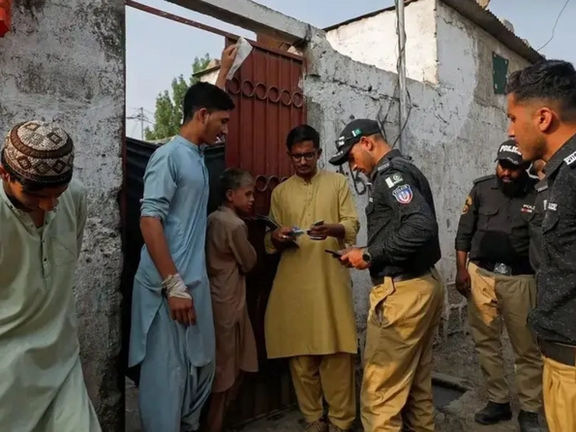
According to the United Nations Refugee Agency, the number of Afghan refugees in Pakistan has now reached 3.5 million.

According to the United Nations Refugee Agency, the number of Afghan refugees in Pakistan has now reached 3.5 million.
Of these, 1,400,000 people have POR residency cards and 800,000 have ECC cards. 600,000 migrants do not have official residency documents.
The Pakistani newspaper Business Recorder on Friday (November 29) quoted the UN refugee agency as saying that 700,000 Afghans who arrived in Pakistan after the Taliban took control of Afghanistan are planning to leave Pakistan for another country.
In November 2023, the Pakistani government forcibly deported undocumented immigrants, a move that has caused economic problems and severe psychological pressure for Afghan returnees. Many of the returnees described these behaviors as "degrading" and spoke of the seizure of their personal property.
On the other hand, according to international organisations, more than 20 million people in Afghanistan are struggling with poverty. Meanwhile, the Taliban's rule has caused many aid organisations to suspend or significantly reduce their activities due to policies that are "anti-human rights and against the rights of women and girls”.
Pakistan's Interior Minister Mohsin Naqvi announced on Wednesday, November 27, that after December 31, Afghan citizens will not be allowed to stay in Islamabad without an official permit. The order comes as Afghan refugees claim to be taking part in anti-government protests.
Rustam Shah Mohmand, Pakistan's former ambassador to Kabul, has criticised the new decision of the Pakistani Interior Ministry to expel Afghans from Islamabad, calling it unfair. Afghans have been targeted in Pakistan because of internal political differences, he said.

Hassan Kazemi Qomi, the former Special Representative of the Islamic Republic of Iran, objected to the presence of representatives of women and civil society in the Doha Process Anti-Narcotics Working Group.
In response to the request of Western countries for the broad participation of Afghan political and civil institutions, Qomi said that the fight against narcotics should not be politicised.
In an interview with ISNA news agency, Qomi stressed that technical and specialised issues should be separated from political issues and that the issue of combating drugs should not be allowed to become a tool for political pressure.
According to the report, he made these remarks in response to some criticisms from Western representatives, especially the United States and the European Union, who stressed on the need for a broader participation of Afghan political and civil institutions in these meetings.
Hassan Kazemi Qomi also quoted the Russian envoy as saying that he strongly opposed the West's attempt to politicise technical issues and warned that if this process continues, Moscow will not participate in future negotiations.
He added that Russia has stressed that it will not allow the United States to use the Anti-Narcotics Task Force for its own political purposes, arguing that it is a technical and specialised working group and should not be politicised.
The first meeting of the Anti-Narcotics Task Force, which is part of the Doha Process, was held on Thursday, November 28.
UNAMA announced that this task force will provide the ground for coordinated interaction with the Taliban.
It is not yet known whether any of the women, Afghan civil society and Taliban opponents were present in the working group.
The third Doha meeting was attended by the special representatives of countries for Afghanistan on June 30 and July 1. Taliban representatives were invited to the third Doha meeting, but women, civil society, and political opponents of the Taliban were not present.
Domestic media outlets had previously reported that the Foreign Minister of the Islamic Republic of Iran had dismissed Qomi from the position of Iran's special envoy to Afghanistan. According to reports, Alireza Bikdeli has been appointed as the representative of the Ministry of Foreign Affairs of the Islamic Republic of Iran for Afghanistan.

Chile, Costa Rica, Spain, France, Luxembourg and Mexico referred the case of violations of women's rights in Afghanistan to the International Criminal Court (ICC).
The six countries called on the ICC prosecutor to address the ongoing and systematic violations of the rights of Afghan women and girls.
Chile's Ministry of Foreign Affairs announced on Thursday (November 28) that "due to the deterioration of the situation and the critical situation of Afghan women and girls, the situation in the country has been referred to the International Criminal Court".
The ICC prosecutor has resumed investigations into Afghanistan in 2022. Previously, the investigation into Afghanistan was halted in 2020 at the request of Afghan authorities.
The signatories of the petition called on the Prosecutor of the International Criminal Court to pay attention to the situation in Afghanistan, and in particular, the situation of Afghan women and girls, who face continuous and systematic violations of their rights.
The six countries have asked the ICC prosecutor to consider crimes committed against women and girls since the Taliban came to power in 2021 in its investigation.
The referral of this case to the Hague Court shows that the international community is deeply concerned about the human rights situation in Afghanistan.
Calling on the ICC prosecutor to pay attention to the systematic and ongoing violations of the rights of Afghan women and girls could increase political and diplomatic pressure on the Taliban. This is especially true if the ICC's investigation is concluded and evidence of crimes against Afghan women and girls is found. Such an investigation could lead to international condemnation and even more sanctions.
One of the consequences of this action is the possibility of prosecution of Taliban leaders and other officials responsible for human rights violations. If the Hague Court decides to prosecute, serious charges such as war crimes and crimes against humanity will be brought against Taliban officials. This could affect the personal security of Taliban leaders and lead to their further international isolation.

Vladimir Putin said on Thursday on the sidelines of the Collective Security Treaty Organisation (CSTO) summit that Afghanistan is achieving stability.
"The situation in Afghanistan is complicated," the Russian president told reporters. “However, we hope that we can develop our relations with Afghanistan," he added.
According to the state-run TASS news agency, Putin stressed that Moscow cannot ignore the fact that the situation in Afghanistan is stabilising. "We have entered into bilateral relations with the current Afghan authorities, and these relations will be further developed," he added.
The Russian president called the situation in the world tense, saying, "What is happening in Ukraine is not the only reason for the current difficulties. Is the situation in Asia good? Should the events on the CIS border with Afghanistan make us optimistic enough to turn our attention elsewhere?"
Recently, the secretary of the Russian National Security Council headed a delegation to Kabul and held talks with senior Taliban officials. The focus of these talks was the expansion of economic and political relations.
The Taliban hopes to reduce its international isolation with Russia's help. Russia and the Taliban are under severe economic and political sanctions from the West: Russia for its military aggression against Ukraine and the Taliban for supporting terrorist groups.
Russian media reported that Taliban’s Deputy Prime Minister Mullah Abdul Ghani Baradar said in a meeting with the Russian delegation that the group has tried to create conditions for increasing the export of Afghan goods abroad and attracting foreign investment in Afghanistan.
"As you know, after the Taliban's victory in Afghanistan, the United States and Western countries are putting all kinds of pressure on us. So we expect Russia to help us defuse this pressure," he said.
Abdul Ghani Baradar has assured Russian officials that the Taliban is a reliable economic partner. He said that the Taliban's security institutions have taken measures to ensure security in Afghanistan, as a result of which the ISIS group has been destroyed in Afghanistan and transferred to other countries.
However, Russian and Central Asian officials are concerned about the activities of Uzbek and Tajik terrorist groups. At today's meeting of the Collective Security Treaty Organisation, Russia and the four Central Asian countries approved a plan to strengthen the border between Afghanistan and Tajikistan.
Referring to the multi-year US military presence in Afghanistan, Russian Security Council Secretary Sergei Shoigu said that the United States should take the lead in rebuilding Afghanistan. He said that the United States, which hastily withdrew its troops from Afghanistan after 20 years, should take responsibility for helping to rebuild the country.
The Taliban quoted Russian officials as saying that Moscow will remove the group from the list of terrorist groups in the near future. However, the Kremlin spokesman said that the country has not made any decision on the matter.

Nader Yar-Ahmadi, head of the Centre for Aliens and Foreign Immigrants Affairs of the Islamic Republic, said that 1.2 million undocumented immigrants are deported from Iran every year.
Yar-Ahmadi warned undocumented migrants to leave Iran or face forced deportation.
Speaking at a meeting of the Commission for the Regulation of Foreign Nationals on Thursday, November 28, the Iranian official said that people who have entered Iran "illegally" are currently being deported with impunity.
He described the Islamic Republic's refusal to punish migrants as "the best help" for them.
Nader Yar-Ahmadi added that people who intend to immigrate to Iran must go through the legal pathways of issuing permits.
He also stated that the Centre for Aliens Affairs helps unauthorised immigrants have a dignified return, otherwise they will have no choice but to be forcibly deported.
Ali Bagheri, the director general of foreign employment at the Ministry of Labour, also said that according to statistics, less than five percent of employment in Iran is allocated to immigrants.
He added that employers are provided with a list of jobs based on the needs assessment of the provinces so that they can use immigrants if it is not possible to hire Iranian workers.
Earlier, Iranian officials announced that two million undocumented immigrants would be deported from the country by the end of this year.

Imangali Tasmagambetov, the secretary-general of the Collective Security Treaty Organisation (CSTO) said on Wednesday that Afghanistan continues to be a source of serious challenges and threats for the member states of the organisation.
Tasmagambetov said that at the meeting in Kazakhstan, the plan to secure Tajikistan's border with Afghanistan will be discussed. The CSTO summit will be held on Thursday, November 28, in Astana, the capital of Kazakhstan.
"One of the important documents presented for review is the CSTO's proposed plan to strengthen the Tajikistan-Afghanistan border," Tasmagambetov told TASS news agency.
"Afghanistan continues to be a source of serious challenges and threats to collective security, and this set of proposed measures is intended to increase the level of protection of the organisation's member states," he noted.
The Astana meeting will discuss the military and political situation in the member states of the Collective Security Treaty and within their borders.
These countries are seeking to create a security belt on the Afghan border. Preventing drug trafficking and the infiltration of terrorists into Central Asian countries is one of the goals of this security belt. The plan comes as Chinese citizens were recently targeted by gunmen on the Tajikistan-Afghanistan border. At least one Chinese man was killed and four others were wounded in the attack.
Some sources said that the attackers attacked from Afghan soil and returned to their shelter.
Russia, Tajikistan, Kazakhstan, Kyrgyzstan, Armenia and Belarus are permanent members of the CSTO.
