• العربية
  • پښتو
  • فارسی
Brand
  • Afghanistan
  • Sport
  • Markets
  • Afghanistan
  • Sport
  • Markets
  • Theme
  • Language
    • العربية
    • پښتو
    • فارسی
  • Afghanistan
  • Sport
  • Markets
All rights reserved for Volant Media UK Limited
volant media logo

Taliban Conducts Public Flogging of Five Individuals in Khost Province

Dec 1, 2024, 16:25 GMT+0

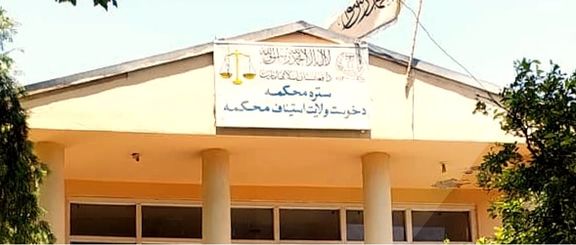
The Taliban’s Supreme Court has announced the public flogging of five individuals, including one woman, in Khost province. These individuals were convicted on charges of “adultery” and “homosexuality.”

According to the court’s statement released on Sunday, each person received sentences ranging from one to four years’ imprisonment and 39 lashes. The punishments were administered in the presence of local officials and members of the public.

Earlier, on 28 November, the Supreme Court reported the public flogging of ten individuals, including two women, across three provinces for offences such as “immorality,” “adultery,” and “homosexuality.” In the past week alone, the Taliban has flogged over 20 people throughout Afghanistan on various charges.

The Taliban asserts that public flogging is in accordance with “Islamic Sharia” law. Despite international appeals to cease such corporal punishments, the group continues to implement them. The Supreme Court has not provided details regarding the judicial processes or the defendants’ access to legal representation.

International human rights organisations have previously expressed concerns about the administration of justice under Taliban rule, highlighting issues related to fair trials and the treatment of the accused.

Most Viewed

Female Ismaili Entrepreneur Shot Dead In Badakhshan
1

Female Ismaili Entrepreneur Shot Dead In Badakhshan

2

Afghanistan May Not Remain Intact In Future, Says Pakistani Analyst

3

French Parliament Hosts Two-Day Meeting On Afghanistan

4

Taliban, Iran Working On Surveillance App For Afghan Users, Say Sources

5

Pakistan Welcomes Local Ceasefire Agreement In Kunar & Nuristan Border Areas

•
•
•

More Stories

Japan’s Support Improves Lives of Two Million Afghans Over Three Years, Reports UN

Dec 1, 2024, 15:26 GMT+0

The United Nations Development Programme (UNDP) has reported that Japan’s assistance has significantly improved the lives of over two million people in Afghanistan since 2021.

This support has enabled 856,000 individuals, including 225,000 women, to secure employment, while more than 1.7 million people have gained access to enhanced services.

In a post on the social media platform X on Sunday, UNDP expressed its gratitude to Japan for its sustained three-year commitment to Afghanistan.

The organisation highlighted that during this period, 14,600 micro, small, and medium enterprises, including 8,600 women-led businesses, benefited from Japan’s financial contributions. Additionally, Japan’s support enabled the installation of renewable energy facilities powering over 5,000 sites across Afghanistan.

The UNDP also acknowledged Japan’s previous aid of $10 million for treating addiction and providing alternative livelihoods in Afghanistan. Earlier this year, Japan allocated more than $7 million to improve basic services and support vulnerable urban populations in the country.

Afghanistan is currently grappling with one of the world’s most severe and complex humanitarian crises. According to reports, more than 23 million Afghans are in need of urgent humanitarian assistance.

One-Quarter of Afghan Families Face Severe Food Shortages, Warns WFP

Dec 1, 2024, 13:31 GMT+0

The World Food Programme (WFP) has issued a stark warning about escalating food insecurity in Afghanistan as winter approaches, with one-quarter of Afghan households at risk of severe food shortages.

The WFP has emphasised that it remains the last hope for these vulnerable families, but to sustain its operations, the organisation requires $680 million in funding.

In its statement, WFP highlighted that in 2024, three-quarters of Afghan households have resorted to taking on debt to purchase food. The average debt per household now stands at $560, reflecting the growing desperation among the population.

The organisation noted that limited resources have turned survival into a daily struggle for millions of Afghans. With the onset of winter, many will face not only harsh living conditions but also critical food shortages.

Despite the challenges, WFP reported that it has delivered cash and food assistance to 10.5 million people across Afghanistan in 2023. These initiatives aim to improve child nutrition, stimulate the local economy, and empower Afghan communities.

According to WFP, Afghanistan is among 22 countries worldwide experiencing a rise in food insecurity.

This warning follows a recent report by the United Nations Office for the Coordination of Humanitarian Affairs (OCHA), which revealed that at least 23 million Afghans are in urgent need of humanitarian assistance.

Afghanistan Ranked as the World’s Most Dangerous Country by Economic Times

Dec 1, 2024, 12:30 GMT+0

The Economic Times has identified Afghanistan as the most dangerous country in the world for travellers, citing war, political instability, and rampant crime as the primary factors.

The publication highlighted ten nations that pose significant risks, advising against travel to these regions in 2025.

According to the report published on Saturday, Afghanistan’s ongoing conflict, severe political instability, and worsening humanitarian crisis place it at the top of the list. “Afghanistan is the world’s most dangerous country, grappling with ongoing conflict, political instability, and severe humanitarian crises,” the report states.

The Economic Times attributed Afghanistan’s dire state to decades of war, including the Taliban’s resurgence, which have resulted in widespread violence and insecurity. The report also emphasised the impact of poverty, lack of essential services, food shortages, and a fragile healthcare system, which have compounded the nation’s challenges.

The presence of terrorist groups such as ISIS further fuels violence, making daily life perilous for Afghan citizens.

Other countries listed as highly dangerous include Yemen, Syria, South Sudan, the Democratic Republic of Congo, Russia, Ukraine, Somalia, Sudan, and Iraq. The Economic Times urged travellers to avoid these regions due to similar risks of conflict and instability.

Russia Deports Multiple Undocumented Migrants, Including Afghan Nationals

Dec 1, 2024, 11:35 GMT+0

Russian authorities have reportedly arrested and deported 15 undocumented migrants from the city of Pskov, according to local media.

The deported individuals were identified as citizens of Afghanistan, Kenya, Sri Lanka, and Kazakhstan, who were allegedly attempting to cross the border into Europe illegally.

Under Russian immigration laws, the deported individuals are banned from re-entering the country for the next five years.

Government statistics reveal that since the start of this year, security forces in Pskov have deported 520 foreign nationals, a figure nearly three times higher than during the same periods in 2022 and 2023.

Over the past three years, an increasing number of citizens from Central Asia and Afghanistan have used Russia as a transit point to reach Europe. Many of these individuals have been apprehended and subsequently returned to their home countries by Russian authorities.

Taliban Embassy in Islamabad Denies Afghan Refugees’ Involvement in Pakistan Protests

Dec 1, 2024, 09:53 GMT+0

The Taliban Embassy in Islamabad has categorically denied claims that Afghan refugees participated in recent anti-government protests in Pakistan.

In an official statement, the embassy expressed concern that such allegations, made by the Pakistani Interior Minister and other officials, could serve as justification for the harassment and mistreatment of Afghan refugees in the country.

Earlier, Pakistan’s Interior Ministry accused Afghan refugees of taking part in protests against the government, stating that at least 37 Afghan nationals were arrested during the demonstrations. The country’s Minister of Information and Culture also alleged that Afghan citizens had been involved in protests organised by the Pakistan Tehreek-e-Insaf (PTI) party. Meanwhile, the Punjab government announced its intention to disclose the identities of Afghan participants in the demonstrations.

Pakistan’s Interior Minister, Mohsin Naqvi, declared on Wednesday that Afghan citizens without proper documentation would not be permitted to reside in Islamabad after 31 December.

In a statement issued on Saturday, the Taliban Embassy dismissed these accusations as unfounded and voiced concerns that such rhetoric could lead to unjust treatment and harassment of Afghan refugees by Pakistani law enforcement agencies.

The embassy stated: “Afghan refugees in Pakistan have never engaged in political activities or criminal acts. They have consistently lived peacefully and made positive contributions to Pakistan’s economy.”

The Taliban Embassy called on the Pakistani government to avoid creating an atmosphere of distrust towards Afghan refugees, warning that such an environment could exacerbate incidents of harassment, damage reputations, and result in forced deportations.

The statement also cautioned that continuing these policies would be detrimental to Pakistan’s interests and could further strain relations between the two neighbouring nations.

The allegations surfaced following protests led by supporters of the Pakistan Tehreek-e-Insaf (PTI) party, demanding the release of Imran Khan from prison. Thousands of PTI supporters responded to Khan’s call for action last Monday, marching towards Islamabad and clashing with police upon entering the capital.

The protests were subsequently quelled, with Pakistani police arresting dozens of demonstrators. Reports indicated that several individuals were killed during the clashes.