Explosion Near Taliban’s Interior Ministry In Kabul

Residents of Kabul reported an explosion near the Taliban's Ministry of Interior in Kabul on Saturday, December 28.

Residents of Kabul reported an explosion near the Taliban's Ministry of Interior in Kabul on Saturday, December 28.
Khalid Zadran, the spokesman for the Taliban's police command in Kabul, confirmed that at least four people were injured in an explosion on the road to Kabul airport.
Zadran told media outlets that the explosion occurred near Shaikh Zayed Hospital.
He said that the injured had been taken to the hospital and an investigation was underway.
No group has claimed responsibility for the incident and there is no information about the nature of the explosion.
Russia's security service announced on Friday, December 27, that it had prevented a terrorist attack by the Afghanistan-based ISIS-K branch near the Russian Interior Ministry in Moscow.
Russia's security service said that ISIS members resisted armed forces and were killed at the time of their arrest.
The identities of these individuals have not been announced.
Russia's state-run Tass news agency reported on Friday, citing the country's security service, that the attackers were from Central Asia.
According to the report, ISIS-K members had purchased a vehicle, placed propane gas cylinders in it, and then began making an improvised explosive device.

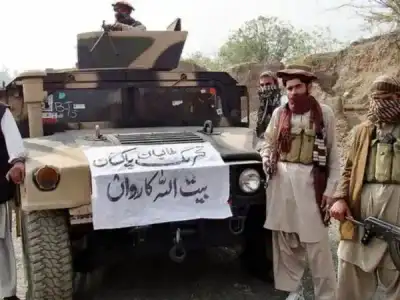
Three days after Pakistan's airstrikes on Paktika, the country’s Prime Minister Shehbaz Sharif called on the Taliban administration to adopt a decisive policy against the Tehreek-e-Taliban Pakistan (TTP).
The Taliban must take a clear stance against the TTP, he said, stressing that Pakistan will not tolerate double standards.
Referring to the recent attacks in the country that targeted Pakistani security forces, the Pakistani Prime Minister stressed that the country's military and law enforcement institutions are fully mobilised to fight against terrorism.
In his speech, Shehbaz Sharif added that a Pakistani army officer was also killed in another clash with the TTP.
The Prime Minister of Pakistan has emphasised that he wants strong relations with Afghanistan, especially in the trade and economic sectors.
However, he expressed concern about the continuation of TTP operations from Afghan soil.
According to Pakistan's Express Tribune, he said that Islamabad could no longer tolerate the use of Afghan soil against Pakistani citizens.
"This is a red line for us, we do not accept the activities of the TTP from Afghan soil and we will defend Pakistan's territorial integrity at any cost," Shehbaz Sharif added.
Pakistan's prime minister called on the Taliban to come up with a comprehensive strategy to address the issue.
While Pakistan wants to improve relations with Afghanistan, it is not acceptable for TTP elements to be free in the neighbouring country, he said.
Stressing on the importance of a coherent and decisive policy, he noted, "You can't say one thing and do another."
The Tehreek-e-Taliban Pakistan (TTP) earlier announced that it had killed 16 Pakistani security forces in an attack on a checkpoint in South Waziristan.
Pakistan's military on Friday, December 27, announced that a senior Pakistani army officer and 13 TTP members were killed in separate clashes between its security forces and insurgents in Khyber Pakhtunkhwa.
Pakistani officials have always said that TTP members have safe havens in Afghanistan. The Afghan Taliban, however, have repeatedly rejected the claims of Pakistani officials.
Meanwhile, Pakistani army warplanes bombed Barmal district of Paktika province on Tuesday evening. On Thursday, Pakistan's Foreign Ministry said that the country had targeted terrorist centres.
Taliban spokesman Zabihullah Mujahid said that at least 46 people were killed in the attacks, most of them women and children. The Taliban has said that the victims are Waziristani refugees and that the group will respond to Pakistan's attacks.

The Taliban's Ministry of Industry and Commerce wrote in a statement that Uzbekistan has promised to help the group with soil laboratory equipment.
According to the statement, Uzbekistan is also scheduled to train 200 experts from Afghanistan in the agriculture sector.
According to the statement published on Thursday, December 27, officials of the Taliban's Ministry of Industry and Commerce held a video meeting with Uzbek officials.
The meeting was attended by the Taliban's deputy ministers of mines, agriculture, finance, transport, public works, and economy.
The statement said that Uzbek officials pledged at the meeting to provide the Taliban with "laboratory machinery capable of analysing and identifying 20 types of soil".
Although Uzbekistan does not recognise the Taliban like other countries, it has extensive diplomatic and economic relations with the group.
Earlier, on December 25, a group of male and female doctors from Uzbekistan arrived in Balkh to examine people in the province for free. The country delivered a shipment of food and medicine to the Taliban on the same day.

Pakistan's military said that a senior army officer and 13 TTP members were killed in separate clashes between its security forces and insurgents in Khyber Pakhtunkhwa.
Recently, clashes between Pakistani security forces and the Tehreek-e-Taliban Pakistan (TTP) have escalated in the province.
The Pakistani army has announced the name of the slain senior army officer as Colonel Muhammad Owais.
Also on Wednesday, the Pakistani army announced that it had killed 13 insurgents in the South Waziristan region.
Earlier, the Tehreek-e-Taliban Pakistan (TTP) killed 16 Pakistani security forces in an attack at a checkpoint in South Waziristan.
Pakistani officials have always said that TTP members have safe havens in Afghanistan. The Afghan Taliban, however, have rejected the claims of Pakistani officials.
Meanwhile, Pakistani army warplanes bombed several locations in Barmal district of Paktika province on Tuesday evening.
A Pakistani official told Reuters that Pakistani warplanes targeted a camp of the Tehreek-e-Taliban Pakistan (TTP) militant group. However, Taliban spokesman Zabihullah Mujahid said that at least 46 people were killed in the attacks, most of them women and children.

The Taliban's Ministry of Public Works announced on December 27 that China's first rail transit shipment arrived in Herat via Iran's rail network.
Mohammad Ashraf Haqshenas, a spokesman for the ministry, said that the shipment included 1,000 iron coils from Bandar Abbas to Herat's Roznak station.
A spokesman for the Taliban's Ministry of Public Works wrote on Friday, December 27, "The shipment, which had started its departure from Chinese territory, arrived in Afghanistan via the Islamic Republic of Iran's rail network."
Haqshenas called the transfer of this cargo through the Bandar Abbas-Herat transit route "an important step in the development of Afghanistan's transit communications and connecting the country to open waters".
He also said that with the completion of the Khaf-Herat railway, new capacities will be created for the Afghan economy and will be the ground for the expansion of trade and transit in the region.
The project to connect Afghanistan to international waters through Iran's railway system began a few years ago. The work of this major project has been implemented in several phases since Ashraf Ghani's government.
Previously, Afghan traders had access to international waters only through Pakistan and the port of Karachi.
Pakistan's strictures have caused Afghan businessmen to transfer their trade through Karachi to Iran’s Chabahar port.
