UNAMA Chief Meets Pakistan's Deputy Foreign Minister On Sidelines Of Education Summit

Pakistan's Deputy Foreign Minister Amna Baloch met with Roza Otunbayeva, head of the United Nations Political Office in Afghanistan (UNAMA).

Pakistan's Deputy Foreign Minister Amna Baloch met with Roza Otunbayeva, head of the United Nations Political Office in Afghanistan (UNAMA).
The meeting was held on the sidelines of the International Conference of Islamic Countries on Girls' Education in Islamabad.
Pakistan's Foreign Ministry on Monday, January 13, wrote on its official account on social media platform X that the meeting was aimed at reviewing the current developments in Afghanistan and assessing the efforts of the international community to resolve the country's humanitarian crises.
Pakistan's Foreign Ministry and UNAMA have not released further details of the meeting.
The International Conference on Girls' Education in Muslim Communities was held on Saturday and Sunday in Islamabad, the capital of Pakistan.
The conference was attended by more than 150 clerics, ministers, ambassadors, experts, and representatives of reputable organisations such as the Organisation of Islamic Cooperation, UNESCO, UNICEF, and the World Bank.
Nobel Peace Prize laureate Malala Yousafzai called on Muslim leaders to challenge the Taliban government and its repressive policies towards Afghan women. "The Taliban do not see women as human beings in Afghanistan," Yousafzai said.
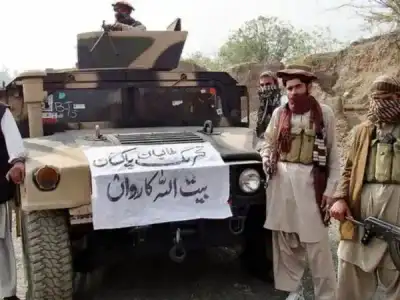
Nobel Peace Prize laureate Malala Yousafzai has called on Muslim leaders to challenge the Taliban government and its repressive policies towards Afghan women.
"The Taliban do not see women as human beings in Afghanistan," Yousafzai said at an international conference on girls' education in Islamabad.
Addressing Muslim leaders at the meeting, which was attended by dozens of government officials and religious scholars from Muslim-majority countries, Yousafzai said that the Taliban's policies, which include preventing girls and women from accessing education and work, are "not Islamic at all".
The Nobel Peace Prize laureate, who was shot in the head by the Pakistani Taliban members at the age of 15 for a campaign to support girls' education, and who later left Pakistan, said on Sunday in Islamabad that she was happy to be back home. She has only returned to Pakistan a handful of times since the 2012 attack, after making her first return in 2018.
‘Gender Apartheid in Afghanistan’
Malala Yousafzai said on Sunday that the Taliban have re-established a "gender apartheid system" by imposing restrictions on women and girls.
The Taliban "punish women and girls who dare to violate the group's vague laws by beating, detaining and torturing them", she said.
Malala added that the Taliban "cover up their crimes under cultural and religious justifications", but in reality, the group's policies are "contrary to everything that our faith dictates".
Taliban officials were invited to the meeting, which was organised by the Organisation of Islamic Cooperation, the government of Pakistan, and the World Islamic League, but did not attend.
Conference participants included dozens of government officials and scientists from Muslim-majority countries who advocated for girls' education.
Since the Taliban regained control of Afghanistan in 2021, the group's rule has not been recognised by any country. Western powers have conditioned the recognition of the Taliban government on a change in the group's policies, especially with regard to the situation of women and girls.
"Afghanistan is the only country in the world where girls are completely banned from studying beyond the sixth grade," Yousafzai said on Sunday.

The Taliban's Statistics and Information Authority announced that more than 15 million people have been issued electronic ID cards since the start of the distribution of these cards.
It is said that nearly nine million electronic ID cards have been distributed since the Taliban administration came to power.
According to the statistics presented, more than 9,067,000 electronic ID cards have been distributed for men and more than 5,952,000 for women.
On July 8, the Taliban's Statistics and Information Authority had announced that they would also activate electronic ID card distribution centres in Pakistan, Iran, and Turkiye.
According to the agency, there are currently 78 such distribution centres operating across Afghanistan.
After coming to power in August 2021, the Taliban announced that they were seeking a census of Afghanistan's population.

French officials warn of an increase in the smuggling of methamphetamine produced in Afghanistan and Turkiye.
The French International Security Cooperation Agency says that Afghanistan has become one of the centres for the production of methamphetamines, competing with the countries of Southeast Asia and Central Europe.
According to the French newspaper Le Journal du Dimanche, although the consumption of methamphetamine in Europe is relatively low, this very potent synthetic drug is used as a stimulant, especially at parties where people under the influence of drugs indulge in illicit activities.
According to a document from France's International Security Cooperation Agency, which is linked to the country's Interior Ministry, officials have expressed concern about a new wave in Europe and France due to the increase in illegal production of the substance in Turkiye and Afghanistan.
According to the report, Turkish police were able to seize more than 25 tons of methamphetamine in 2024.
Turkiye, which is currently facing the deadly dangers of the drug, has reported that 46% of drug-related deaths are now linked to methamphetamine.
According to a report by France's International Security Cooperation, Afghanistan has also become a major centre for the production of methamphetamines, and the traditional pattern of drug production and distribution has changed.
To combat drug trafficking more effectively, French authorities have recommended that employees at ports and airports, and in particular at customs, receive more training to detect drugs.

Hamid Karzai, the former president of Afghanistan, has welcomed the statement of the International Summit on Girls' Education in Muslim Communities, held in Islamabad. Karzai described girls' education as a fundamental and undeniable right.
In a statement made on Monday via the X social media platform, the former president emphasised that educating girls is both an unquestionable right and a national necessity.
He stressed that denying this right contradicts the national interests and the greater good of Afghanistan, calling it unjustifiable.
Karzai further stated that providing education for all young people would not only restore hope for a dignified life within Afghanistan, but also prevent forced migration. He believes such opportunities would help steer the country toward development, progress, and self-sufficiency.
Karzai stated that the key to a better and stronger future for Afghanistan lies in the knowledge and talents of its children, emphasising on the importance of investing in the country's youth.
The International Conference on Girls' Education in Islamic Communities concluded in Islamabad, Pakistan’s capital, without the participation of the Taliban. The conference underscored the critical importance of girls' education in Islamic countries. A statement from the conference reaffirmed that the education of women is supported by Islamic teachings, national constitutions, and international law.
Although the statement did not specifically address the ban on women's education in Afghanistan under the Taliban’s regime, it expressed opposition to such restrictions in Muslim-majority countries.

Noor Ahmad Agha, the head of the Taliban’s central bank, met with Ali Reza Bekdeli, Iran’s ambassador to Afghanistan, to discuss enhanced banking collaboration between the two nations.
During the meeting, Agha highlighted the importance of expanding banking ties for fostering trade and pledged his administration’s full cooperation.
According to a press release issued by the Taliban’s central bank on Sunday, the discussions centred on boosting trade, facilitating banking services, and advancing electronic banking systems. Agha emphasised the crucial role of electronic banking in promoting trade development, adding that Afghanistan’s central bank is committed to modernising its financial system by learning from international best practices.
The Iranian ambassador also underscored the importance of strengthening trade and banking relations and assured Iran’s comprehensive support in this regard.
In November 2024, the Taliban administration announced that bilateral trade with Iran had surpassed $1.8 billion. According to a report by the Bakhtar News Agency, the Ministry of Industry and Commerce, under Taliban oversight, disclosed that within the past seven months, Afghanistan had exported $30 million worth of goods to Iran while importing nearly $1.8 billion worth of Iranian products. Currently, Afghanistan ranks as the sixth-largest market for Iranian exports.
