China Bans Imports Of Livestock Products From Afghanistan, Several Other Countries

China announced that it has banned the import of sheep, goats and livestock products from Afghanistan, Palestine, Pakistan, Nepal and Bangladesh.

China announced that it has banned the import of sheep, goats and livestock products from Afghanistan, Palestine, Pakistan, Nepal and Bangladesh.
The decision was made due to concerns about the spread of diseases such as foot-and-mouth disease, sheep pox, and goat pox.
The ban, which covers African, Asian and European countries, comes after the World Health Organisation warned about the spread of animal diseases in various countries.
Foot-and-mouth disease and sheep pox are among the most dangerous animal diseases. Both diseases are mainly seen in African and Asian countries and have serious effects on other animals. Foot-and-mouth fever can lead to the death of animals in some cases.
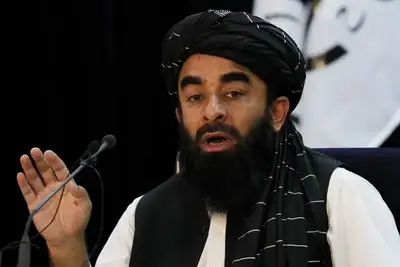

Afghanistan International sources reported that Abbas Stanekzai, the Taliban's deputy foreign minister, has left Afghanistan after Hibatullah Akhundzada issued an exit ban and arrest warrant against him.
According to these sources, Yaqoob Mujahid, the Taliban's defence minister, provided the conditions for his immediate visit to Dubai.
A well-informed source in Kabul said that after Abbas Stanekzai harshly criticised Hibatullah Akhundzada for banning girls' education, the Taliban leader ordered Abdul Haq Wasiq, the head of intelligence, to arrest Stanekzai and ban him from leaving the country.
After receiving the order, Wasiq contacted Defence Minister Mohammad Yaqoob Mujahid, who is considered one of Abbas Stanekzai's main supporters in the Taliban structure.
According to these sources, the Taliban's defence minister asked him to leave Afghanistan immediately after learning of the Taliban leader's decision to arrest and ban Stanekzai from leaving Afghanistan.
The Taliban has not yet officially commented on the matter.
However, a source close to the Taliban's deputy foreign minister, in an interview with Afghanistan International, denied that "there is a dispute between Hibatullah and Stanekzai". The source said that Abbas Stanekzai had planned to publish a video about the incident, but was unable to do so due to the illness he suffered.
The source close to Stanekzai added that the Deputy Foreign Minister has asked Zia Ahmad Takal, the Deputy Spokesperson of the Ministry of Foreign Affairs, to take a position on this issue.
In a speech on Saturday, January 18, at the graduation ceremony of students of a religious school in Khost Province, Abbas Stanekzai, the Taliban's deputy foreign minister, said that the Taliban are "acting against Sharia" and have ignored the rights of 20 million of Afghanistan's population (women).
He stressed that the Taliban's decision to close schools and universities to girls has no religious basis, and that the ban is only Hibatullah Akhundzada's personal view.
Abbas Stanekzai's remarks about injustice against women have been widely reflected in the international media. Reuters called the comments one of the harshest public criticisms of the policy that has led to the Taliban's international isolation.
CNN also described Abbas Stanekzai's harsh remarks as "rare public criticism of the policies" of Hibatullah Akhundzada.
An analyst told CNN that Stanekzai's recent speech went beyond his previous criticisms. "Stanekzai has publicly called for a change in policies and questioned the legitimacy of the current approach," he said.
The Economist Times, referring to Stanekzai's previous criticisms, wrote that this time he addressed Hibatullah Akhundzada directly and asked him to change his policies.

In an interview with CBS, US Vice-President JD Vance strongly defended Donald Trump's decision to suspend the Afghan refugee transfer programme.
He said that the files of some asylum seekers before entering the United States were not properly vetted from a security point of view, which has raised concerns.
In his first interview with the media since his inauguration, part of which aired on CBS News on Sunday, Vance was repeatedly asked about the suspension of the Afghan refugee repatriation programme and he strongly supported Trump's decision.
"I don't believe that all of these asylum seekers have been properly vetted," Trump's vice-president said. "There is evidence that some of these individuals were even planning to carry out terrorist attacks."
He pointed to the case of Nasir Ahmad Tawhedi, an Afghan immigrant living in Oklahoma who was accused of planning a terrorist attack on Election Day, and said that the case showed that the process of vetting asylum seekers was flawed.
Vance added, "Many of these asylum programmes have problems in terms of the quality of the review. We certainly can't let thousands of people into our country without asking."
The CBS anchor said that "these individuals have been investigated". But Trump's vice-president quipped, "Just like the same person who planned the terrorist attack in Oklahoma a few months ago? He was apparently properly screened."
He added that "a lot of people in the media and in the Democratic Party said that he was properly vetted," but "it is clear that this was not the case".
Vance continued, "I don't want my kids to live in a neighbourhood where these people [immigrants] haven't been properly vetted, and because I don't want that for my children, I don't want the kids of other Americans to have to accept that."
President Donald Trump's decision to suspend foreign aid and the US refugee programme has hampered the transfer of more than 40,000 Afghans to the United States. These people have gone through all the required procedures and are ready to fly to the United States.
The Trump administration's decision to suspend the programme has led to the cancellation of many refugee flights, leaving thousands of people in Afghanistan, Pakistan, Albania and Qatar in a precarious position. The cancellation of flights and the suspension of the evacuation of former US military colleagues have drawn sharp criticism from some lawmakers and human rights groups in the United States.
Meanwhile, the US State Department has suspended funding for organisations that help refugees with housing, employment and other needs. In a letter, the ministry said that these organisations should stop all their activities.
Donald Trump's tough immigration policies, which were part of his 2024 election campaign, have left the future of many of these Afghan refugees in doubt.

Mahmood Khan Achakzai, the leader of Pakistan's Awami National Party, announced that he does not want to divide Pakistan, but if the country interferes in Afghanistan's affairs, he will confront it.
Referring to the Taliban's ban on girls' education, Achakzai said that in Afghanistan, there are more important problems than girls' education.
"We don't want to divide Pakistan, but if Pakistan interferes in Afghanistan and we have power, we will stop it," the leader of the Pakhtunkhwa Awami National Party (ANP) said at a gathering in Quetta on Sunday. We will not allow anyone to harm Afghanistan."
"Our party supports whoever is in power in Afghanistan," he added. "The Pakhtunkhwa Awami National Party will support anyone who strives to preserve the territorial integrity and freedom of Afghanistan."
Regarding girls' education, Achakzai said, "Afghanistan has big problems and other issues are prioritised over education. The liberation of Afghanistan and the establishment of a unified government are more important than anything else."
Referring to the Pakistani government's treatment of Afghan refugees, he said, "Pakistan should give birth certificates to those Afghan refugees who were born and raised in this country. If this is not done, we will go to international courts."
He stated that the freedom of Afghanistan is tied to the freedom of the Pashtuns of Pakistan, and reiterated that Pakistan is neither an Islamic nor a republic.
Mahmood Khan Achakzai criticised the Pakistani government's disregard for the rights of Pashtuns and said that Pashtuns should enjoy equal rights like other ethnic groups in Pakistan.
The Pashtun politician, who had close relations with politicians of the previous government in the past, has been accused of supporting the Taliban after the fall of the republican system in Afghanistan.

The “Polio-Free Afghanistan” organisation has announced the launch of a new polio vaccination campaign, set to begin on Monday, 27 January, across 16 provinces in Afghanistan.
According to the World Health Organization (WHO), Afghanistan recorded 25 cases of polio in 2024. However, the Taliban had previously claimed that no positive cases of the disease had been reported within the country.
In a statement released on Sunday, Polio-Free Afghanistan revealed that the campaign will be conducted in the provinces of Kandahar, Helmand, Uruzgan, Zabul, Paktia, Paktika, Khost, Ghazni, Nangarhar, Laghman, Kunar, Nuristan, Kabul, Baghlan, Herat, and Badghis.
The organisation, however, did not specify the duration of the campaign or the number of children expected to be vaccinated.
The WHO continues to stress the importance of vaccination campaigns in eradicating polio, particularly in regions like Afghanistan, where the disease remains a significant health concern.

Mullah Hassan Akhund, the Taliban Prime Minister has assured Iran that the group has no intention of causing harm over water-related issues, according to a statement released by the Taliban on Sunday, 26 January.
During a meeting with Abbas Araghchi, the Iranian Foreign Minister, the Taliban Prime Minister expressed commitment to addressing water disputes amicably. Hamdullah Fitrat, the Taliban’s Deputy Spokesperson, stated that Araghchi emphasised the full implementation of the Helmand Water Treaty as a means to resolve ongoing water-related concerns.
Fitrat quoted the Iranian Foreign Minister as saying, “Iran has no intention of interfering in Afghanistan’s internal affairs and calls for the full implementation of the Helmand Water Treaty.” Araghchi further noted, “Iran’s security and stability are closely tied to Afghanistan’s security and stability.”
The meeting also focused on expanding cooperation between Tehran and the Taliban, with both sides expressing a desire for stronger bilateral ties. The statement highlighted Iran’s continued efforts to repatriate undocumented Afghan refugees as a point of discussion.
Another key topic raised was the treatment of Afghan prisoners in Iranian custody. The Taliban Prime Minister urged Iranian officials to show leniency towards Afghan prisoners, noting, “Sometimes, the execution of Afghans stirs public sentiment. Therefore, they should be treated kindly based on principles of good neighbourliness.”
He also requested that Iran avoid the immediate deportation of Afghan refugees, calling for their repatriation to be carried out “gradually” to allow Afghanistan to manage the process effectively.