• العربية
  • پښتو
  • فارسی
Brand
  • Afghanistan
  • Sport
  • Markets
  • Afghanistan
  • Sport
  • Markets
  • Theme
  • Language
    • العربية
    • پښتو
    • فارسی
  • Afghanistan
  • Sport
  • Markets
All rights reserved for Volant Media UK Limited
volant media logo

Taliban Rejects Rome Statute, Claims Afghanistan Is No Longer Bound By ICC Jurisdiction

Feb 20, 2025, 09:41 GMT+0

The Taliban administration has declared that it does not consider itself bound by the provisions of the Rome Statute and does not recognise the legal validity of the former Afghan government’s accession to the International Criminal Court (ICC).

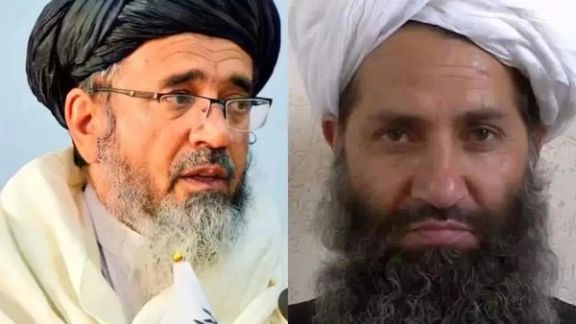
In a statement, the Taliban accused the ICC of acting on political motives rather than principles of justice and fairness. The announcement follows a request by ICC Chief Prosecutor Karim Khan for arrest warrants against Taliban leader Hibatullah Akhundzada and Supreme Court Chief Abdul Hakim Haqqani.

Afghanistan became a member of the ICC in 2003 under the Rome Statute, which established the court as the world’s only permanent tribunal for prosecuting war crimes, crimes against humanity, and genocide.

On Thursday, the Taliban administration issued a statement asserting that while it seeks engagement with all countries based on mutual respect, it does not accept the ICC’s approach.

The Taliban stated: “In many countries, including Afghanistan, millions of innocent people—most of them women, children, and civilians—have suffered atrocities, yet this so-called ‘court’ has remained silent.”

The group also accused the ICC of failing to hold foreign occupiers and their allies accountable for war crimes committed against Afghan civilians. Citing these reasons, the Taliban declared that it does not recognise the Rome Statute and does not consider itself legally bound by the ICC’s jurisdiction.

ICC Chief Prosecutor Karim Khan has requested arrest warrants for Hibatullah Akhundzada and Abdul Hakim Haqqani, accusing them of crimes against humanity, including gender-based persecution and violence.

On 23 January, Khan announced that he had asked ICC judges in The Hague to approve arrest warrants against the two Taliban officials, stating that Afghan women, girls, and LGBTQ+ individuals are facing unprecedented, unimaginable, and ongoing persecution under the Taliban’s rule.

Since seizing power in August 2021, the Taliban has banned women from employment, most public spaces, and education beyond sixth grade.

Last year, Hibatullah Akhundzada issued a decree prohibiting the installation of windows overlooking areas where women sit or stand.

In August 2024, marking three years since the Taliban’s return to power, UNESCO reported that at least 1.4 million Afghan girls have been denied secondary education, putting an entire generation’s future at risk.

The ICC, established in July 2002, aims to end the culture of impunity for serious crimes. Afghanistan joined the court a year after its founding, but the Taliban now claims it does not recognise the former government’s accession to the Rome Statute.

Most Viewed

Taliban Order Cut To Residential Fibre-Optic Internet In Kabul, Say Sources
1

Taliban Order Cut To Residential Fibre-Optic Internet In Kabul, Say Sources

2

Taliban Besieged TOLOnews Offices After Journalist Detentions, Say Sources

3

Taliban Leader Adviser Arrested In Kandahar Over Alleged Bribery

4

Exiled Media Watchdog Urges UN, EU To Seek Release Of Journalists Held By Taliban

5

Pakistani Envoy Urges Taliban to Take Practical Action Against Militants

•
•
•

More Stories

Taliban Opponents Approve Key Roadmap For Afghanistan’s Future At Vienna Conference

Feb 19, 2025, 17:50 GMT+0

At the Fifth round of Vienna Conference, opposition figures to the Taliban announced that they have approved key documents outlining a roadmap for Afghanistan’s future.

These documents define a political vision based on a democratic system, international relations, human rights, and an economic framework.

In a statement, participants of the conference highlighted that the roadmap presents a coordinated and strategic approach for establishing a sustainable, democratic, and inclusive future in Afghanistan. They emphasised that these documents are the result of extensive consultations and expert contributions from the working groups within the Vienna Process.

According to the statement, the political vision approved by Taliban opponents outlines the principles and framework for a democratic and participatory system, grounded in free elections, equal citizenship rights, and the rule of law.

The resolution also details strategies for international relations, focusing on engaging the Afghan people with the global community, developing diplomatic relations, and mobilising international political and economic support.

In terms of human rights, the Taliban opponents stated that the documents propose mechanisms for protecting the rights of women, children, and ethnic groups in Afghanistan. The plan also includes serious measures for ensuring justice, including prosecuting human rights violators.

The economic framework addresses strategies for sustainable development, poverty reduction, natural resource management, and attracting foreign investment to create jobs and improve public welfare.

A major decision taken at the Fifth Vienna Conference was the formation of a National Commission composed of 19 members.

According to the statement, this commission will be responsible for finalising key documents, proposing solutions to the crisis, and establishing inclusive political structures based on previous declarations and the outcomes of working group discussions.

The Taliban’s opponents have called on the international community to adopt a targeted and practical approach in shaping Afghanistan’s future and assisting in the creation of a transitional government.

Participants at the Vienna meeting also urged the international community to recognise the approved documents and roadmap as the foundation for a just and inclusive political system. They emphasised that Afghanistan requires a legitimate and representative government that upholds Islamic values and the rule of law.

The Fifth Vienna Conference commenced on Tuesday, bringing together dozens of anti-Taliban figures. During the meeting, Ahmad Massoud and Yasin Zia, leaders of armed opposition groups, reiterated their commitment to continuing the fight against the Taliban until Afghanistan is liberated.

In an interview with Afghanistan International, Mohammad Mohaqiq, leader of the People’s Islamic Unity Party of Afghanistan, highlighted internal divisions within the Taliban. He suggested that opposition figures within the Taliban, such as Sirajuddin Haqqani and Mullah Baradar, could eventually join the Vienna Process.

Meanwhile, Zabihullah Mujahid, the Taliban’s spokesperson, dismissed the Fifth Vienna Meeting as a “failed attempt”. He called on political opponents of the Taliban to return to Afghanistan, insisting that the world has recognised Afghanistan as being under the rule of a “strong regime.”
Pakistan’s FM Urges UN Support To Tackle Terrorism In Afghanistan

Feb 19, 2025, 17:21 GMT+0

Pakistan’s Foreign Minister, Mohammad Ishaq Dar, has called on the United Nations to support efforts in combating terrorism in Afghanistan.

During a meeting with UN Secretary-General António Guterres in New York, Dar emphasised the need for international assistance in addressing security threats originating from Afghan territory.

In a statement released on Wednesday, Pakistan’s Ministry of Foreign Affairs confirmed that Dar raised concerns over terrorism in Afghanistan and sought UN support in countering militant groups operating within the country.

The Pakistani Foreign Minister also reaffirmed Pakistan’s commitment to providing humanitarian aid to millions of impoverished Afghans and supporting economic development through infrastructure and communication projects linking Central Asia with Pakistan.

Dar further reiterated Pakistan’s dedication to global peace and security as a non-permanent member of the United Nations Security Council. In response, Guterres expressed gratitude for Pakistan’s active engagement in the UN, particularly its contributions to peacekeeping operations.

Dar’s appeal comes amid an escalation in attacks by armed groups, particularly the Tehreek-e-Taliban Pakistan (TTP), following the Taliban’s return to power in Afghanistan.

Pakistani officials have repeatedly claimed that these groups have acquired military equipment left behind by NATO forces and are operating from Afghan territory. The Taliban, however, has dismissed these allegations, insisting that the activities of Pakistani militant groups are Pakistan’s internal issue.

Previously, Pakistan’s Dawn newspaper reported that while the Afghan Taliban maintains that Afghan soil is not being used against any country, a UN report confirmed that the Taliban has provided logistical, operational, and financial support to the TTP.

According to the report, the Taliban has offered financial assistance to TTP leaders and facilitated the establishment of new training centres for the group’s fighters in the provinces of Kunar, Nangarhar, Khost, and Paktika.

On 24 December 2024, the Pakistan Army carried out airstrikes in Paktika, targeting alleged TTP hideouts. The Taliban later reported that at least 46 people were killed in the attacks.

Taliban Border Police Struggle To Verify Authenticity Of New Zealand Visa

Feb 19, 2025, 15:21 GMT+0

Leaked documents from the Taliban administration reveal that the group’s border police have been unable to verify the authenticity of a New Zealand visa label attached to the passport of an Afghan citizen.

The documents, published by the hacker group “TalibLeaks”, show that the Taliban’s Ministry of Foreign Affairs has instructed its embassy in Tehran to raise the issue with the New Zealand embassy in Iran.

At the request of the border police, the Ministry of Foreign Affairs has sought clarification regarding the validity of the New Zealand visa issued to the Afghan individual.

Border police officers are typically trained to distinguish genuine travel and consular documents from forgeries and are equipped with specialist tools for this purpose. However, since the Taliban’s return to power, the group has replaced many trained personnel in civilian and military institutions with its own appointees.

Many of these newly appointed officials lack formal education and have primarily received training in religious schools in Pakistan and Afghanistan.

Pakistan To Expel All Afghan Refugees, Confirms Taliban Embassy

Feb 19, 2025, 14:13 GMT+0

The Taliban embassy in Islamabad announced on Wednesday that the Pakistani government has decided to expel all Afghan refugees from the country.

In a statement, the embassy said that Pakistan’s Ministry of Foreign Affairs confirmed the imminent deportation of all Afghan migrants, including those holding Afghan Citizen Cards (ACC) and Proof of Registration (PoR) cards.

“Officials from Pakistan’s Ministry of Foreign Affairs have confirmed that there is a definitive and final plan to deport all Afghan refugees not only from Islamabad and Rawalpindi but also from the entire country in the near future,” the statement read.

According to the Taliban embassy, only Afghans with valid visas will be allowed to remain in Islamabad and Rawalpindi. The embassy expressed concerns over Pakistan’s unilateral decision and stated that it has raised the issue with Pakistani authorities and international organisations. It further noted that the Taliban administration in Afghanistan has been informed to coordinate the return of refugees.

The statement also alleged that Afghan nationals in Islamabad and Rawalpindi have recently been subjected to arrests, searches, and forced evictions by Pakistani police. The embassy claimed that the Pakistani government did not notify them in advance and that the United Nations High Commissioner for Refugees (UNHCR) was also unaware of the situation.

According to a document obtained by Afghanistan International, the Pakistani government, under Prime Minister Shehbaz Sharif, approved a mass deportation plan for Afghan refugees during a meeting on 29 January.

Taliban Arrests 34 Humanitarian Workers & Suspends 56 Aid Projects

Feb 19, 2025, 12:36 GMT+0

The United Nations Office for the Coordination of Humanitarian Affairs (OCHA) has confirmed a significant increase in Taliban crackdowns on humanitarian operations in Afghanistan. In January 2024, 34 aid workers, including nine women, were arrested by Taliban authorities.

According to the report, 15 of those detained remain in custody as of February. OCHA also revealed that 56 humanitarian projects have been suspended due to Taliban interference, with nearly half still on hold.

The findings indicate a one hundred sixty-one percent rise in aid worker arrests compared to the previous month. Additionally, 127 cases of interference or restrictions on humanitarian aid access were recorded, with eighty-three percent attributed to the Taliban.

OCHA outlined several ways in which the Taliban have disrupted humanitarian work, including demands for staff lists and data, restrictions on women’s participation in aid efforts, intervention in hiring processes, delays in document approvals, and procurement disruptions.

A previous OCHA report showed that in November 2024, 164 incidents of humanitarian aid disruptions were documented in Afghanistan, with ninety-nine percent linked to Taliban authorities.