Taliban Calls For Trilateral Meet With Pak, UN Over Afghan Refugee Expulsions
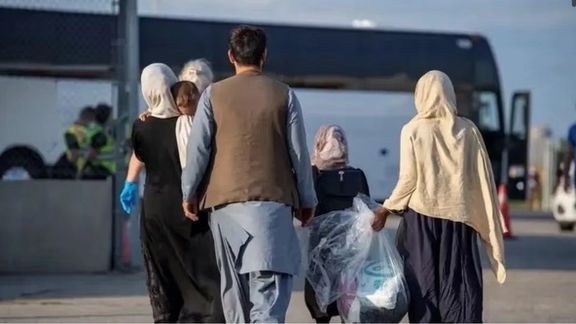
The Taliban’s ambassador in Islamabad has urged the United Nations and Pakistan to hold a trilateral meeting to discuss the mass deportation of Afghan refugees.
The Taliban’s ambassador in Islamabad has urged the United Nations and Pakistan to hold a trilateral meeting to discuss the mass deportation of Afghan refugees.
The request was made during a meeting with the head of the UN High Commissioner for Refugees (UNHCR) in Pakistan.
On Saturday, the Taliban-controlled Bakhtar News Agency reported that Sardar Ahmad Shaqib, the Taliban’s envoy in Islamabad, met with Philippa Candler, UNHCR’s representative in Pakistan.
The meeting focused on Pakistan’s recent decision to expel Afghan refugees from Islamabad and Rawalpindi and the necessary arrangements for their forced return.
On 31 January, the Pakistani government, under Prime Minister Shehbaz Sharif’s leadership, approved a large-scale deportation plan for Afghan refugees. Following this decision, Pakistani authorities began mass arrests, detaining and deporting thousands of Afghan nationals.
The Taliban’s embassy in Islamabad has confirmed that Pakistan’s decision to deport all Afghan refugees from Rawalpindi and Islamabad—except for those with valid residency permits—has been finalised and is irreversible.
The UNHCR previously reported, citing Pakistani government officials, that all Afghan refugees must leave Islamabad and Rawalpindi by 28 February 2025.

Mullah Abdul Ghani Baradar, the Taliban’s Deputy Prime Minister for Economic Affairs, departed for Uzbekistan on Saturday leading a high-level delegation for diplomatic and trade discussions.
The delegation includes Hidayatullah Badri, Minister of Mines and Petroleum; Hamidullah Akhundzada, Minister of Transport and Civil Aviation; Nooruddin Azizi, Minister of Industry and Trade; Ataullah Omari, Minister of Agriculture; and Noor Ahmad Agha, Governor of the Taliban-controlled Central Bank.
According to a statement from Baradar’s office, the two-day visit aims to strengthen political and economic relations between the Taliban administration and Uzbekistan. The delegation is scheduled to meet with Uzbek officials in Tashkent to explore opportunities for expanding bilateral cooperation.
While Uzbekistan, like other nations, has not officially recognised the Taliban government, it maintains extensive diplomatic and economic ties with the group. The Afghan embassy in Tashkent has also been handed over to Taliban representatives.
Prior to the Taliban delegation’s visit, Uzbekistan’s Special Representative for Afghanistan, Ismatulla Irgashev, met with US Ambassador to Uzbekistan, Jonathan Henick, to discuss Afghanistan-related matters.
Nasir Ahmad Andisha, Afghanistan’s representative to the UN Human Rights Council in Geneva, has dismissed the Taliban’s announcement regarding their withdrawal from the Rome Statute, stating that the group lacks the legal authority to make such a decision.
He asserted that the Taliban demonstrates its diplomatic incompetence with every international statement.
On Friday, Andisha wrote on X that the Taliban’s declaration rejecting the jurisdiction of the International Criminal Court (ICC) and the Rome Statute is merely symbolic, as the group is not internationally recognised.
He explained that under Article 127 of the Rome Statute, states may withdraw from the treaty, but the process requires a formal written notification to the UN Secretary-General, followed by a one-year waiting period before the withdrawal takes effect.
Andisha emphasised that withdrawing from the treaty does not nullify the ICC’s jurisdiction over crimes committed prior to the withdrawal. He added that Afghanistan remains a signatory to the Rome Statute, meaning the ICC retains the authority to investigate crimes committed in the country since 2003, including those attributed to Taliban leaders.
According to Andisha, this latest move further highlights the Taliban’s diplomatic incompetence. He noted that since taking power in 2021, the Taliban has sought international legitimacy, but no country has formally recognised their government. He added that their recent takeover of diplomatic missions in some countries is more a result of temporary, pragmatic considerations rather than broad international acceptance.
Andisha argued that the Taliban’s rejection of ICC jurisdiction reflects their isolationist approach. He pointed out that their history of repression, violations of women’s rights, and internal security crises has already weakened their diplomatic standing. Rejecting the ICC’s jurisdiction, he said, only worsens the situation, demonstrating that the Taliban prioritises ideology over strategic engagement.
The Afghan envoy stressed that this issue goes beyond the ICC, illustrating a broader diplomatic challenge for the Taliban. He noted that while the group seeks the privileges of a formal government—such as control over embassies and participation in international discussions—it refuses to accept the responsibilities of a state, including adherence to international treaties.
Anna Kelly, Deputy White House Press Secretary, has stated that Afghan women are suffering under the Taliban’s harsh and restrictive policies, which she described as “medieval laws.”
She attributed the situation to the “disastrous withdrawal” of U.S. forces from Afghanistan during President Joe Biden’s administration.
Speaking to The Washington Post about the impact of the suspension of U.S. foreign aid on Afghan women’s education, Kelly remarked, “Joe Biden’s disastrous Afghanistan withdrawal allowed the Taliban to conduct a hostile takeover of the country’s government and impose medieval Sharia law policies.”
According to the report, numerous educational initiatives for Afghan women—including online courses and international scholarship programmes—have been suspended due to the halt in U.S. foreign aid.
Between 2005 and 2019, the United States invested approximately $167 million in the American University of Afghanistan (AUAF), which has been a major provider of online education for Afghan women. The institution, now operating from Doha, Qatar, has announced the suspension of its Spring 2025 semester, a decision that will affect nearly 700 students.
Similarly, the Asian University for Women in Bangladesh, which had become a refuge for Afghan female students, has postponed the admission of 330 new students due to funding cuts. Many Afghan women who had planned to study abroad now face an uncertain future.
International organisations and human rights groups have expressed deep concern over the consequences of the aid suspension, particularly for Afghan women and girls.
The crisis was exacerbated when U.S. President Donald Trump signed an executive order on his first day in office, suspending all U.S. foreign aid. The decision has significantly impacted humanitarian and educational programmes worldwide.
Beyond education, experts warn of severe economic ramifications for Afghanistan. The Center for Global Development, a Washington-based think tank, estimated last week that if U.S. aid remains suspended for a year, Afghanistan’s gross national income could decline by up to seven percent.
The International Rescue Committee (IRC) has announced mass layoffs worldwide following the continued suspension of U.S. financial aid. While the organisation’s office in Afghanistan has also been affected, it will continue operations in the country.
A letter from the IRC to the Taliban’s Ministry of Economy, obtained by Afghanistan International, indicated that reduced financial support from some donors had impacted the organisation, as it has impacted other humanitarian agencies operating in Afghanistan. The letter stated that the situation would lead to adjustments in operational methods and reductions in both local and international staff.
Despite the funding challenges, the IRC reaffirmed its commitment to Afghanistan, stating that it is actively seeking new financial resources. The organisation plans to maintain its presence in the provinces under its coverage by restructuring its operations to ensure continued service delivery.
On Wednesday, the IRC confirmed that it is implementing significant cost-cutting measures, including laying off thousands of employees worldwide.
“We have had to take immediate and significant cost-cutting measures, including laying off and furloughing thousands of IRC personnel around the world,” the statement read.
The organisation attributed the decision to the suspension of most foreign aid programmes and difficulties in accessing payments through the U.S. government’s financial system.
Last week, David Miliband, the IRC’s CEO, warned employees in a separate letter about an initial round of unpaid leave placements and imminent layoffs.
The IRC also announced the cancellation of a previously planned 2 percent salary increase for employees in some countries and a 20 percent reduction in leadership salaries.
Further cost-cutting measures include a hiring freeze, restrictions on travel, and the elimination of non-essential procurement.
The IRC had previously stated that it employs over 17,000 people globally. According to Miliband’s letter, approximately 42 percent of the IRC’s 2025 budget—around $650 million—was expected to be funded by the U.S. government.
The Iran Human Rights organisation, in its annual report, revealed that the Islamic Republic executed at least 80 Afghan citizens in 2024. This figure is three times higher than the number of Afghans executed in Iran in 2023.
According to the report, 25 Afghan nationals were executed in 2023, while 16 were executed in 2022. The Norway-based human rights organisation accused the Iranian authorities of intensifying repression against Afghan citizens and implementing increasingly “discriminatory” policies.
Afghan citizens executed in Iran faced various charges. The report stated that 39 were executed on drug-related offences, while 31 were sentenced to death for murder under qisas (retribution laws). Additionally, nine were executed on charges of rape.
The organisation further reported that 24 of the executed Afghans were not properly identified, with only their first names recorded. One Afghan citizen was publicly hanged in front of a crowd.
The report indicated that Afghan nationals were executed in prisons across 15 Iranian provinces, with 31 executions taking place in Alborz/Tehran prisons. However, only six of these executions were officially announced by Iranian authorities.
The Iran Human Rights organisation highlighted that Afghans constitute the largest group of non-Iranians executed or sentenced to death in Iranian prisons.
In 2021, there were no recorded executions of Afghan citizens in Iran until September. However, within a span of just 35 days, five Afghan men were executed.
On October 2021, the organisation warned that the Taliban’s return to power had created conditions that facilitated the execution of Afghan citizens in Iran. The report noted that executions of Afghans have significantly increased since the Taliban assumed control of Afghanistan.
The organisation also stated that there is no official data on the total number of Afghan death row prisoners in Iran. However, estimates suggest that the number is particularly high in prisons in the country’s eastern regions.
Additionally, the report pointed out that Afghan executions are rarely publicised by Iranian authorities, and many of those sentenced to death lack family networks or legal representation to advocate on their behalf. Consequently, the organisation believes the actual number of executions is likely higher than officially recorded figures.
In January, Abdul Malik Haqqani, the administrative deputy of the Taliban’s Supreme Court, led a delegation to Iran and formally requested a list of Afghan prisoners on death row.
During his visit, the Taliban official urged the Iranian government to “show leniency toward Afghan prisoners based on Islamic brotherhood” and to consider alternative punishments instead of the death penalty.