Afghan Citizen Killed In Clash With Pakistani Forces In North Waziristan
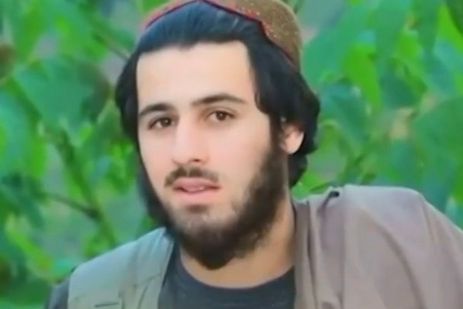
Pakistani media have reported the death of an Afghan citizen during a confrontation between Pakistani security forces and armed groups in North Waziristan.
Pakistani media have reported the death of an Afghan citizen during a confrontation between Pakistani security forces and armed groups in North Waziristan.
According to Geo News, the individual, identified as Mujeeb-ur-Rahman Mansoor, was reportedly a commander in the third battalion of Afghanistan’s National Military Academy. Sources claim he was killed on February 28, along with 14 others described as “terrorists” in the Ghulum Khan area of Khyber Pakhtunkhwa.
The report does not specify whether Rahman held his position under the Taliban administration or the previous Afghan government.
Earlier, Pakistani authorities reported that Badruddin, the son of Mullah Ghulam Mohammad, the Taliban’s deputy governor in Badghis, was killed in a clash with Pakistani military forces alongside several Tehreek-e-Taliban Pakistan (TTP) fighters.
Pakistani officials have frequently claimed that Afghan nationals are fighting alongside the TTP against Pakistan’s security forces, further straining relations between Islamabad and the Taliban government.

Iranian Foreign Ministry spokesperson Ismail Baghaei has confirmed the visit of Afghan jihadi leader Abdul Rab Rasul Sayyaf to Tehran, stating that Afghan society is diverse and the visit of one of its figures to Iran is “not an unusual matter.”
Baghaei explained that Sayyaf traveled to Iran for “medical treatment.” During a press conference on Monday, in response to a question about the visit of an Afghan jihadi leader, he said, “Afghan society is diverse, with many different personalities and parties, and it is not unusual for someone to travel to Iran.”
Without directly naming Sayyaf, Baghaei added, “As far as I know, the individual you are referring to has come to Iran for medical treatment.”
However, a former Afghan government official and close associate of Sayyaf told Afghanistan International that the jihadi leader traveled to Iran at the invitation of the Iranian government.
Reports of Sayyaf’s trip to Iran emerged last week. He is a well-known opponent of the Taliban and has consistently criticised the group’s policies.
Earlier, sources close to Sayyaf told Afghanistan International that he was engaged in discussions with Iranian officials regarding the situation in Afghanistan and potential solutions to the ongoing conflict. He also reportedly held meetings with Afghan factions residing in Iran.
Ismail Pourabad, the head of Iran’s Dogharoon Customs, has announced a seventy percent increase in the volume of transit goods entering Afghanistan through this border in the first ten months of the current Solar Hijri year, compared to the same period last year.
According to Pourabad, 1.95 million tonnes of goods were transported to Afghanistan through this route during the stated period.
The Islamic Republic News Agency (IRNA) reported on Monday, citing the Iranian official, that Iran’s exports to Afghanistan via Dogharoon Customs rose by 25 percent between 20 March 2024 and 19 January 2025, compared to the same period last year.
Pourabad stated that 1,315,527 tonnes of goods were exported to Afghanistan during this time.
According to the Iranian official, key Iranian exports to Afghanistan included construction materials, iron, fuel, and liquefied gas.
Meanwhile, Mohammad Ali Khashi, Supervisor of Sistan-Baluchestan province customs, also reported that over the past 11 months, Iran has exported goods worth $31 million to Afghanistan exclusively through the province’s border crossings.
The Iranian officials did not specify the reason behind the seventy percent increase in transit trade through the Dogharoon border. However, a decline in Afghan traders’ use of Pakistan for transit trade may be a significant factor behind the surge in imports via Iran.
In recent years, Pakistan has imposed severe restrictions on Afghan transit trade, along with multiple closures of the Torkham border crossing. Afghan traders have been required to provide financial guarantees in Pakistani banks equivalent to the value of their goods and pay 10 percent of the goods’ value as a clearance fee.
Sources have confirmed to Afghanistan International that at least one civilian has been killed in clashes between Pakistani border forces and the Taliban at the Torkham crossing.
According to reports, two security personnel and one Pakistani civilian were also injured during the confrontation.
Local sources reported on Sunday evening that heavy fighting erupted between the two sides. A video of the incident shows intense exchanges of fire, though the exact cause of the clash remains unclear.
The confrontation occurred just after the Torkham border had been closed for nine days. Earlier, Pakistan’s Foreign Ministry spokesperson, Shafqat Ali Khan, stated that the closure was due to the Taliban’s attempt to construct a checkpoint inside Pakistani territory—an action he described as a violation of existing protocols.
He emphasised that Pakistan seeks to resolve the issue through dialogue.
Pakistani media reports indicate that multiple rounds of negotiations have taken place between Taliban and Pakistani border forces to reopen the crossing, but so far, discussions have been unsuccessful.
The Taliban’s Supreme Court has announced that seven individuals in Kabul, Takhar, and Nangarhar have been publicly flogged for alleged offences, including “extramarital relations, selling alcohol, and same-sex relations.”
Each of the convicted individuals has also been sentenced to imprisonment ranging from six months to two years.
In separate statements on Sunday, the Taliban’s judiciary reported that three people in Takhar were punished for extramarital relations, three in Nangarhar for same-sex relations, and one in Kabul for producing and selling alcoholic beverages.
According to the court, the three individuals in Takhar’s Chah Ab district received prison terms of six months to one year. In Nangarhar’s Spin Ghar district, the Taliban’s primary court sentenced three individuals to one to two years in prison. Meanwhile, the individual convicted of producing and selling alcohol in Kabul was given a two-year sentence.
Over the past week, the Taliban has publicly flogged more than 40 people across Afghanistan for various offences, claiming these punishments enforce “Islamic Sharia.” However, international human rights organisations have condemned the Taliban’s judicial process as lacking fairness and due process.
The Daily Mail recently reported that many individuals punished by the Taliban over the past three and a half years may not have committed any crimes at all. The British newspaper highlighted that the Taliban has carried out severe punishments, including public floggings, stonings, executions by firing squad, and crushing individuals under walls.
Zabihullah Mujahid, the Taliban’s spokesperson, has stated that the group operates around 40 political offices in various countries and maintains strong ties with numerous nations, particularly its neighbours.
He also accused the United States and some European countries of retaining a “mentality of war.”
In an interview aired on Sunday by the Taliban-controlled Radio Television Afghanistan (RTA), Mujahid addressed the group’s relations with the West, acknowledging the challenges posed by past conflicts and what he described as the “occupation of Afghanistan” by Western nations.
“It is not easy to convince them, but negotiations are ongoing. Meetings have been held, and Taliban diplomacy is expanding day by day,” Mujahid stated.
The Taliban spokesperson emphasised that the group seeks international relations based on Islamic Sharia and mutual respect.
Mujahid also claimed that the U.S. and certain Western countries are unwilling to engage with the Taliban unless they change their perspective and acknowledge the problems they have created.
He reassured Western nations that Afghan soil would not be used against them and that the security of embassies and diplomatic missions would be ensured. “We want to establish official relations, which would build confidence,” he added.
According to Mujahid, the Taliban has repeatedly urged the U.S. and European nations to reopen their embassies in Afghanistan and allow the group to establish diplomatic missions in their countries. He asserted that European nations are interested in formal relations with the Taliban but remain restricted by “certain sensitivities and agreements with the U.S.”
“European countries look to the U.S. when deciding on relations with us,” he said, further claiming that some nations are already engaging with the Taliban unofficially but have yet to make their ties public.
During the interview, Mujahid also responded to recent remarks by U.S. President Donald Trump regarding the Taliban’s control of U.S. military equipment and claims of a Chinese military presence at Bagram Airbase.
Dismissing Trump’s comments as “emotional,” Mujahid insisted that the military equipment in the Taliban’s possession was captured as “war spoils.”
He also denied Trump’s assertion that Chinese forces were stationed at Bagram, stating, “Not a single armed Chinese individual is present in Afghanistan. Bagram is fully under Taliban control.”
“Trump is a leader of a country like the U.S., and his statements should be more precise,” Mujahid added.
Mujahid also addressed the issue of military helicopters that Afghan government forces flew to Uzbekistan and Tajikistan following the Taliban’s takeover. He reiterated the group’s demand for their return.
He suggested that the U.S. might be pressuring Uzbekistan to retain the aircraft but insisted, “These helicopters belong to Afghanistan, and we still demand their return.”
Following the fall of the previous Afghan government on 15 August 2021, officials from Uzbekistan and Tajikistan confirmed that 22 military planes and 24 helicopters had entered their airspace.
The Taliban has repeatedly asserted its ownership of these aircraft. Last year, Taliban Defence Minister Mohammad Yaqub Mujahid declared that they would never allow Afghanistan’s northern neighbours to seize or use them.