Taliban Foreign Minister Visits Oman For Talks On Political & Economic Relations
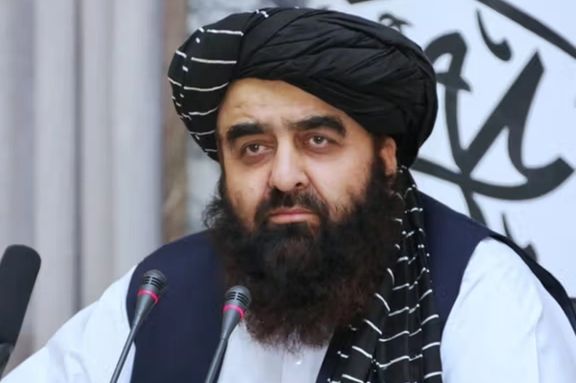
Amir Khan Muttaqi, the Taliban’s Foreign Minister, travelled to Oman on Sunday, 9 March at the invitation of Badr bin Hamad al-Busaidi, Oman’s Foreign Minister.
Amir Khan Muttaqi, the Taliban’s Foreign Minister, travelled to Oman on Sunday, 9 March at the invitation of Badr bin Hamad al-Busaidi, Oman’s Foreign Minister.
According to a statement from the Taliban’s Ministry of Foreign Affairs, Muttaqi is expected to hold discussions on political and economic relations with Omani officials during his visit.
This trip follows the Taliban’s announcement in September that their diplomats had taken control of Afghanistan’s embassy in Oman. On 15 September, Zia Ahmad Takal, Deputy Spokesperson for the Taliban Foreign Ministry, stated that the embassy’s services had resumed with the cooperation of the Omani government.
Although no country has officially recognised the Taliban, some regional nations have allowed their diplomats to operate in embassies under their administration.

The Taliban’s spokesperson, Zabihullah Mujahid, has described the group’s relations with Iran as strong. He stated that the Taliban seeks closer cooperation with Tehran and considers Iran an important country.
In an interview with IRAF, Mujahid was asked about the Taliban’s stance on relations with the U.S. and Iran. He responded that Iran is a neighbouring country with many shared interests, while the U.S. was an occupying force that harmed Afghanistan for 20 years. He insisted that comparing Iran and the U.S. was not up for discussion. He also said that the recent visit of Iran’s Foreign Minister to Kabul reflects the close ties between the Taliban and Tehran.
Iran’s Foreign Minister, Abbas Araghchi, recently travelled to Kabul and met with Taliban leaders. Their discussions covered border security, water disputes, countering ISIS, economic cooperation, drug trafficking, and mutual threats. During his visit, Araghchi stated that a new chapter in Iran-Taliban relations had begun.
Mujahid also addressed Washington’s decision to retrieve American weapons left in Afghanistan. He declared that no one can take the Taliban’s weapons. He warned that if any attempt were made, the Taliban would defend Afghanistan and itself.
U.S. President Donald Trump has repeatedly pledged to retrieve American military equipment from the Taliban. He also claimed that the Bagram airbase is now controlled by China. Mujahid denied this, stating that no foreign troops are in Afghanistan. He accused Trump of mixing political and economic issues.
He further stated that pressure and coercion will not succeed, arguing that 20 years of war had already proven this.
Pakistan has backed Washington’s decision to retrieve weapons from the Taliban. The Pakistani Defence Minister claimed that advanced U.S. weaponry left in Afghanistan is now being used by terrorists.
Mujahid once again claimed that ISIS militants have established safe havens in Pakistan. He insisted that the Taliban has suppressed ISIS in Afghanistan, forcing them to flee and take refuge in Pakistan.
He downplayed ISIS’s presence in Afghanistan, saying its operations are minimal and deceptive. He also accused some countries of exaggerating ISIS’s influence for propaganda purposes.
Mujahid responded to Pakistan’s allegations that Afghanistan is being used as a base for attacks against Pakistan. While he did not outright deny the claims, he said Pakistan should strengthen its own borders.
Discussing border disputes, Mujahid said the recognition of the Durand Line should be decided by the people on both sides. He stated that when the time is right, the people will make their decision.
Pakistan considers the Durand Line an official international border, while the Taliban, like previous Afghan governments, has refused to formally recognise it. Mujahid claimed that the British were responsible for dividing the people along the border.
After 16 days of closure, traders and drivers in Khyber Pakhtunkhwa (KP) staged a protest in Landi Kotal, demanding the immediate reopening of the Torkham crossing.
The protesters urged both the Taliban and the Pakistani government to resolve their disputes and ease the suffering of travellers and traders. The demonstration took place on Saturday, 8 March, with participants chanting slogans such as “We want peace and security” and “We demand security in border areas.”
Stranded drivers and traders in Landi Kotal called on the governments of Afghanistan and Pakistan to allow traffic and passengers to cross without further delay. An Afghan driver affected by the closure said he had spent over 50,000 Pakistani rupees due to the prolonged shutdown. He added that the situation has become even more difficult with Ramadan approaching.
The Torkham crossing was closed on 22 February after tensions escalated between Pakistani border guards and the Taliban. The clashes have intensified over the past two weeks. The Pakistani government stated that the closure was due to the Taliban’s attempt to construct a checkpoint on Pakistani territory.
Despite several rounds of negotiations, no agreement has been reached to reopen the border. Abdul Kabir, the Taliban’s Minister of Refugees, met with Ubaid Ur Rehman Nizamani, Pakistan’s Chargé d’Affaires in Kabul. He insisted that closing the Torkham crossing will not resolve conflicts and stressed the need for dialogue to address the ongoing issues.
The U.S. State Department has confirmed that it is conducting a comprehensive review of all visa programmes.
Meanwhile, reports have surfaced about a potential new travel ban, with an American official telling CNN that Afghanistan may be included on the list of restricted countries.
A State Department spokesperson stated that the department is reviewing all visa programmes in accordance with president Trump’s executive order and is working to implement the administration’s priorities.
An American official told CNN that the ban could take effect soon, possibly as early as next week. However, it remains unclear whether final decisions have been made regarding the countries to be included.
On 20 January, U.S. President Donald Trump issued an executive order instructing his cabinet members, including the Secretary of State, to compile a list of countries deemed to have insufficient screening procedures. Citizens from those nations could face partial or full travel restrictions to the U.S.. The order requires the list to be finalised within 60 days.
During his first term, Trump banned refugees from seven Muslim-majority countries, a move that faced legal challenges until it was revoked by Joe Biden in 2021.
If Afghanistan is added to the new travel ban, it could severely impact tens of thousands of Afghans who worked alongside U.S. forces during the two-decade war and are still awaiting relocation to the U.S. Many of them have already faced delays due to Trump’s previous executive orders, which suspended refugee admissions and cut funding for Special Immigrant Visa (SIV) holders’ travel costs.
On Wednesday, the group AfghanEvac, which has been working since the U.S. withdrawal in 2021 to relocate Afghan allies to safety, issued a warning. It urged all Afghans holding valid U.S. visas to travel immediately, citing credible evidence that a travel ban for Afghan citizens may soon take effect.
The organisation stated that while no official announcement has been made, multiple sources within the U.S. government indicate that a new travel restriction may be implemented next week. It warned that this policy could significantly impact Afghan visa holders awaiting transfer to the U.S..
The International Refugee Assistance Project (IRAP) also condemned the reports of a new travel ban. In a statement released on Friday, the organisation said that many Afghan applicants have waited years for visa processing and remain in life-threatening conditions. It argued that a new ban would place them in even greater danger.
IRAP further stated that even a temporary suspension would have immediate and lasting consequences for refugees and their families. The organisation also raised concerns that the ban may target Afghan refugees at risk of Taliban persecution, including SIV holders and those who supported the U.S. mission in Afghanistan.
The group called the Trump administration’s decisions “shameful”, accusing it of betraying America’s promise to its Afghan allies and others forcibly displaced from their homes.
Earlier, Reuters reported that Trump is expected to sign a new executive order next week, which may include citizens of Afghanistan and Pakistan in the travel ban, blocking their entry to the US.
The Taliban spokesperson, Zabihullah Mujahid, has claimed that Afghan women live in complete physical and psychological security.
In a statement for International Women’s Day, Mujahid said the Taliban have eliminated violence against women and ensured that their rights are protected.
Mujahid added that women’s rights in an Islamic and Afghan society differ from those in the West. He stated that these differences must be considered when evaluating women’s status under Taliban rule. He insisted that women’s fundamental rights are secured within the framework of Islamic law and Afghan traditions.
He further claimed that protecting women’s dignity, honour, and legal rights is a priority for the Taliban. Mujahid added that women in Afghanistan live in complete security and that the Taliban’s judicial and administrative bodies have been instructed to uphold their rights. The statement also mentioned that authorities are responsible for safeguarding women’s rights in marriage, inheritance, and dowries.
Human rights activists strongly reject these claims. Rights groups argue that gender apartheid exists in Taliban-controlled Afghanistan, as women are systematically deprived of their fundamental rights. They point to the ban on girls’ education, restrictions on women’s employment, limitations on movement without a male guardian, and their exclusion from government roles as clear evidence of institutionalised gender segregation.
The United Nations and women’s rights organisations have warned that these policies reduce women to second-class citizens. The Taliban, however, dismiss these criticisms, insisting that their laws and policies align with Islamic principles and Afghan culture and should not be compared with Western standards.
Contrary to Mujahid’s statement, research shows that the psychological well-being of Afghan women has significantly deteriorated in recent years. Widespread restrictions on education, employment, and social freedoms, combined with economic and cultural pressures, have led to rising levels of anxiety, depression, and hopelessness.
Reports indicate that many women, especially those who were the primary earners in their families, are experiencing severe stress after losing their jobs. Young girls, unable to pursue education or social activities, face an uncertain future, leading to feelings of frustration and demotivation.
Despite these hardships, many Afghan women continue to resist and search for ways to maintain hope and motivation amid the restrictions imposed on them.
The United Nations Assistance Mission in Afghanistan (UNAMA) has once again urged the Taliban to remove restrictions imposed on women and girls.
The organisation stated that these limitations violate human rights and hinder Afghanistan’s progress. It also warned that the restrictions are exacerbating poverty and isolating millions of people.
Rosa Otunbayeva, the UN Secretary-General’s Special Representative for Afghanistan, reaffirmed the organisation’s commitment, stating that the United Nations in Afghanistan stands in full solidarity with Afghan women and girls.
In a statement sent to Afghanistan International, UNAMA urged UN member states to actively support Afghan women’s leadership, amplify their voices, and invest in their resilience and future.
Otunbayeva emphasised that including women in efforts to address Afghanistan’s current and emerging challenges is essential. She stated that the UN will continue to do all they can to invest in the resilience and leadership of Afghan women and girls, who are key to a prosperous and inclusive Afghanistan.
Alison Davidian, Head of UN Women in Afghanistan, echoed that they must stand with Afghan women.
Davidian reiterated that the UN remains committed to defending the rights of all Afghans and will continue working alongside its partners to ensure justice and equality for women and girls in Afghanistan.