Taliban Ban Women From Mosques In Kandahar & Herat During Ramadan Prayers

The Taliban’s morality police have banned women from praying in mosques in Kandahar and Herat, sources told Afghanistan International.

The Taliban’s morality police have banned women from praying in mosques in Kandahar and Herat, sources told Afghanistan International.
On Monday night, during evening prayers, the Taliban expelled women from several mosques in Kandahar.
Women in Herat also reported that since the start of Ramadan, the Taliban have blocked their access to mosques. They said that morality police now stand at mosque entrances, preventing them from attending Tarawih prayers.
Previously, women in Herat and other provinces were able to pray in mosques during Ramadan without restrictions.
Sources from Kandahar’s second district confirmed that on Monday night, the Taliban expelled women from Haji Abdullah Mina Mosque. The group also warned women not to return for prayers.
Many families in Herat and Kandahar condemned the Taliban’s actions. They called it an act of discrimination and hatred toward women.
These restrictions contradict the Taliban’s repeated claims that they respect women’s rights under Islamic law. Despite international pressure, the group continues to tighten restrictions on women across Afghanistan.
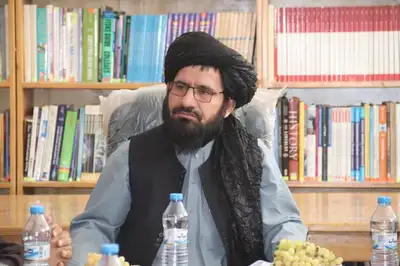
Amir Saeed Iravani, Iran’s Permanent Representative to the United Nations, has stated that Afghan legal migrants in Iran face no restrictions, and Iranian consulates in Afghanistan issue 5,000 visas daily.
According to Iran’s state-run IRNA news agency, Iravani made these remarks on Monday during a UN Security Council meeting on Afghanistan.
He emphasised that Iran’s policy towards Afghan refugees and migrants remains unchanged and is based on humanitarian principles. He noted that Iran has hosted millions of Afghans for over four decades. He stated that the situation worsened following the U.S. withdrawal from Afghanistan in 2021, placing additional strain on Iran.
Iravani reiterated that legal Afghan migrants in Iran do not face restrictions. He said Iranian consulates issue 5,000 visas daily to Afghan nationals.
Addressing the deportation of Afghan migrants, Iravani stated that those repatriated had entered Iran illegally. He cited security concerns, including terrorism threats, as the reason for Iran’s continued deportations of undocumented migrants.
He called on international organisations to assist Tehran in managing the Afghan migrant crisis. He stressed that neighbouring countries like Iran and Pakistan cannot bear this responsibility alone and need continuous and meaningful support.
Iravani urged the international community to take concrete actions rather than relying on rhetoric.
His remarks come as Iran has intensified deportations of undocumented Afghan migrants over the past year, with thousands expelled daily.

The Taliban judiciary has sentenced six people to public flogging in Hesa Duwum Kohistan district of Kapisa province. The group accused one woman and five men of extramarital relations.
The individuals received between 15 and 39 lashes. They were also given prison terms ranging from 8 months to 2 years.
In a statement on Tuesday, the Taliban Supreme Court said two people were flogged 35 times each, while two others received 20 and 15 lashes. The remaining two were whipped 39 times.
The Taliban carried out the punishment publicly, in front of local officials, employees, and residents.

Senior diplomats from the United States, United Kingdom, China, Russia, Iran, and Pakistan have raised strong concerns over the Taliban’s governance, security threats, and human rights violations in Afghanistan.
The discussions took place during a UN Security Council meeting on Afghanistan on Monday.
US Urges Action Against Terrorism
Dorothy Shea, US Ambassador to the UN, reaffirmed that Washington will not recognise the Taliban due to its links with terrorist groups and hostage-taking of Americans. She warned that ISIS-Khorasan remains a serious security threat and called on the Taliban to take decisive action against all terrorist groups.
Shea stressed that Afghanistan must not become a safe haven for extremism and warned that the Taliban’s refusal to cooperate internationally would destabilise the region.
UK Pushes for ICC Action on Taliban Human Rights Violations
James Kariuki, UK Deputy Permanent Representative to the UN, backed calls to refer the Taliban’s human rights abuses to the International Court of Justice. He condemned the closure of secondary schools for girls, calling it a violation of international law.
Kariuki also highlighted the Taliban’s severe restrictions on Afghan women. He warned that if the Taliban seeks international legitimacy, it must respect human rights and address terrorism.
China Calls for Engagement and Sanctions Relief
Unlike Western powers, China’s Ambassador Fu Cong advocated for easing sanctions on the Taliban and granting travel exemptions to its leaders. He argued that engagement with the Taliban could help stabilise Afghanistan.
Fu acknowledged the Taliban’s failure to curb terrorist activity but insisted that the global community must find ways to work with the group. He urged a more flexible stance on sanctions to enable constructive dialogue.
Russia Demands Inclusive Government
Vassily Nebenzia, Russia’s Ambassador to the UN, called for an inclusive government in Afghanistan, warning that its absence threatens long-term peace and stability. He noted that ISIS-Khorasan remains active and continues to recruit.
Nebenzia also raised concerns about foreign fighters in Afghanistan, warning that their presence poses a serious security risk to the entire region. He urged joint counterterrorism efforts with the Taliban.
Iran and Pakistan Warn of Security and Humanitarian Crisis
Iran’s UN Representative, Amir Saeed Iravani, described the situation for Afghan women as dire. He called the Taliban’s restrictions on women un-Islamic and against Afghan cultural traditions.
Iravani warned that ISIS-Khorasan and other extremist groups threaten Afghanistan and regional stability. He urged the Taliban to prioritise counterterrorism efforts and allow unhindered humanitarian aid.
Pakistan’s UN Representative, Munir Akram, criticised the Taliban’s failure to control ISIS-Khorasan and over 20 terrorist groups operating in Afghanistan. He linked the recent attacks in Kerman, Moscow, and Peshawar to the Taliban’s lack of security control.
Akram also expressed concern over Western weapons left in Afghanistan, urging the Taliban to retrieve them from terrorist groups.

Republican lawmakers in the US House of Representatives plan to remove the proposed increase in Special Immigrant Visas (SIVs) for Afghan allies from their spending bill.
A Republican congressman expressed concerns about the screening process for resettled Afghans in the US. He said he is working to change visa regulations for Afghan immigrants.
Republicans in the House aim to revise the temporary funding bill to win support from opponents. They plan to eliminate the scheduled expansion of visas for Afghans who fought alongside US forces in Afghanistan.
On Monday, 11 March, Andy Ogles, a Republican from Tennessee, said he is pushing for changes to the SIV programme. He voiced concerns over the vetting process for Afghans resettled in the US.
Cory Mills, a Republican from Florida, also raised concerns about the visa provisions in the bill.
Two other Republican lawmakers estimated that 8 to 10 party members would refuse to vote for the funding bill unless their requested SIV changes were made.
With Republican Congressman Thomas Massie of Kentucky opposing the bill and Democratic leaders working against it, House Speaker Mike Johnson cannot afford further opposition. The government shutdown deadline is Friday, and several other Republican representatives remain undecided on the bill.
Republican leaders are adding amendments to the SIV programme in a managerial revision expected to pass through the House Rules Committee.
The amendment would reduce the total number of SIVs from 70,500 to 50,500. It would also remove an extension that would have allowed Afghan applicants two more years to apply.
A senior Republican congressional official stated that this amendment maintains the SIV programme for Afghan allies in its current form until the administration completes its review.

US Congressman Raja Krishnamoorthi has urged President Donald Trump to abandon plans for a travel ban that could prevent Afghan citizens from entering the United States.
In a letter sent to Trump on 7 March, Krishnamoorthi warned that such a ban would endanger thousands of US allies in Afghanistan. He said the decision would contradict American values and interests and expose many to Taliban retaliation.
On Monday, Krishnamoorthi shared a copy of his letter, expressing deep concern over reports that the Trump administration plans to impose a travel ban this week. He stated that the proposed ban would affect several countries, including Afghanistan and Pakistan.
The congressman cautioned that the move would leave thousands of Afghans in limbo, including former translators, military collaborators, and employees of the previous Afghan government. Many of these individuals were promised protection from the Taliban.
Krishnamoorthi argued that banning those who risked their lives for the US is unjust. He stressed that closing America’s doors to Afghans in the legal migration process would be a betrayal.
Reports of a possible travel ban have sparked fear among thousands of former US allies in Afghanistan and Pakistan. Many are waiting for the resumption of their relocation process.
At present, tens of thousands of Afghans with approved US resettlement applications face an uncertain future due to Trump’s recent executive orders.
On his first day back in office, Trump suspended all US refugee admissions. The decision has further impacted thousands of Afghan refugees, adding to their growing uncertainty.
