• العربية
  • پښتو
  • فارسی
Brand
  • Afghanistan
  • Sport
  • Markets
  • Afghanistan
  • Sport
  • Markets
  • Theme
  • Language
    • العربية
    • پښتو
    • فارسی
  • Afghanistan
  • Sport
  • Markets
All rights reserved for Volant Media UK Limited
volant media logo

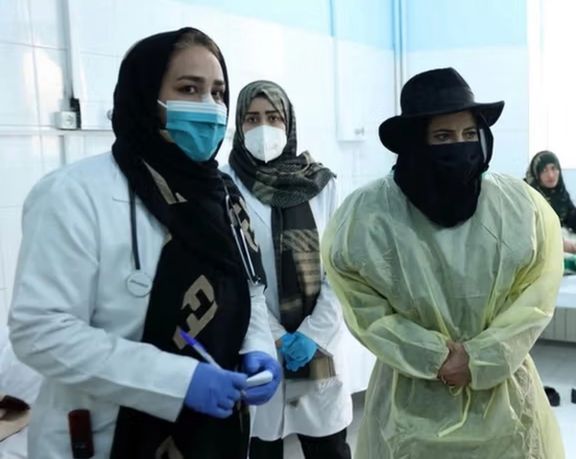
EU Urges Improved Healthcare Access For Afghan Women

Mar 13, 2025, 12:50 GMT+0

The European Union Delegation in Afghanistan has emphasised that access to healthcare is essential for Afghan women. This statement was made on the final day of the EU’s five-day campaign marking International Women’s Day.

The EU delegation announced that it has trained 581 women in mental health and 41 others in infectious disease prevention. It also highlighted that strengthening Afghanistan’s healthcare system is crucial for responding to disease outbreaks effectively.

On Thursday, March 13, the EU Delegation to Afghanistan stated that it supports efforts to enhance diagnostic and treatment services for infectious diseases across the country. The office also reported that, through the World Health Organization (WHO), it has provided healthcare services to over 95,000 Afghan women. Among them, 7,700 women have received inpatient care and medical treatment.

Earlier, the EU condemned the Taliban’s systematic repression of women and girls during a UNHCR Standing Committee session. It called for the full and equal realisation of human rights and urged greater empowerment, participation, and leadership of women in society.

On March 2, the EU Delegation to Afghanistan reaffirmed its commitment to supporting the Afghan people. The office stated that Europe remains dedicated to assisting Afghanistan in education, healthcare, private sector development, and economic empowerment.

Most Viewed

Pakistan Hosts Regional Meet On Afghanistan Without Taliban
1

Pakistan Hosts Regional Meet On Afghanistan Without Taliban

2

Taliban Ignore Afghanistan’s Interests By Backing Militants, Says Pakistan Army Chief

3

Taliban Delegation Travels To Russia To Facilitate Medicine Imports

4

Germany’s Interior Minister Defends Deportations To Afghanistan

5

United Nations Delivers Education Kits To Four Million Afghan Children

•
•
•

More Stories

Taliban Harbouring Terror Groups, Causing Regional Instability, Says NRF

Mar 13, 2025, 11:25 GMT+0

The National Resistance Front (NRF) has condemned the attack on the Jaffar Express train in Pakistan’s Balochistan province, where Baloch militants took passengers hostage.

The NRF accused the Taliban of harbouring terrorist groups, holding them responsible for growing instability in the region.

The Pakistan Army has officially stated that the masterminds behind the attack operated from Afghanistan.

Ali Maisam Nazary, head of foreign relations for the NRF, reacted to the incident on X. He stated that the NRF strongly condemned the attack and extended condolences to the Pakistani people and the families of the victims.

Nazary claimed that terrorist activities in the region had intensified since the Taliban’s return to power in 2021. He accused the group of sheltering over 21 terrorist organisations, which he said had fuelled instability across multiple countries. He stressed that the only way to end the crisis was to support the Afghan people’s struggle for liberation and the establishment of a democratic government in Afghanistan.

Meanwhile, the Pakistan Army maintained that the attack was planned from Afghan soil.

Following the completion of the hostage rescue operation, Pakistani military issued a statement confirming that intelligence reports had traced the attack to terrorist leaders based in Afghanistan. It stated that the hostage-takers had remained in direct contact with their mastermind in Afghanistan throughout the incident.

The Pakistan Army reiterated its demand for the Taliban to prevent Afghan territory from being used against Pakistan. The army’s spokesperson warned that the attack had “changed the rules of the game”, signalling a shift in Pakistan’s approach to regional security threats.

Pakistan Army Blames Afghan-Based Militants For Balochistan Train Attack

Mar 13, 2025, 10:36 GMT+0

The Pakistan Army has claimed that the mastermind behind the Jaffar Express train attack in Balochistan was operating from Afghanistan.

On Wednesday, army spokesperson Ahmed Sharif Chaudhry announced that the hostage rescue operation had been completed, with all Baloch separatist militants killed.

Chaudhry stated that the attack was planned and directed by Baloch separatists based in Afghanistan. He revealed that the militants used satellite phones to communicate with their handlers in Afghanistan. He warned that this attack had "changed the rules of the game" and vowed to bring those responsible to justice.

The attack occurred on Tuesday when Baloch separatists bombed a railway track, stopping the Jaffar Express with over 400 passengers on board. The train was halted in a remote mountainous area near the Afghanistan-Iran border. Militants took hostages, including women and children, using them as human shields. Suicide bombers were reportedly placed among the hostages, complicating the rescue mission.

The Pakistan Army launched a special forces operation, using snipers to eliminate the suicide bombers. According to Chaudhry, 33 militants were killed, and no hostages were harmed during the operation. However, 21 passengers were killed by the militants before the operation began.

Chaudhry detailed the attack, saying that on March 11, militants blew up a railroad track in Bolan at 1 p.m., stopping the Jaffar Express. He confirmed that all militants at the scene were eliminated, but security forces were still clearing explosives.

The attack has triggered strong political reactions in Pakistan, with several countries condemning the incident.

Despite the army’s claims of success, the Baloch Liberation Army (BLA) claimed it had executed 50 more hostages in retaliation. The group accused Pakistan of ignoring their warnings and refusing to exchange hostages for imprisoned members.

Baloch separatists alleged that Pakistan used heavy artillery and advanced weapons in the operation, leading to intense clashes. They claimed their fighters repelled the attack and forced Pakistani forces to retreat. The BLA also confirmed that three of its fighters had been killed.
Afghan Delegation Cancels Jirga On Torkham Border Reopening Over Participant Dispute

Mar 13, 2025, 09:18 GMT+0

The second round of talks between Pakistani and Afghan tribal elders and traders aimed at reopening the Torkham border crossing was cancelled on Wednesday.

Afghan representatives called off the meeting after Pakistani side increased the number of its participants at the last minute.

Haji Gul Murad Arab, a member of the jirga, told Afghanistan International that 26 Pakistani traders and tribal elders were initially expected to attend. However, just hours before the meeting, Pakistan submitted a list of 60 participants.

According to Arab, the Afghan side insisted on negotiating only with traders and tribal elders and refused to engage with government officials or private individuals.

Sayed Jawad Hussain Kazemi, a Pakistani jirga member, also confirmed that Afghan representatives cancelled the meeting due to the increased number of participants. He stated that the Pakistani delegation would consult with officials to arrange another round of negotiations soon.

Earlier, tribal elders and traders from both sides had agreed to investigate a military post the Taliban planned to build near the border. Pakistan had previously stated that Torkham was closed due to the Taliban's attempt to construct a post on Pakistani soil.

During the first meeting, both sides agreed that if the disputed area was proven to be Pakistani territory, the Taliban would halt construction, allowing the border crossing to reopen.

Despite ongoing efforts and meetings, no final agreement has been reached to reopen the key trade and travel route. Torkham has remained closed for over two weeks, causing millions of dollars in losses for traders on both sides.

UN Warns Of Record Opium Prices In Afghanistan As Production Declines

Mar 12, 2025, 17:00 GMT+0

The United Nations Office on Drugs and Crime (UNODC) has described the recent surge in opium prices as historic. In 2024, the price of one kilogram of opium soared to $750, ten times its 2022 value.

Opium production has sharply declined following the Taliban’s ban, but UNODC warns that the skyrocketing prices continue to benefit major drug traffickers.

In a report released on 12 March, the UN highlighted a sharp drop in heroin and opium trafficking. Drug seizures have fallen by about 50 percent since 2021. However, despite the crackdown, Afghanistan’s opium stockpiles remain high. By the end of 2022, reserves were estimated at 13,200 tons, enough to sustain global demand until 2027.

Ghada Waly, Executive Director of UNODC, warned that rising opium prices and large stockpiles continue to fuel drug trafficking. She said the trade is highly profitable for organised crime and contributes to regional and global instability.

The report estimated that before the decline in cultivation, Afghanistan’s opium reserves were worth between $4.6 billion and $5.9 billion. This accounted for 23 to 29 percent of the country’s GDP in 2023. While these reserves helped cushion Afghanistan’s economy after the Taliban’s return to power, the UNODC found that only 30 percent of Afghan farmers had small to medium-sized reserves in 2022, suggesting widespread financial hardship.

The UN urged a coordinated response to target trafficking networks while promoting economic alternatives for farmers. It also warned that the ongoing opium shortage could lead to a shift towards synthetic opioids like fentanyl, which pose even greater health risks.

EU Condemns Taliban’s Rights Violations, Pledges Support For Afghan Refugees

Mar 12, 2025, 15:16 GMT+0

The European Union (EU) has condemned the Taliban’s systematic suppression of women and girls during a UNHCR Standing Committee session. The EU urged full and equal human rights for Afghan women and called for their empowerment, participation, and leadership in society.

In a statement, the EU warned that Afghanistan’s human rights and humanitarian crisis continues to worsen. It stressed that women and girls are the most affected by the Taliban’s policies.

EU member states expressed deep concern over the ongoing crisis in Afghanistan. They reaffirmed their commitment to funding the UNHCR to support Afghan refugees and displaced persons in Afghanistan, Pakistan, and Iran.

The EU called for ensuring Afghan refugees have access to education, healthcare, and economic opportunities. It also pledged support for security measures, including identity document extensions for Afghans.

The EU urged UNHCR to oppose the deportation of undocumented Afghan refugees from Pakistan and Iran. It emphasised the need for regional strategies to assess Afghanistan’s situation and provide sustainable solutions for returnees.

The EU called for an inclusive humanitarian response and stronger efforts to support Afghan returnees through life-saving assistance and resilience-building programmes.