• العربية
  • پښتو
  • فارسی
Brand
  • Afghanistan
  • Sport
  • Markets
  • Afghanistan
  • Sport
  • Markets
  • Theme
  • Language
    • العربية
    • پښتو
    • فارسی
  • Afghanistan
  • Sport
  • Markets
All rights reserved for Volant Media UK Limited
volant media logo

Former Taliban Detainee Alleges Forced Stripping, Abuse & Photography In Prison

Mar 17, 2025, 08:47 GMT+0

Former Taliban detainee Nadia Sadat told Afghanistan International that she was stripped naked and subjected to abuse in prison. She claimed that Taliban officials took photos and videos of her during interrogations.
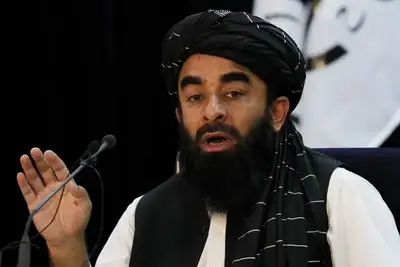
Sadat was detained for protesting in Mazar-i-Sharif and for speaking to the media about the closure of schools and universities for women and girls. She said that during her detention, Taliban officers sexually abused her and touched parts of her body without consent.

Sadat criticised the conditions in Taliban prisons, saying, “The Taliban are devoid of humanity.” She added that detainees are tortured, and female prisoners are particularly vulnerable. After two weeks in detention, she was released on bail after a large sum was paid. However, her health has since deteriorated and she struggles to sleep. Sadat also disclosed that a senior Taliban official in Balkh had proposed to her.

At least ten women confirmed to Afghanistan International that they were sexually assaulted during their detention. Eight women reported being raped, while two said that Taliban officials filmed and photographed their naked bodies during interrogations. Some witnesses claimed that the Taliban used mobile phones or installed cameras in women’s cells to record the abuse.

Richard Bent, the UN Special Rapporteur on Human Rights in Afghanistan, confirmed that he is aware of these allegations and that investigations are ongoing.

Most Viewed

Pakistani Islamist Leader Calls For Reopening Afghan Border Crossings
1

Pakistani Islamist Leader Calls For Reopening Afghan Border Crossings

2

Afghanistan Faces Trade Crisis Due To Pak Border Closure & Hormuz Tensions

3

Taliban Using Administrative Excuses To Shutdown Afghan Media, Says Watchdog

4

Taliban Impose Music Restrictions On Visitors To Nuristan

5

Moscow Supports Conditional Extension Of UN Mission In Afghanistan

•
•
•

More Stories

Karzai Urges Taliban To Lift Ban On Girls’ Education, Calls It Barrier To Progress

Mar 16, 2025, 16:19 GMT+0

Former Afghan President Hamid Karzai has urged the Taliban to reopen schools and universities for girls as the new academic year approaches.

He warned that the ongoing ban on girls’ education is a major barrier to Afghanistan’s development and will push the country further into decline.

The Taliban has not yet announced a specific date for the start of the new school year. However, last year, they opened schools on March 20 after canceling Nowruz celebrations. As the new academic year begins, the ban on girls’ education is entering its fourth year.

On Sunday, Karzai wrote on X that Afghan girls have been waiting for years to hear the school bell but remain deprived of this right. He stressed that education is not only a fundamental right but also essential for the country’s survival and prosperity. He warned that continued restrictions are forcing young people and families to leave Afghanistan.

Once again, he called on the Taliban to lift the ban and allow girls to continue their studies.

Despite repeated international calls, the Taliban insists that education policies are an internal matter. Over the past three years, the ban on girls’ education beyond sixth grade has left 1.4 million female students without access to schooling.

Taliban Closes 22 Media Outlets, Detains 50 Journalists In One Year

Mar 16, 2025, 15:05 GMT+0

The Afghanistan Journalists Center (AFJC) has reported a 24 percent rise in violations against journalists and media outlets in the past year. The report, covering March 2024 to March 2025, documented 172 cases of media suppression by the Taliban.

According to the AFJC’s annual report released on Sunday, the Taliban shut down 22 media outlets and detained 50 journalists over the past year. The report described an intensified crackdown on press freedom, with increasing restrictions on media organisations and reporters.

The AFJC recorded 122 cases of threats, 22 media closures, and the detention of 50 journalists. It stated that 15 of the closed media outlets remain shut, while 10 of the detained journalists are still in custody.

Marking National Journalists’ Day, the report highlighted divisions within the Taliban regarding media policies. Some officials in the Ministry of Information and Culture follow media laws from the previous government, while conservative figures push for stricter control over the press.

The AFJC also pointed to the enforcement of the Taliban’s Promotion of Virtue law, which grants broad authority to morality enforcers overseeing media operations. These enforcers, sometimes working with Taliban intelligence, have taken direct action against journalists and media outlets.

The report criticised the sidelining of the Media Complaints and Rights Violations Commission. It also noted five new restrictions on media, including bans on airing live political programs, critical content, and broadcasting images of living animals. Journalists must now get Taliban approval for guests and use the terms “martyr” and “martyrdom” in reports.

Journalists who fail to comply face threats, imprisonment, or the closure of their media organisations. Despite these restrictions, the AFJC noted that no targeted attacks on media workers were recorded in the past year.

Pakistan Must Engage Taliban To Tackle Terrorism, Says KP Adviser

Mar 16, 2025, 13:02 GMT+0

A senior adviser to Pakistan’s Khyber Pakhtunkhwa (KP) government has stated that while Islamabad blames Taliban for terrorism, it refuses to engage in diplomatic talks with the group.

Muhammad Ali Saif, an adviser to the KP chief minister, stressed that dialogue with the Taliban is necessary to curb terrorism. He warned that Pakistan is struggling with rising militant attacks, yet the federal government remains inactive. He accused the country’s prime minister of being a “passive spectator.”

Saif criticised Pakistan’s leadership for lacking a clear counterterrorism strategy and failing to initiate diplomatic talks with Afghanistan. He added that the government does not allow Khyber Pakhtunkhwa to engage with the Taliban either. He warned that if urgent action is not taken, terrorism could spread to Punjab and Sindh.

Earlier, KP Chief Minister Ali Amin Gandapur linked the province’s insecurity to the situation in Afghanistan. He proposed forming a jirga [tribal council] to negotiate with the Afghan Taliban. He also expressed willingness to send a delegation to Afghanistan, pending federal government approval.

Violence has escalated in Khyber Pakhtunkhwa and Balochistan in recent months. The Tehreek-e-Taliban Pakistan (TTP), a major militant group opposing the Pakistani government, has a strong presence in KP.

Pakistani authorities claim the Afghan Taliban supports the TTP, allowing it to launch attacks from Afghan territory. The Taliban denies these allegations, but international reports have corroborated Pakistan’s concerns.

Iran Deports 350 Undocumented Afghan Migrants Daily From Khorasan Razavi

Mar 16, 2025, 11:40 GMT+0

Iranian authorities are expelling around 350 undocumented Afghan migrants from Khorasan Razavi Province each day. Mohammad Ali Nabipour, the province’s deputy governor for political, security, and social affairs, confirmed the deportations, calling them “forced.”

Speaking to Tasnim News Agency, Nabipour said he hopes to speed up the deportation process. He also criticised opposition to the expulsions, accusing “certain political groups” of trying to retain foreign nationals in Iran for political reasons.

Iranian officials frequently refer to Afghan migrants as “foreign nationals.” During a press conference on Saturday, Nabipour stated that the Iranian public supports the deportations. He argued that “resources should not be shared between foreigners and fellow citizens.”

The crackdown comes amid increasing restrictions on Afghan migrants in Iran. In recent months, authorities have banned Afghans from working and renting homes in several cities.

The human rights organisation Hengaw has warned of growing anti-Afghan sentiment in Iran. In a statement, it reported a rise in both state-sponsored and social discrimination against Afghan migrants.

India & Taliban Colluding To Destabilise Pakistan, Claims Pak Newspaper

Mar 16, 2025, 10:27 GMT+0

The Pakistani newspaper Express Tribune has accused the Taliban and India of conspiring to undermine Pakistan’s security.

Referring to the recent attack on a train in Balochistan, the newspaper claimed that the Taliban are acting in line with India’s strategy to legitimise Baloch separatists.

On Saturday, Express Tribune published an article titled “Kabul-Delhi Nexus”, stating: “It is no secret that Afghanistan and India are in cahoots, and have a vested agenda to nurse by bleeding and destabilising Pakistan.”

The newspaper, known for its alignment with the Pakistani military, described the train attack in Balochistan as an “intelligence failure.” It urged Islamabad to expose what it called “open-and-shut complicity” at diplomatic forums.

However, the publication criticised the international community for ignoring Pakistan’s complaints. It questioned why Pakistan’s evidence of foreign involvement in terrorism was not being acknowledged by the United Nations and other global powers.

While Islamabad claims to be a victim of terrorism, both India and the Taliban accuse Pakistan of using militant groups as proxies. India has long labelled Pakistan as a state sponsor of terrorism. In recent years, the Taliban, once closely aligned with Islamabad, have made similar allegations. Taliban officials claim that Pakistan uses ISIS to advance its regional influence.

Taliban spokespersons have previously stated that ISIS has bases in Pakistan’s Balochistan province.

Earlier, a spokesperson for the Pakistani military accused the Taliban and India of planning the Jaffar Express attack from Afghan soil. The Taliban, however, rejected these claims and urged Pakistan to stop “blaming Afghanistan for its own failures.”

Meanwhile, Pakistan’s Minister of Railways, Hanif Abbasi, warned on Saturday that those responsible for terrorist acts, whether inside Pakistan or fleeing to Afghanistan and other countries, would not be spared.

Speaking at a press conference in Lahore, Abbasi stressed the need to investigate the resurgence of terrorism in Pakistan. He also warned that the China-Pakistan Economic Corridor (CPEC) was being targeted by international forces seeking to weaken Pakistan’s growing economic strength.