• العربية
  • پښتو
  • فارسی
Brand
  • Afghanistan
  • Sport
  • Markets
  • Afghanistan
  • Sport
  • Markets
  • Theme
  • Language
    • العربية
    • پښتو
    • فارسی
  • Afghanistan
  • Sport
  • Markets
All rights reserved for Volant Media UK Limited
volant media logo

Taliban Urges UN Mission To Avoid ‘Unnecessary Concerns’ Over Afghanistan

Mar 18, 2025, 11:32 GMT+0

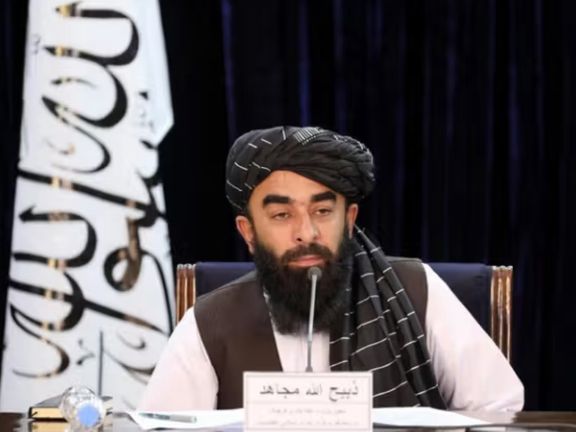
Zabihullah Mujahid, spokesperson for Taliban leader Hibatullah Akhundzada, has called on the United Nations Assistance Mission in Afghanistan (UNAMA) to refrain from creating “unnecessary concerns” about the country.

His statement follows the UN Security Council’s decision to extend UNAMA’s mandate for another year.

Mujahid accused UNAMA of using isolated issues to spread “propaganda against Afghanistan” and claimed it was becoming a “tool for hostile circles.” He urged the mission to focus on strengthening the Taliban’s relations with the United Nations and other countries.

He also called on UNAMA to support efforts to lift international sanctions on the Taliban, release Afghanistan’s frozen assets, and facilitate the group’s recognition at the United Nations.

On Monday, the UN Security Council unanimously approved a resolution extending UNAMA’s mission until March 2026. During the session, several member states expressed concerns over security in Afghanistan, the Taliban’s failure to establish an inclusive government, and continued restrictions on women’s rights.

Most Viewed

Pakistan Hosts Regional Meet On Afghanistan Without Taliban
1

Pakistan Hosts Regional Meet On Afghanistan Without Taliban

2

Taliban Ignore Afghanistan’s Interests By Backing Militants, Says Pakistan Army Chief

3

Taliban Delegation Travels To Russia To Facilitate Medicine Imports

4

Germany’s Interior Minister Defends Deportations To Afghanistan

5

United Nations Delivers Education Kits To Four Million Afghan Children

•
•
•

More Stories

Pakistan, Taliban Agree To Reopen Torkham Border After Talks, Says Pakistani Media

Mar 18, 2025, 10:10 GMT+0

Pakistan’s Express Tribune reported that the Taliban and Pakistani delegations have agreed to reopen the Torkham border crossing on Tuesday, March 18, following successful negotiations.

Syed Jawad Hussain Kazmi, head of the Pakistani negotiating team, stated that the Taliban agreed to stop “illegal construction” along the border. The second round of talks took place in Torkham, focusing on reopening the critical crossing.

Kazmi, who also leads the Khyber Pakhtunkhwa Chamber of Commerce and Industry, told Express Tribune that both sides agreed that any future border construction would require mutual approval.

A 36-member Pakistani delegation, including clerics, tribal leaders, and business representatives, met with a 25-member Afghan delegation in Torkham. This was the second jirga in two weeks aimed at resolving the border closure. A week earlier, a 57-member Pakistani jirga also met with Taliban representatives, calling for a ceasefire and reopening the crossing.

Pakistani media reported that the first round of talks failed due to the Taliban’s refusal to halt border post construction.

The Torkham crossing, a key trade and travel route, has been closed for 25 days. The closure followed a border clash on February 21, when Taliban and Pakistani forces exchanged fire over the construction of a Taliban outpost and the installation of a road sign by Pakistan at the zero-point border. Pakistan then shut the crossing to passengers and trade.

Thousands of travelers remain stranded on both sides, and businesses have suffered heavy losses. A Pakistani official told Express Tribune that the closure has cost Pakistan’s treasury an estimated $72 million.
Taliban Announces Military Modernisation, Plans To Upgrade Advanced Weapons

Mar 18, 2025, 09:25 GMT+0

Fasihuddin Fitrat, Chief of Staff of the Taliban Army, has announced plans to equip Taliban forces with advanced weaponry and modern military equipment. He stated that strengthening the so-called “Islamic Army” is not intended to provoke conflict with neighbouring countries.

The Taliban government remains under strict economic and military sanctions, raising questions about the source of its modern weaponry. Since taking control of Afghanistan in 2021, the group has seized American arms left behind in the country. Former U.S. President Donald Trump has publicly urged the Taliban to return these weapons.

On Monday, Fitrat said the main goal of modernising the Taliban’s military is to protect Afghanistan’s borders and uphold Islamic values. “We do not seek war or conflict with neighbouring countries or the world,” he said. “We prefer dialogue and reconciliation.”

However, he warned that any force challenging the Taliban would face a response similar to that experienced by past superpowers. His remarks referenced the defeats of British, Soviet, and U.S. forces in Afghanistan.

His comments come amid rising tensions between the Taliban and Pakistan. Islamabad has signalled its willingness to target militant groups inside Afghan territory, further straining relations.

Despite Fitrat’s announcement, there is no confirmation that the Taliban has entered negotiations with any country to acquire modern arms. With many senior Taliban officials still on the United Nations’ blacklist, it remains unclear which nation would supply weapons to the group.

UN Security Council Extends UNAMA Mission In Afghanistan Until 2026

Mar 17, 2025, 15:46 GMT+0

The United Nations Security Council (UNSC) has unanimously extended the mandate of the UN Assistance Mission in Afghanistan (UNAMA) until March 17, 2026.

Russia’s representative at the UNSC stated that lasting peace in Afghanistan is possible but requires a comprehensive and pragmatic approach, including engagement with the Taliban.

Pakistan, which supported the extension, identified terrorism as Afghanistan’s main challenge. Its representative accused the Taliban of failing to contain ISIS and alleged their involvement in attacks by Tehreek-e-Taliban Pakistan (TTP). Citing recent attacks in Pakistan, he claimed to have evidence of financial links to sources in Afghanistan and urged the Security Council to take immediate action.

The extended UNAMA mandate includes monitoring human rights, women’s and girls’ rights, peace and security, economic and humanitarian conditions, counterterrorism, drug trafficking, refugees, and the impact of natural disasters.

UNAMA was originally established on March 28, 2002, under UNSC Resolution 1401, to support the Afghan people. However, the Taliban has dismissed its mission as a “failure.” Taliban spokesperson Zabihullah Mujahid accused the UN agency of issuing negative and inaccurate reports that misrepresent Afghanistan’s situation, claiming they distort the country’s image within the UN.

Taliban Yet To Halt Border Post Construction At Torkham, Says Pak Delegation

Mar 17, 2025, 14:18 GMT+0

Pakistani tribal elders have stated that the Taliban has not yet agreed to stop building a border post at the Torkham crossing. The statement follows a Jirga meeting on Monday aimed at resolving the ongoing dispute.

The talks focused on halting construction, achieving a ceasefire, and reopening the border, which has been closed for 25 days. In a video obtained by Afghanistan International, Pakistani negotiators are seen urging the Taliban to cease construction, which initially triggered clashes. Taliban representatives said they needed time until Monday evening to consult their leadership before making a final decision.

Syed Jawad Hussain Kazmi, head of the Pakistani delegation, expressed hope that stopping the construction could lead to an end to the conflict. Meanwhile, Zalmay Azimi, a member of the Nangarhar Chamber of Commerce, stated that the prolonged border closure has caused $90 million in losses to Afghanistan’s private sector. He also noted that thousands of trucks carrying commercial goods remain stranded on both sides.

Azimi remained hopeful that the crossing would reopen soon, possibly within the next day. The Torkham border has now been closed for nearly a month due to ongoing clashes and Pakistan’s opposition to the Taliban’s construction activities, prolonging tensions between the two sides.

Taliban Rejects Claims Of Interior Minister Haqqani’s Resignation

Mar 17, 2025, 13:17 GMT+0

The Taliban’s Ministry of Interior has denied reports that Sirajuddin Haqqani has resigned as Interior Minister.

Abdul Mateen Qani, the ministry’s spokesperson, dismissed the claims on Monday. He called them false and urged media outlets to stop spreading “propaganda far from reality.”

In an official statement, the ministry insisted the reports were baseless. It called on journalists to verify information before publishing.

Speculation about Haqqani’s resignation arose due to his prolonged absence from the ministry, lasting nearly 50 days. After visiting the United Arab Emirates and Saudi Arabia, he did not return to Kabul. Instead, he moved to his hometown in Khost. Sources say he has been frequently shifting between Khost and North Waziristan.

Neither Haqqani nor his representatives have given an official explanation for his extended absence.

Reports of tensions between Haqqani and Taliban Supreme Leader Hibatullah Akhundzada have surfaced repeatedly. Haqqani has previously criticised the group’s leadership. In a speech last December, he indirectly challenged Akhundzada, stating, “One should not think that just because I am the ruler, everyone must accept my words, and if they don’t, the sky will fall.”