Over 6 Million Afghan Migrants Reside In Iran, Official Says
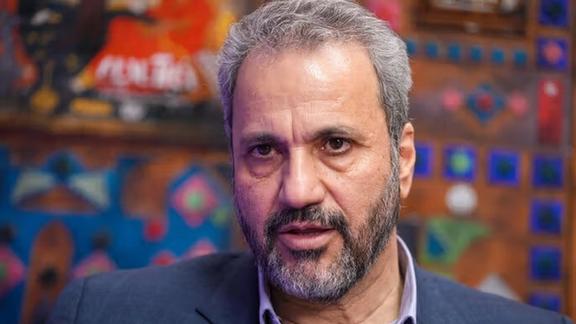
An Iranian official has announced that 6.1 million Afghan migrants are currently residing in Iran, with more than two million lacking legal documentation.

An Iranian official has announced that 6.1 million Afghan migrants are currently residing in Iran, with more than two million lacking legal documentation.
Nader YarAhmadi, Deputy Interior Minister and Head of Iran’s Centre for Foreign Nationals and Migrants Affairs, made the remarks during an interview with Khabar Online.
He stated that many Afghans enter the country with passports and visas—some return within the permitted timeframe, while others overstay and seek visa extensions.
“The number of Afghan migrants remains 6.1 million,” YarAhmadi emphasised, noting that the Afghan population in Iran tends to settle in clusters within urban areas.
He also highlighted the deep cultural and linguistic ties between the two nations, saying, “Afghan brothers have never been considered a minority in Iran, which is why they are present across various cities.”
According to YarAhmadi, Iran deported over one million Afghan migrants last year, but approximately 50 percent of them have since returned to the country.
In recent months, Iran has increased efforts to expel undocumented migrants. However, the country’s foreign minister, Abbas Araghchi, has said that the process will be carried out “gradually and with dignity.”
He added that Afghanistan must develop sufficient infrastructure and capacity to reintegrate returning migrants effectively.


Alireza Bikdeli, Iran’s acting ambassador in Kabul, met with Khairullah Khairkhwa, the Taliban’s Minister of Information and Culture, to discuss plans for organising joint cultural and artistic exhibitions.
According to a statement issued on Saturday by the Embassy of the Islamic Republic of Iran in Kabul, the two sides discussed holding exhibitions featuring handicrafts, cultural displays, and the exchange of cultural delegations. Both parties emphasised that the shared cultural heritage between Iran and Afghanistan serves as a foundation for strengthening bilateral ties.
The discussions suggest preparations are underway to hold a joint cultural exhibition in Kabul. Sayed Ruhollah Hosseini, Iran’s cultural attaché in Kabul, previously announced that an Iranian cultural and artistic exhibition would soon be held in the Afghan capital, though no specific date has yet been confirmed.
Before the Taliban’s return to power in August 2021, such exhibitions were held annually in Kabul, typically featuring dozens of cultural institutions and book publishers from both countries. These events also included poetry readings and artistic performances, fostering cultural exchange between the two neighbouring nations.

Former US envoy to Afghanistan Zalmay Khalilzad has announced that an American citizen currently held by the Taliban is expected to be released soon.
In a post on the social media platform X, Khalilzad cited the Taliban’s Ministry of Foreign Affairs, stating that the individual—identified as Faye Dai Hall—is set to be freed. He did not provide additional details, and it remains unclear how long Hall has been in Taliban custody or the reasons for their detention.
It is also unknown whether the Taliban are receiving anything in return for the release.
The most recent known case of a US citizen being released by the Taliban occurred on 20 March 2025, when George Glezmann was freed following a visit by a US diplomatic delegation to Kabul. At the time, the Trump administration did not release any Taliban prisoners in exchange. That visit marked the first official trip by a US delegation to Taliban-controlled Kabul, and Khalilzad, who was part of the team, described Glezmann’s release as a gesture of “goodwill” toward Trump.
In a previous exchange during the final days of Joe Biden’s presidency, the Taliban released two American detainees in return for the release of one of their imprisoned members.
However, the status of Mahmood Shah Habibi, an Afghan-American citizen still believed to be in Taliban custody, remains unknown.

U.S. Vice President J.D. Vance has described the Taliban as one of the “worst terrorist organisations in the world,” during remarks made at a US military base in Pituffik, northern Greenland.
Vance, serving under President Donald Trump, referenced the US withdrawal from Afghanistan in 2021 and the subsequent seizure of American military equipment by the Taliban. “About $80 billion in military equipment [was handed] to one of the worst terrorist organisations in the world,” he said.
He also recalled the deaths of 13 American service members in a suicide bombing carried out by ISIS at Kabul airport during the Biden administration, calling it a “catastrophic error.”
Vance’s comments came in response to recent remarks by Taliban Foreign Ministry spokesperson Abdul Qahar Balkhi, who asserted that the U.S. military equipment left behind in Afghanistan now belongs to the Taliban and would not be returned.
The chaotic collapse of the Afghan government in August 2021 allowed the Taliban to take control of billions of dollars’ worth of US military hardware. While some assets were destroyed by departing American forces in Kabul and Bagram, a substantial cache of operational equipment—including military vehicles, advanced weapons, biometric systems, and other technologies—remained intact.
Although the Biden administration has estimated the value of the abandoned military assets at just over $7 billion, Trump and Vance have repeatedly claimed the figure is closer to $80 billion.
At a White House event on 27 March, Trump again criticised President Biden, saying: “Maybe we have to ask for that back, although it is getting a little old.” In earlier remarks, he also condemned the Taliban for parading with US military equipment.
The Taliban have dismissed such criticisms, referring to the equipment as “war spoils” and asserting that it will not be returned.
In February, Trump reportedly tasked a US official named “Doug” with drafting a plan to reclaim the abandoned military assets now under Taliban control.

The suspension of Afghan refugee resettlement to the United States, coupled with Pakistan’s impending deportation deadline, has placed former Afghan Air Force pilots in a deeply precarious position.
Once allies of the US military, these individuals now find themselves stranded, fearing violent retribution if returned to Taliban-controlled Afghanistan.
Shawn Vandiver, head of AfghanEvac—a group advocating for the resettlement of Afghan refugees—told CNN: “These pilots risked everything for America. Their lives are now on the line because of our failure to follow through on our promises.”
Tauheed Khan (a pseudonym), an Afghan pilot currently residing in Pakistan with his family, described the harrowing uncertainty they face. After two years of navigating the US refugee admissions process, he was finally invited for an interview at the US Embassy in April last year. Since then, he has received no further communication.
“I fear I will be killed if sent back to Afghanistan,” he said, citing Taliban hostility toward former military personnel.
Restrictive immigration policies in both Washington and Islamabad have further worsened the plight of Afghan refugees. With Pakistan's deportation deadline looming, these pilots—already at risk—are running out of time to secure safe passage elsewhere.
Many fear being recognised by local communities or informants, which could lead to Taliban targeting. “Eight to ten” of Khan’s fellow pilots were assassinated in targeted attacks, he recalled.
Another former officer, Khapalwak (a pseudonym), aged 37, served as an aviation engineer in the Afghan Air Force’s intelligence, surveillance, and reconnaissance division. He was responsible for clearing civilian areas before US drone operations—a role that made him a Taliban target. Before the fall of Kabul, he was forced to change locations every “three to four months” to stay alive.
Now selling wood on the roadside in Pakistan, Khapalwak fears the Taliban’s influence extends beyond Afghan borders. “I know they have contacts here. They could target me if they wanted. I just want to get out of here so my daughters can be educated,” he told CNN.
Taliban spokesperson Zabihullah Mujahid denied that pilots are in danger, stating: “We don’t have any problem with them. The pilots who want to return to Afghanistan are needed because they are an asset to the country and important military personnel.” He also claimed that some former pilots are already serving under Taliban command.
In the past two months, US immigration policy under Donald Trump’s administration has become increasingly unpredictable and restrictive, casting further doubt over the fate of pilots like Khan and Khapalwak.
Meanwhile, since October 2023, Pakistan has escalated its campaign to expel Afghan refugees. In February, Pakistani authorities announced that even Afghans awaiting resettlement in third countries would be deported by 31 March—a date that coincides with the Eid al-Fitr holiday.
For many, the mood is not celebratory but one of desperation. Jawad Ahmad, a former Black Hawk helicopter pilot, summed up the anguish:
“We don’t have options in Pakistan. What can we do? Please, for the love of God, get us out of here. We don’t have a life; we are choking with fear.”

The Taliban has reportedly rejected a request from the Tebyan Cultural Centre to hold Quds Day demonstrations in Kabul and Mazar-e-Sharif, according to sources speaking to Afghanistan International.
Following the denial, a closed-door Quds Day ceremony was held inside the centre’s Kabul office, where participants were seen burning an Israeli flag. Photographs from the event show Issa Hosseini Mazari, head of the Tebyan Centre and a well-known pro-Iranian figure in Afghanistan, standing next to the burning flag.
Quds Day, observed annually on the last Friday of Ramadan, was established by Ruhollah Khomeini, the founder of the Islamic Republic of Iran, as a show of solidarity with Palestinians. The Iranian government regularly organises commemorative events in various countries, including Afghanistan.
This year, the Tebyan Centre had reportedly intended to organise public gatherings in Kabul and Balkh provinces. However, the Taliban opposed the initiative, effectively blocking the planned demonstrations.
In recent years, Quds Day events in Afghanistan have often been hosted at Iranian diplomatic missions, with attendance by both Iranian and Taliban officials. Joint prayer ceremonies between representatives of both governments have also been documented.
Mazari, known for his alignment with Iran, has previously voiced support for the Taliban and maintains close ties with Tehran.
Despite regular observances, Quds Day ceremonies in Afghanistan have drawn criticism from those who see the event as a political tool employed by Iran to exert influence in the region.