• العربية
  • پښتو
  • فارسی
Brand
  • Afghanistan
  • Sport
  • Markets
  • Afghanistan
  • Sport
  • Markets
  • Theme
  • Language
    • العربية
    • پښتو
    • فارسی
  • Afghanistan
  • Sport
  • Markets
All rights reserved for Volant Media UK Limited
volant media logo

Taliban Executes Four Men Publicly In Farah, Badghis, Nimroz Provinces

Apr 11, 2025, 09:21 GMT+1Updated: 11:21 GMT+1

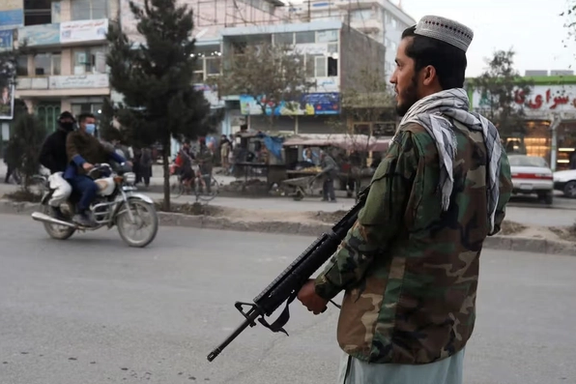
The Taliban’s Supreme Court announced on Friday, 11 April 2025, that it had executed four men in public across three Afghan provinces of Farah, Badghis, and Nimroz for murder convictions, under the Islamic principle of qisas, or retribution.

The executions, approved by Taliban leader Hibatullah Akhundzada, were conducted in front of crowds, including Taliban officials, in what marks a continuation of the group’s use of capital punishment since regaining power in 2021.

In Farah province, Mohammad Sadiq was executed in a stadium in the provincial capital after being found guilty of murder. In Badghis, two men, Soleiman and Haidar, were put to death in separate incidents. Soleiman was accused of killing three people, while Haidar was also convicted of murder. In Nimroz, Abdul Qadir, a resident of the provincial capital, was executed for a similar offence.

The Taliban’s judicial process, rooted in a strict interpretation of Sharia and local customary law, has drawn widespread criticism from human rights organisations for its lack of transparency, absence of legal representation, and reports of rushed or coerced trials. Critics argue that the application of qisas, intended in Islamic jurisprudence to ensure justice and prevent tribal revenge, is undermined by opaque proceedings and inadequate evidentiary standards.

Since the Taliban’s return to power in August 2021, public executions have resumed, echoing practices from their first regime (1996–2001), when punishments like executions and amputations were common. Historical cases, such as the 1999 execution of a woman named Zarmina in Kabul’s main stadium, underscored the brutality of that era.

While comprehensive data from both periods remains scarce due to restricted media access and limited official records, at least eight public executions have been documented since 2021, with rights groups suggesting the true number may be higher.

The first confirmed public execution under the current regime occurred in Farah in December 2022, followed by three executions in Ghazni and Jowzjan provinces in February 2024, and another in Paktia province in November 2024. The Taliban’s prohibition on media coverage and filming has further obscured the scale of such punishments.

International bodies, including the United Nations and Human Rights Watch, have condemned the executions as violations of human rights, calling for an end to capital punishment and urging reforms to ensure fair trials.
Most Viewed

Explosions & Aircraft Activity Reported Over Kabul
1

Explosions & Aircraft Activity Reported Over Kabul

2

Nearly 23,000 Militants Operating In Afghanistan, Says Russian Security Chief

3

Taliban Promised Inquiry Into Abuse Of Cleric, Says Shia Commission

4

Afghanistan Instability Is A Direct Regional Security Threat, Says Russia

5

EU Again Calls For Lifting Restrictions On Afghan Women & Girls

•
•
•

More Stories

Taliban Leader Urges Unity In Paktia Amid Tensions With Haqqani Faction

Apr 11, 2025, 09:03 GMT+1

Taliban leader Hibatullah Akhundzada met with senior officials in Paktia province on Thursday, 10 April, calling for unity and obedience, the group’s spokesperson Zabihullah Mujahid announced.

The rare gathering in a Haqqani network stronghold highlights internal dynamics within the Taliban’s leadership.

The meeting, attended by Paktia’s governor Mehrullah Hamad, the provincial police chief, intelligence head, and other key figures, centred on reinforcing discipline.

Akhundzada stressed that obeying superiors, including ministers, is “obligatory” and demanded strict implementation of Sharia law across economic, political, and military domains, Mujahid said. He also underscored the promotion of “Islamic rulings” and the “propagation of virtue.”

Akhundzada addressed Afghanistan’s chronic poverty, which he has previously called “divine destiny” and a product of “intelligence agency propaganda,” without offering specific economic solutions. He urged Taliban members to eradicate “hostility, disputes, and ethnic prejudices” while focusing on national security.

The timing and location of the meeting point to underlying rivalries, particularly with acting Interior Minister Sirajuddin Haqqani, whose network holds significant sway in Paktia. Analysts see the visit as an attempt to strengthen authority amid these internal challenges.

Taliban Sets Up Security Committee For Afghan Migrants Facing Deportation In Pakistan

Apr 10, 2025, 16:04 GMT+1

The Taliban has formed a "security committee" to safeguard Afghan migrants in Pakistan amid ongoing deportations and reports of mistreatment, Shir Mohammad Sharif, head of the group's Border Police within the Ministry of Interior, announced on Thursday.

Speaking to Taliban-controlled national television during a visit to the Torkham border crossing, Sharif said the committee aims to "prevent ill-treatment by Pakistani authorities towards Afghan migrants and address their concerns in Pakistan."

Sharif’s visit to Torkham, a key transit point, was intended to evaluate recent damages, assess the security situation, and review the plight of Afghan migrants expelled from Pakistan.

The move follows accounts of alleged abuses, with several Afghan children at the border telling Afghanistan International they were detained and imprisoned by Pakistani police without cause.

Pakistan’s immigration department reported that over the past week, 11,371 Afghan migrants were detained and deported. On Tuesday alone, 3,669 were sent back through Torkham, according to official figures.

The Express Tribune noted that Pakistan’s ongoing operation targets not only undocumented migrants but also asylum seekers and families linked to criminal activities for detention and deportation.

The Pakistani government’s plan to expel approximately three million Afghan migrants in 2025 has drawn sharp criticism from international organisations. Despite the backlash, authorities continue their crackdown, intensifying efforts to identify and remove Afghan nationals across the country.

Taliban’s Restrictions On Women May Cost Afghanistan $1.4B Yearly, Says UN

Apr 10, 2025, 14:15 GMT+1

The United Nations Assistance Mission in Afghanistan (UNAMA) has warned that the Taliban’s stringent bans on women’s education and employment could slash Afghanistan’s economy by $1.4 billion annually, according to World Bank estimates cited in a new UN report.

The findings, released on Thursday, link these economic losses to the Taliban’s enforcement of its “Propagation of Virtue and Prevention of Vice” law, which UNAMA says is deepening the country’s dire financial crisis.

The report, covering the past six months, details how the Vice and Virtue law, which is part of the Taliban’s push to establish a “pure” Islamic system, has granted its morality police sweeping powers to arbitrarily detain individuals and confiscate property. Men, women, youth, and minorities across Afghanistan have felt the law’s impact, with violations of privacy and disruptions to economic activity reported nationwide.

Women and girls face particularly severe restrictions, including dress code enforcement, limits on accessing public spaces, and a requirement to travel with a male guardian, or mahram.

UNAMA highlighted that these measures have drastically curtailed women’s access to healthcare, with female healthcare workers telling the mission they are barred from workplaces without a mahram.

The United Nations Security Council, in its Resolution 2777 passed on 17 March 2025, has demanded the Taliban repeal the law and lift these restrictions immediately.

The UN mission also noted a troubling ripple effect, with a quarterly survey by the UN Women’s Section showing a sharp rise in family and community enforcement of the Taliban’s rules.

Between August and October 2024, the percentage of male family members imposing restrictions on women doubled from 22 percent to 44 percent. Enforcement by religious scholars rose from 26 percent to 45 percent, and by community elders from 18 percent to 33 percent.

UNAMA cautioned that this trend is normalising the curbs, reshaping social and familial dynamics, and fostering a climate of fear and uncertainty.

As the Taliban’s morality police continue their arbitrary enforcement, UNAMA warned that many Afghans are increasingly aligning their behaviour with the law’s provisions, further entrenching its impact on society and the economy.

Taliban To Execute Three Individuals Publicly In Badghis & Nimroz

Apr 10, 2025, 12:48 GMT+1

The Taliban has scheduled the public execution of three individuals convicted of murder for Friday, 12 April, in the provinces of Badghis and Nimroz, according to Abdul Rahim Rashid, spokesperson for the Taliban’s Supreme Court.

The executions, set to occur in the provincial capitals of Qala-e-Naw and Zaranj, will be carried out under the group’s interpretation of Sharia law, with authorities urging the public to attend.

Rashid confirmed the details in a statement posted on X on Thursday, noting that the three were sentenced to “qisas” — a form of retributive justice — by a Taliban court.

In Zaranj, the execution of one individual will take place at the city’s stadium, as announced by Nimroz’s Directorate of Information and Culture. Meanwhile, separate executions are planned in Qala-e-Naw city of Badghis province.

Taliban officials in both provinces have invited civil and military leaders, religious scholars, and residents to witness the events, while imposing strict rules banning weapons, smartphones, and recording devices at the sites. The group has framed the executions as a demonstration of its judicial authority.

Since reclaiming power in August 2021, the Taliban has conducted five public executions, with the most recent cases occurring in Ghazni, Jowzjan, Paktia, and Farah provinces.

Atiqullah Darwish, Chief of the Criminal Division of the Taliban’s Supreme Court, stated that approximately 30 additional death sentences are pending final approval from the group’s leader.

Taliban’s Morality Police Granted Sweeping Powers For Arbitrary Detentions, Says UN

Apr 10, 2025, 11:55 GMT+1

The United Nations Assistance Mission in Afghanistan (UNAMA) has raised alarm over the Taliban’s “propagation of virtue and prevention of vice” law, detailing its extensive implications in a report released on Wednesday.

The legislation empowers the group’s moral enforcers with broad authority to conduct arbitrary detentions and seize property from individuals deemed non-compliant, the report states.

According to UNAMA, the Taliban has established implementation committees across 28 provinces to enforce the law, each chaired by a provincial governor aligned with the group.

The measure, which spans from 21 August 2024 to 31 March 2025, has affected men, women, youth, and minority communities throughout Afghanistan, though the severity of its impact varies.

The report highlights frequent breaches of personal privacy during enforcement, with some cases involving the targeting of non-Sunni communities.

Afghan women, in particular, face significant restrictions, including limited access to healthcare due to a Taliban edict prohibiting travel without a male guardian, known as a mahram.

Several female healthcare workers told UNAMA they are barred from entering their workplaces without a mahram, further exacerbating the crisis in medical services.