• العربية
  • پښتو
  • فارسی
Brand
  • Afghanistan
  • Sport
  • Markets
  • Afghanistan
  • Sport
  • Markets
  • Theme
  • Language
    • العربية
    • پښتو
    • فارسی
  • Afghanistan
  • Sport
  • Markets
All rights reserved for Volant Media UK Limited
volant media logo

Russia Protecting Interests In Afghanistan & Syria, Says Security Chief Shoigu

Apr 25, 2025, 10:39 GMT+1

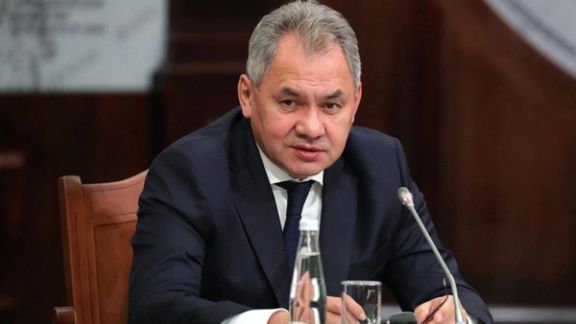
Sergei Shoigu, Secretary of Russia’s Security Council, has emphasised that Moscow’s longstanding priority since the Soviet era has been ensuring the security of Central Asia.

He added that simultaneously Russia has been working to safeguard its interests in Afghanistan, Syria, and the broader Middle East.

Speaking to the Russian state news agency TASS, Shoigu stated: “Russia’s national interests in the global arena include such comprehensive problems as the situation in the Middle East, Syria, and Afghanistan.” He did not elaborate further but noted that Russia’s interests vary depending on the specific circumstances in each region.

Shoigu highlighted that, within the post-Soviet space, a key strategic objective remains the development of bilateral and multilateral cooperation with neighbouring countries through organisations such as the Collective Security Treaty Organisation (CSTO), the Shanghai Cooperation Organisation (SCO), the Commonwealth of Independent States (CIS), and the Eurasian Economic Union (EAEU).

His comments on Afghanistan come shortly after Russia’s Supreme Court approved a request from the Prosecutor General’s Office to suspend the Taliban’s designation as a terrorist organisation in Russia. Following this decision, Russia’s special envoy for Afghanistan, Zamir Kabulov, visited Kabul and held meetings with senior Taliban officials, including Amir Khan Muttaqi, Foreign Minister, and Sirajuddin Haqqani, Interior Minister.

Moscow Security Conference Set for May

Shoigu also announced that this year’s Moscow International Security Conference will be held from 27 to 29 May. According to Shoigu, representatives from more than 150 countries are expected to attend the annual gathering.

Organised by the Security Council of the Russian Federation, the conference focuses on multilateral cooperation and regional and global security challenges. It remains unclear whether the Taliban has been invited to participate this year, although former Afghan President Hamid Karzai has attended in previous years.

Regarding the conference agenda, Shoigu stated: “We plan to discuss concrete ways of strengthening security cooperation with countries of the global majority, or, as it is said today, the global South and East.”

In addition to plenary sessions and panel discussions, the event will feature exhibitions showcasing modern Russian weaponry, military equipment, and achievements in the field of information security.

Most Viewed

Taliban Ignore Afghanistan’s Interests By Backing Militants, Says Pakistan Army Chief
1

Taliban Ignore Afghanistan’s Interests By Backing Militants, Says Pakistan Army Chief

2

United Nations Delivers Education Kits To Four Million Afghan Children

3

European Parliament To Review Petition On Gender Apartheid, Taliban Status

4

Taliban Renews Call For China To Launch Aynak Copper Mine

5

Taliban Leaders In South-West Hold Security Meet In Kandahar

•
•
•

More Stories

Taliban Enforces 10 New Laws Since Seizing Power In 2021

Apr 25, 2025, 09:28 GMT+1

The Taliban’s Ministry of Justice has announced that, over the past three and a half years, it has enacted 10 new laws, all of which have been approved and enforced by the group’s leader, Hibatullah Akhundzada. These laws have been officially published in the national gazette.

Among the most controversial is the law on the propagation of virtue and the prevention of vice, which has drawn significant criticism for its sweeping restrictions on human rights, particularly the rights of women and girls. Since taking control of Afghanistan in August 2021, the Taliban have abolished nearly all laws instituted under the previous government, including the Afghan Constitution, replacing them with decrees and directives attributed to Mullah Hibatullah, which are now treated as binding law.

In its recent statement, the Ministry of Justice also highlighted several other enacted laws, including the law on hearing complaints, the law on preventing land usurpation and returning seized lands, the law on the money exchange and financial services sector, the law on industrial zones, and the law on leasing “Emirati” lands.

While comprehensive legislation already existed in these sectors under the former administration, the Taliban have opted to overhaul or replace them entirely.

The ministry also reported that, since 2021, it has issued four procedural guidelines, one charter, and dozens of decrees, rulings, and directives from Akhundzada. A substantial number of these have directly targeted women’s rights and personal freedoms, contributing to ongoing domestic and international concern.

Legislation Rooted in Quran and Hanafi Jurisprudence

According to the ministry, over the past four years it has reviewed, researched, and finalised 119 legislative documents, including laws, charters, statutes, procedural guidelines, and regulations. An additional 196 documents have undergone jurisprudential analysis based on the Holy Quran, the traditions of the Prophet, and Hanafi jurisprudence.

These legislative documents include revisions or new drafts of the Police law, the law on the regulation of prisons, the mining law, the law on the transfer and repatriation of prisoners, the environmental law, the customs law, the labour law, and the private investment law.

By discarding the previous constitution, the Taliban have reaffirmed that their legal system is now grounded solely in Islamic texts, Hanafi legal tradition, and the decrees of their supreme leader.

Despite nearly four years in power, the Taliban government remains unrecognised by any country including Pakistan. Their rigid interpretation and enforcement of Sharia, particularly in regard to women’s freedoms, have not only isolated the regime internationally but also fuelled growing divisions within the Taliban leadership itself.

Prominent figures such as Deputy Foreign Minister Sher Mohammad Abbas Stanekzai have publicly opposed policies like the continued ban on education for girls and women, highlighting internal dissent within the group over the direction of its rule.
14 Kilometres Of TAPI Pipeline Completed Inside Afghanistan, Says Project Head

Apr 24, 2025, 16:26 GMT+1

The head of the TAPI gas pipeline project in Afghanistan has announced that 14 kilometres of the pipeline have now been completed within Afghan territory.

According to a statement released by the Taliban governor’s office in Herat, TAPI Project Director Abdullah Youf also confirmed that an additional 24 kilometres of the pipeline route have been levelled and prepared for construction.

The TAPI pipeline named after the participating countries of Turkmenistan, Afghanistan, Pakistan, and India is a strategically significant infrastructure project designed to transport natural gas across South and Central Asia. The pipeline will extend 1814 kilometres in total, including 214 kilometres in Turkmenistan, 774 kilometres in Afghanistan, and 826 kilometres in Pakistan, before reaching Fazilka in India.

During a recent meeting with Youf, Herat’s Taliban-appointed governor, Noor Ahmad Islamjar, pledged full cooperation and facilitation to accelerate the pipeline’s construction through western Afghanistan.

The pipeline is expected to deliver up to 33 billion cubic metres of natural gas annually from the Galkynysh gas field in southern Turkmenistan. Its planned route will pass through Herat and Kandahar in Afghanistan, Quetta and Multan in Pakistan, and into northern India.

First launched nearly nine years ago in Herat with the participation of leaders from all four nations, the $10 billion project has faced repeated delays due to political tensions and prolonged instability—particularly within Afghanistan.

However, following renewed talks last year, the Taliban administration and Turkmen authorities agreed to resume construction inside Afghanistan. Taliban officials claim the project could generate up to $400 million in annual revenue for the country once operational.

Civil Society Groups Urge US To Resume Afghan Refugee Resettlement Programmes

Apr 24, 2025, 15:30 GMT+1

Dozens of civil society organisations, women’s rights movements, and human rights groups have issued an open letter to the US State Department, urging the immediate resumption of Afghan refugee resettlement programmes.

The letter, signed by 49 organisations including Afghan women’s protest movements and advocacy groups was addressed to the Bureau of Population, Refugees, and Migration at the State Department, as well as to US senators, members of Congress, and relevant federal agencies.

The signatories called for urgent action to support Afghan refugees, warning that delays in relocation efforts are putting lives at risk.

The organisations expressed serious concern over the growing backlog in processing applications under the Priority 1 (P1), Priority 2 (P2), and Special Immigrant Visa (SIV) programmes. These channels were specifically designed to support at-risk Afghans who had worked closely with US-funded missions and projects.

The letter emphasised that many of the applicants are women’s rights activists, journalists, human rights defenders, educators, artists, and others facing persecution under the Taliban regime. According to the signatories, these individuals clearly qualify for international protection under the 1951 Refugee Convention and the 1967 Protocol.

The groups stressed that the United States has a legal, moral, and political obligation to uphold its commitments to these Afghans, many of whom are now stranded in third countries without access to legal protections and are enduring precarious living conditions.

The Trump administration had previously suspended key refugee and immigration pathways and deported some Afghan asylum seekers. Concerns have recently been reignited following a report by Axios, which revealed that the US Department of Homeland Security sent emails to over 200 Afghan refugees in Iowa, instructing them to leave the country immediately.

According to the advocacy group Afghan Partners in Iowa, the recipients of these notices include former soldiers who had fought alongside US forces during the war in Afghanistan.

Vast Majority Of Afghans Who Fled To Pakistan After 2021 Still Await Resettlement

Apr 24, 2025, 14:31 GMT+1

Pakistan’s Special Envoy for Afghanistan has revealed that the international community has resettled just 86,000 of the approximately 800,000 Afghans who entered Pakistan following the Taliban’s return to power in 2021.

In a post on X (formerly Twitter), Mohammad Sadiq said he discussed Pakistan’s ongoing efforts to facilitate the return of Afghan nationals with the Deputy High Commissioner of the United Nations Refugee Agency (UNHCR).

Following the collapse of the Western-backed Afghan government, hundreds of thousands of Afghans particularly former civil servants, military personnel, and those associated with foreign missions fled to neighbouring countries such as Pakistan and Iran amid fears of Taliban reprisals.

Nearly four years on, both Pakistan and Iran have ramped up the deportation of Afghan migrants. Over the past year alone, the two countries have expelled an estimated two million Afghans.

While deportations from Pakistan, Iran, and Tajikistan continue to accelerate, resettlement efforts by Western countries have slowed considerably. On Tuesday, Germany’s Foreign Ministry announced a temporary suspension of its Afghan resettlement programme until the formation of a new government.

Meanwhile, under the Trump administration, some Afghan asylum seekers were deported from the United States, a move that has raised alarm among Afghan communities abroad.

Refugee advocacy groups have warned that deported Afghans face the risk of harassment, detention, or persecution by the Taliban. Both the Taliban authorities and the United Nations have repeatedly urged Afghanistan’s neighbours to stop the forced return of Afghan nationals, but these calls have thus far gone largely unheeded.

Nearly 7000 Afghans Deported From Pakistan, Iran In Single Day

Apr 24, 2025, 13:01 GMT+1

The Taliban’s High Commission for Addressing Migrants’ Issues has reported that 6774 Afghan nationals were deported from Pakistan and Iran on Wednesday, 24 April. Around 5391 individuals were expelled from Pakistan, while 1383 were deported from Iran.

In a statement issued Thursday, the commission detailed that 3600 migrants re-entered Afghanistan via the Torkham border crossing, 1719 through Spin Boldak, and 72 through Angur Ada. From Iran, 953 migrants returned through the Islam Qala crossing, with another 430 entering via Pul-e-Abrisham.

The commission also noted that financial assistance totalling 5.468 million Afghanis was distributed to returning migrants. Of those deported, 713 individuals were relocated to various provinces, including Ghazni, Baghlan, Kunduz, Takhar, Balkh, Jawzjan, Logar, Khost, Paktia, and Paktika.

Meanwhile, some Pakistani media outlets reported a higher number of deportations, claiming that 9647 Afghans were expelled from Pakistan on the same day. These sources suggest that the total number of Afghans deported from Pakistan has now reached 993089.

The commission, which provides daily updates on deportation figures from both Iran and Pakistan, had reported 4355 deportations on Tuesday.

According to Pakistan’s Ministry of Interior, at least 100529 Afghan nationals were deported from the country between 1 and 20 April.