• العربية
  • پښتو
  • فارسی
Brand
  • Afghanistan
  • Sport
  • Markets
  • Afghanistan
  • Sport
  • Markets
  • Theme
  • Language
    • العربية
    • پښتو
    • فارسی
  • Afghanistan
  • Sport
  • Markets
All rights reserved for Volant Media UK Limited
volant media logo

Taliban Convenes High-Level Meet On Crime Prevention, Tightens Security In Kandahar

Apr 30, 2025, 14:14 GMT+1

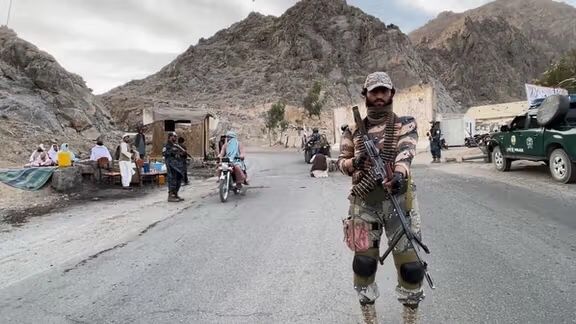
The Taliban governor’s office in Kandahar has announced the convening of a high-level meeting focused on “crime prevention and security improvement,” as security measures tighten around the city particularly near areas linked to Taliban leader Hibatullah Akhundzada.

According to a statement released on Wednesday, 30 April, the meeting brought together senior officials from the group’s intelligence, military, and judicial bodies. Participants included the governor and deputy governor of Kandahar, the provincial police chief, heads of intelligence and the Supreme Court, and other top Taliban officials.

During the session, the governor called on various departments to take action to implement “divine laws” and enforce court rulings without delay.

The Taliban police chief in Kandahar emphasised the role of military officials in carrying out judicial orders swiftly and efficiently. “Military officials have a responsibility to promptly and effectively enforce court rulings so that oppressors are punished and rightful claimants receive their due,” he said.

Gul Mohammad Sayyad, head of the Taliban’s military court in Kandahar, and Hezbollah Kandahari, head of the provincial primary court, stressed that all decisions are based strictly on Sharia law.

The meeting comes amid a noticeable increase in security operations across Kandahar city. Entry points are under intensified surveillance, and reports indicate that security personnel from surrounding districts are being disarmed before being allowed into the city.

Previously, Kandahar’s Taliban police command had verbally instructed local forces not to enter the city with weapons or ammunition a directive that has reportedly been reinforced in recent days.

Most Viewed

Taliban Order Cut To Residential Fibre-Optic Internet In Kabul, Say Sources
1

Taliban Order Cut To Residential Fibre-Optic Internet In Kabul, Say Sources

2

Taliban Leader Adviser Arrested In Kandahar Over Alleged Bribery

3

Taliban Besieged TOLOnews Offices After Journalist Detentions, Say Sources

4

Taliban Urges Turkmenistan To Implement 24-Hour Operations At Torghundi Port

5

Exiled Media Watchdog Urges UN, EU To Seek Release Of Journalists Held By Taliban

•
•
•

More Stories

UN Relief Chief Visits Kandahar, Warns Of Grave Consequences From Aid Cuts

Apr 30, 2025, 13:15 GMT+1

Tom Fletcher, the United Nations Under-Secretary General for Humanitarian Affairs, visited Kandahar this week to assess the deepening humanitarian crisis and express solidarity with aid workers, particularly women facing mounting restrictions and risks.

Despite travelling to the Taliban’s power base, Fletcher was unable to meet with the group’s reclusive leader, Hibatullah Akhundzada. He did, however, hold discussions with the Taliban-appointed governor of Kandahar province.

In a post shared on the social media platform X on Wednesday, Fletcher shared images and video footage of his visit, noting that he engaged with local officials, returning refugees, and healthcare workers during stops at multiple aid sites, including a regional hospital.

Fletcher raised alarm over the plight of displaced children who have been separated from their families, and voiced serious concern over the deteriorating conditions faced by female aid workers.

“Cutting funding for those in greatest need is not something to boast about. For millions, it is a death sentence,” he wrote.

He revealed that recent funding shortfalls had led to the closure of 400 health centres across Kandahar, depriving over three million people of access to essential medical services.

The UN humanitarian chief highlighted severe shortages in hospital capacity, neonatal care, and basic medical supplies, and urged international donors and policymakers to visit Kandahar to witness the crisis firsthand.

“When you spend time with the female health workers on whom this infrastructure relies, and they tell you that they are facing salary cuts of half, of two-thirds,” Fletcher said, “this is the impact of aid cuts.”

He warned that these reductions could result in millions of preventable deaths. “I can’t sugar this pill,” he added.

While Kandahar is widely seen as the stronghold of Taliban supreme leader Akhundzada, Fletcher did not confirm whether a meeting with him had been requested or declined.

Earlier in his trip to Afghanistan, Fletcher met with senior Taliban officials in Kabul, including Deputy Prime Minister Abdul Salam Hanafi, Economy Minister Din Mohammad Hanif, and Foreign Minister Amir Khan Muttaqi. Their discussions reportedly focused on the worsening humanitarian situation, climate change, drug control, and regional security challenges.
Taliban Accuses UN Of Sending Expired Kits, Low-Quality Food To Afghanistan

Apr 30, 2025, 11:29 GMT+1

Noor Jalal Jalali, the Taliban’s Minister of Public Health, has accused United Nations agencies of sending substandard humanitarian aid to Afghanistan, including expired medical supplies and low-quality food.

Speaking at a press conference in Kabul on Wednesday, 30 April, Jalali criticised both the World Food Programme (WFP) and the United Nations Development Programme (UNDP) for what he described as mismanaged and ineffective aid deliveries.

According to Jalali, WFP recently imported 6,750 tonnes of low-quality food products under the label “Super Cereal,” while UNDP provided 650 tuberculosis testing kits, many of which were expired or mismatched in specification compared to official documentation. He added that UNDP had acknowledged these discrepancies.

The minister further claimed that WFP had shipped 55 tonnes of premix food supplements without accounting for local storage limitations, resulting in the supplies expiring before use. “This is a clear waste of aid,” Jalali said, calling for greater transparency and accountability from humanitarian organisations.

These allegations come amid ongoing tensions between the Taliban and UN agencies, which have repeatedly accused the group of obstructing aid efforts and pressuring staff to distribute assistance according to the Taliban’s preferences.

Taliban-Affiliated & Independent Afghan Journalists Visit China

Apr 30, 2025, 10:33 GMT+1

A group of Afghan journalists from Taliban-controlled media and independent outlets have visited China as part of a government-organised tour aimed at showcasing the country's development and enhancing bilateral relations.

According to reports, the delegation toured key historical sites, cultural institutions, industrial facilities, and exhibitions in the cities of Hangzhou and Ürümqi, in the Xinjiang region. During the visit, the journalists also held meetings with local Chinese officials and media representatives.

In Ürümqi, a spokesperson from China’s Ministry of Foreign Affairs commended the strengthening political, economic, and trade relations between Beijing and the Taliban, and called for deeper cooperation moving forward.

China has consistently hosted Afghan journalists in recent years as part of its soft power outreach, using such visits to present its economic achievements, infrastructure development, and cultural programmes to foreign media professionals.

Engagement between China and the Taliban has increased significantly since the group returned to power in 2021. China is among the few nations to accept a Taliban-appointed ambassador and has signed multiple agreements with the group, particularly in the mining, oil, and gas sectors, as it seeks to expand its regional influence.

Taliban Seeks Closer Diplomatic Ties With Qatar

Apr 30, 2025, 09:34 GMT+1

The Taliban’s acting Foreign Minister, Amir Khan Muttaqi, has called for strengthened diplomatic relations with Qatar during a meeting with the country’s Deputy Foreign Minister, Mohammed bin Abdulaziz Al-Khulaifi.

The meeting took place amid ongoing efforts by the Taliban to broaden international engagement, despite the group still lacking formal recognition from the majority of governments worldwide.

According to a statement issued on Tuesday by the Taliban’s Ministry of Foreign Affairs, the two officials discussed bilateral relations, regional developments, and the expansion of cooperation in areas such as culture, health, and sport.

The Taliban reported that Al-Khulaifi pledged greater cooperation and indicated that the Qatari government would help facilitate employment opportunities for Afghan workers in the Gulf state.

Muttaqi described the relationship between the Taliban and Qatar as “positive” and expressed hope for stronger diplomatic engagement in the near future. Al-Khulaifi likewise characterised the relationship as close, highlighting the need for broader collaboration across multiple sectors.

Both parties agreed to enhance institutional engagement and hold more frequent meetings to advance mutual cooperation, according to the statement.

Qatar has maintained close contact with the Taliban for years and played a pivotal role in their return to power in 2021. While Doha continues to operate its embassy in Kabul and hosts a Taliban political office in its capital, it has yet to formally recognise the Taliban government. Qatar’s support has remained limited to humanitarian aid.

The Taliban have repeatedly expressed interest in facilitating the deployment of Afghan workers to Gulf nations. However, countries in the region, which rely heavily on foreign labour, particularly from India and Pakistan have yet to respond favourably to these offers.

Afghans Face Worsening Rights Abuses Under Taliban Rule, Says Rights Group

Apr 29, 2025, 17:25 GMT+1

Afghanistan is experiencing a deepening human rights crisis under Taliban rule, according to Amnesty International’s annual report released on Tuesday.

The organisation warns that Afghan women and girls are enduring what it describes as crimes against humanity in the form of gender persecution.

The report highlights an alarming deterioration in civil liberties, noting that women and girls are being increasingly denied their rights to freedom of movement and expression. Access to healthcare has become more restricted, and education beyond grade six remains banned for girls.

Amnesty International also raised concerns about the continued targeting of the Shia Hazara community, primarily through attacks by the Islamic State (ISIS). The report accuses the Taliban administration of systematically excluding women and ethnic and religious minorities from political participation and from access to public and humanitarian services.

Criticising the United Nations and the wider international community, Amnesty said both have failed to address widespread impunity for past and ongoing crimes in Afghanistan.

Executions and Torture in Taliban Prisons

Amnesty’s report also details a worsening situation in Taliban-run prisons, where hundreds of Afghan detainees have reportedly been sentenced to death, often without fair trial guarantees.

Despite international concern over due process violations, the Taliban have resumed public executions, frequently carrying them out in stadiums and open spaces. Citing data from the United Nations Assistance Mission in Afghanistan (UNAMA), Amnesty noted the execution of three individuals in February and one in November last year, followed by four more executions across three provinces in April this year.

According to Amnesty, Taliban courts sentenced between 300 and 600 prisoners to death as of July last year. The report further warned that the group may resume stoning as a punishment for adultery, based on media reports from March.

The organisation estimates that approximately 20,000 people are currently held in Taliban prisons, including around 1,500 women many of whom are believed to be political prisoners. The report accuses the Taliban of subjecting detainees to torture, enforced disappearances, and other mistreatment.

Former government employees, human rights defenders, journalists, and critics are among those reportedly targeted. The report also condemns ongoing restrictions on the media, including arbitrary arrests of journalists and severe curbs on freedom of expression.

As of now, the Taliban administration has not issued a response to Amnesty International’s findings.