• العربية
  • پښتو
  • فارسی
Brand
  • Afghanistan
  • Sport
  • Markets
  • Afghanistan
  • Sport
  • Markets
  • Theme
  • Language
    • العربية
    • پښتو
    • فارسی
  • Afghanistan
  • Sport
  • Markets
All rights reserved for Volant Media UK Limited
volant media logo

UN Consults Handing Afghanistan’s UN Seat To Taliban Envoy Suhail Shaheen

May 2, 2025, 12:00 GMT+1

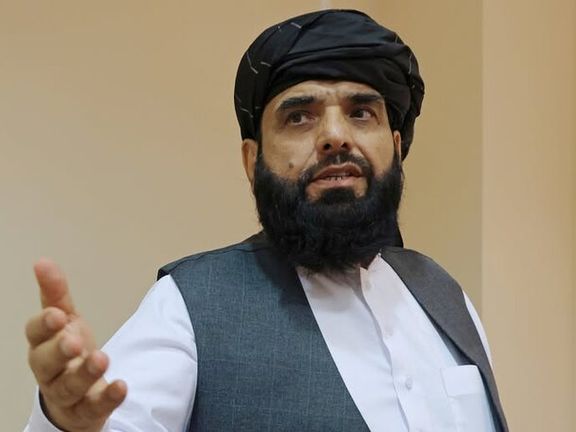
United Nations diplomats are reportedly in consultations over a political framework that could lead to the handover of Afghanistan’s UN seat to Suhail Shaheen, the Taliban’s proposed representative.

Sources aware of the development speaking to Afghanistan International have confirmed that UN officials in Kabul are engaged in talks about Afghanistan’s political future, including the possible accreditation of Suhail Shaheen, currently the Taliban’s envoy in Qatar, as the official group’s ambassador to the United Nations.

According to a source in Kabul, these discussions are part of a broader political roadmap being drafted by the UN for Afghanistan’s re-engagement with the international community.

As part of the proposed framework, three key conditions have been set by the international community and three by the Taliban. The UN is reportedly insisting on the formation of an inclusive government, the dismantling of terrorist networks operating within Afghanistan, and the protection of human rights including the reopening of schools, universities, and workplaces for women.

In return, the Taliban are demanding international recognition of their government, the lifting of economic sanctions, and the unfreezing of Afghanistan’s overseas financial reserves.

Sources say the UN has proposed a phased, step-by-step process for engagement on these six conditions. Should the Taliban establish a broader and more inclusive governing structure in Kabul, the UN seat may be formally handed over to Suhail Shaheen.

The Taliban leadership in both Kabul and Kandahar have, according to the sources, not opposed the plan in principle. Some Afghan political parties and prominent figures have also reportedly welcomed the gradual approach, viewing it as a way to promote human rights, end international isolation, and establish a more representative government.

Diplomatic sources indicate that a six-month timeline has been proposed to begin implementing and monitoring the plan’s key elements.

One diplomat, speaking on condition of anonymity due to the sensitivity of the negotiations, confirmed that progress has been made and that all discussions are taking place under the supervision of the Taliban leadership in Kandahar. However, the diplomat warned that hardline factions within the Taliban, as well as certain political groups, remain resistant to power-sharing arrangements.

The Taliban spokespersons did not respond to a request for comment from Afghanistan International.

Suhail Shaheen was nominated by the Taliban as their UN ambassador shortly after their return to power in 2021. However, the UN has not yet formally recognised him in this capacity.
Most Viewed

Taliban Order Cut To Residential Fibre-Optic Internet In Kabul, Say Sources
1

Taliban Order Cut To Residential Fibre-Optic Internet In Kabul, Say Sources

2

Taliban Leader Adviser Arrested In Kandahar Over Alleged Bribery

3

Taliban Besieged TOLOnews Offices After Journalist Detentions, Say Sources

4

Taliban Urges Turkmenistan To Implement 24-Hour Operations At Torghundi Port

5

Exiled Media Watchdog Urges UN, EU To Seek Release Of Journalists Held By Taliban

•
•
•

More Stories

China Now Controls Bagram Air Base, Says Trump

May 2, 2025, 10:45 GMT+1

US President Donald Trump has renewed his criticism of the Biden administration’s withdrawal from Afghanistan, claiming that the strategically significant Bagram Air Base is now under Chinese control.

Speaking at the White House on Thursday during the National Day of Prayer, Trump asserted that Bagram once the largest US military base in Afghanistan is located just an hour away from Chinese nuclear weapons facilities.

“We were going to keep Bagram, the big air force base, which is one hour away from where China makes its nuclear weapons,” Trump said. “That’s what they do, they make their nuclear missiles one hour away from Bagram. And I said, you can’t give up Bagram.”

He described the decision to abandon the base during the 2021 withdrawal as “crazy,” emphasising Bagram’s size and strategic value.

Trump also referenced the deadly 26 August 2021 suicide bombing at Kabul airport’s Abbey Gate, which killed 13 American service members and more than 160 Afghan civilians, while injuring dozens more. “We lost 13 soldiers, and 42 were horribly injured. Nobody ever talks about them,” he said.

Trump has previously stated that his administration planned to retain Bagram not for Afghanistan’s sake, but because of its geographical proximity to China.

In response to Trump’s remarks, Taliban spokesman Zabihullah Mujahid has reiterated that Afghanistan is an independent nation and does not permit any foreign military presence on its soil. “Bagram Air Base is under the control of the Islamic Emirate, not China,” Mujahid said in an earlier statement refuting similar claims.

Anti-Taliban Group Urges Iran To Halt Deportation Of At-Risk Afghan Nationals

May 2, 2025, 09:37 GMT+1

The National Resistance Council for the Salvation of Afghanistan has appealed to the Iranian government to suspend the deportation of vulnerable Afghan nationals, particularly former security personnel, judges, and government employees who may face persecution under Taliban rule.

According to the council, a high-level delegation led by senior opposition figures, including Mohammad Mohaqiq, recently travelled to Tehran to engage with Iranian officials. During meetings with representatives from Iran’s Ministry of Foreign Affairs and Ministry of Interior, the delegation urged authorities to reconsider the expulsion of Afghans deemed at risk.

Hussain Yasa, spokesperson for the council, told Afghanistan International Radio that deported Afghan security forces have reportedly been subjected to torture by the Taliban upon their return.

In a statement released on Thursday, the council expressed deep concern over the treatment of Afghan refugees, many of whom are former government officials, police officers, judges, and political activists. The Council called on Iran to continue offering refuge and to halt any forced returns that could endanger lives.

The council statement said it submitted a formal proposal outlining measures to protect vulnerable individuals. Iranian officials reportedly pledged to review the plan and assured the delegation that steps would be taken to assess refugee status and improve conditions for Afghan nationals residing in Iran.

Over the past year, Iran has prioritised the deportation of undocumented Afghan migrants, with tens of thousands expelled to date. Despite publicly opposing forced returns, the Taliban claims it is working to support reintegration efforts and has appealed to international organisations for assistance.

Yasa confirmed that the delegation held meetings with both the Foreign and Interior Ministries of Iran. He said Iranian officials promised to take the Council’s concerns seriously and to explore ways of addressing the challenges facing Afghan refugees.

The recent visit by senior members of the National Resistance Council for the Salvation of Afghanistan including Mohammad Mohaqiq, Haji Almas Zahid, Abdullah Qarluq, Mahboob Siddiqi, and Habib-ur-Rahman Sayyaf was aimed solely at addressing the worsening refugee crisis.

Yasa clarified that the delegation did not engage in discussions regarding Iran’s broader foreign policy, saying: “The Islamic Republic’s policy toward the Taliban is an internal matter for Iran.”

Taliban FM Rejects Intra-Afghan Dialogue, Calls Past Talks ‘Bitter Experience’

May 1, 2025, 16:49 GMT+1

Amir Khan Muttaqi, the Taliban’s Foreign Minister, has dismissed the possibility of future intra-Afghan dialogue, describing previous negotiations as a “bitter experience” that should not be repeated.

In an interview with Al Jazeera, Muttaqi said that the current Taliban government represents the entire nation.

Muttaqi claimed that under Taliban rule, citizens are able to live freely without discrimination based on political beliefs, ethnicity, or regional affiliation. He maintained that there are no threats to individuals who wish to live peacefully under the current system.

Commenting on the Taliban’s relationship with the United States, Muttaqi said that several key provisions of the 2020 Doha Agreement particularly the release of Taliban prisoners have not been fully implemented. He noted delays and inconsistencies in prisoner releases and criticised the continued presence of Taliban leaders on international sanctions lists, despite agreements to lift them.

While acknowledging the recent removal of US bounties on some Taliban officials, he insisted that full delisting has yet to occur. He described a recent visit by a US delegation to Kabul as potentially marking the beginning of a new chapter in bilateral relations and expressed hope for gradual improvement.

He stated that Taliban has a balanced foreign policy and seeks mutual progress in economic, political, and diplomatic fields.

Taliban Maintains Neutrality in India–Pakistan Tensions

Muttaqi also addressed the group’s position on India–Pakistan relations, stating that the Taliban does not interfere in the bilateral tensions between the two nuclear-armed neighbours. He stated that Taliban doesn’t take side with one nation against another, and added that the group seeks positive diplomatic ties with both countries.

No Domestic Opposition

On internal security and political opposition, Muttaqi asserted that no organised opposition groups currently exist within Afghanistan and added that those who oppose the the Taliban live abroad Afghanistan and act individually, not as part of any political movement.

He further stated that there are no significant threats to Taliban authority from within and extended an invitation to exiled Afghans, including former political opponents, to return and engage with the Taliban without facing retribution.

Uzbekistan, Taliban Sign Agreement On Water Resources & Economic Cooperation

May 1, 2025, 15:22 GMT+1

Uzbekistan’s Ministry of Agriculture has announced the signing of several agreements with the Taliban in Afghanistan, covering trade, economic cooperation, agriculture, and the joint management of transboundary water resources.

In a statement released on Wednesday, 30 April, the ministry said the agreements aim to strengthen bilateral ties while promoting environmental sustainability and cooperative management of shared water resources in Central Asia.

Although the ministry did not disclose specific terms, Uzbek media reported on Thursday that the agreements include a framework for joint oversight of the Amu Darya river basin and equitable distribution of its water, one of the most critical transboundary water sources in the region.

The deals were formalised during a visit to northern Afghanistan by an Uzbek delegation led by Deputy Minister of Agriculture Jamshid Abduzukhurov. The delegation met with senior Taliban officials, including Yousuf Wafa, the Taliban-appointed governor of Balkh province.

According to the ministry, the discussions centred on enhancing agricultural trade, harmonising plant quarantine regulations, and developing joint strategies for water resource management. The agreements also reflect Uzbekistan’s ongoing efforts to foster regional stability, sustainable development, and environmental security, the statement noted.

The Taliban governor’s office in Balkh confirmed the visit, stating that the primary focus was to expand cooperation in agriculture, economic development, and the use of shared water resources. During the visit, the Uzbek delegation also toured key areas along the Amu Darya river to assess conditions on the ground.

The Amu Darya, which flows through Afghanistan, Uzbekistan, Tajikistan, and Turkmenistan, is a vital water source for agriculture and livelihoods. Effective coordination between riparian states has long been a challenge, particularly amid growing concerns over climate change, water scarcity, and regional political dynamics.

Taliban Publicly Flogs Man For Theft In Ghazni

May 1, 2025, 13:31 GMT+1

The Taliban’s Supreme Court has announced that a man convicted of theft was publicly flogged in Ghazni province. According to the court, the individual received 39 lashes and was sentenced to three years in prison.

In a statement issued on Thursday, 1 May, the court said the punishment was administered publicly by the primary court of Qarabagh district the previous day. The man’s identity has not been disclosed.

The incident marks another instance of the Taliban’s enforcement of its strict interpretation of Sharia law, which includes corporal punishment for certain crimes. Public floggings, executions, and amputations have drawn international condemnation since the group’s return to power in August 2021.

While the Taliban claims such punishments serve as a deterrent and are carried out following legal procedures, human rights organisations continue to criticise the lack of transparency, due process, and the use of punishments deemed inhumane under international law.