Russia Confirms Taliban Has Nominated Ambassador To Moscow
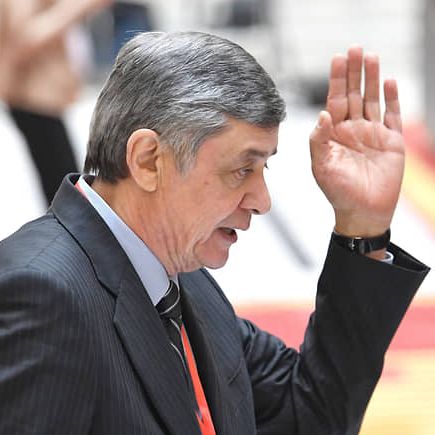
The Taliban has formally nominated a candidate to serve as ambassador to Russia, according to Zamir Kabulov, the Russian President’s Special Envoy for Afghanistan.

The Taliban has formally nominated a candidate to serve as ambassador to Russia, according to Zamir Kabulov, the Russian President’s Special Envoy for Afghanistan.
Speaking to RIA Novosti on Friday, 16 May, Kabulov confirmed that the nominee’s name has been submitted and is currently undergoing review by the Russian Ministry of Foreign Affairs and other relevant government agencies. While he did not disclose the identity of the nominee, Kabulov expressed hope that the approval process would soon conclude with a formal agreement.
Earlier this month, during a meeting with Kabulov, Taliban Foreign Minister Amir Khan Muttaqi announced that the group would soon appoint an ambassador to Russia.
At present, the Afghan embassy in Moscow is headed by Jamal Nasir Gharwal, who was appointed by the Taliban and serves as chargé d’affaires.
The nomination follows Russia’s recent decision to suspend its designation of the Taliban as a terrorist organisation. In the wake of that move, the Russian Foreign Ministry stated its intention to elevate the Taliban’s diplomatic representation in Moscow from chargé d’affaires to ambassador level.
According to RIA Novosti, Kabulov noted that the arrival of a Taliban ambassador in Moscow could pave the way for potential recognition of the Taliban-led government in Afghanistan.


The Taliban’s Supreme Court has announced that six individuals including four men and two women were publicly flogged in the Hesa Awal Kohistan district of Kapisa province.
They are punished on charges of same-sex relations between men, fleeing from home, and extramarital sex.
According to a statement issued on Friday, 16 May, the individuals were sentenced to lashes and prison terms ranging from six months to one year. The punishments were carried out in public, in the presence of local officials, court staff, attendees, and residents, after being approved by the Taliban’s Supreme Court.
Over the past 10 days, the Taliban has publicly flogged at least 55 people across Afghanistan for various alleged offences, continuing its enforcement of strict interpretations of Islamic law.
The group refers to public flogging as the implementation of “Islamic Sharia.” However, international human rights organisations have repeatedly condemned such punishments as forms of torture and violations of international law.
Just a day prior, Taliban-controlled courts also carried out public floggings of 12 individuals in the provinces of Bamiyan, Ghazni, and Parwan.
Despite widespread international criticism, the Taliban continues to impose corporal punishment and public executions as part of its judicial system, drawing concern from global rights advocates and foreign governments.

The Taliban’s Ministry for the Propagation of Virtue and Prevention of Vice has arrested several social media users, accusing them of engaging in “illegitimate” online activities.
The arrests mark a continued crackdown on digital content deemed inappropriate under the group’s strict interpretation of Islamic values.
Saif-ul-Islam Khyber, a spokesperson for the ministry, released videos of two detained TikTok users expressing regret for their actions. One of them, known online as “Haroon Pakora,” appears in what seems to be a forced video confession, stating he was detained for speaking with women during TikTok livestreams. In the video, he pledges not to interact with women again and urges women in Afghanistan and abroad not to join his live broadcasts.
The circumstances under which the video was recorded remain unclear. Some social media users have alleged that the Taliban shaved Haroon’s head during his detention.
Khyber urged content creators to use social media platforms for “education, reliable news, and legitimate business,” warning that activities involving ideological deviation, insults, ethnic discrimination, or behaviour contrary to religious values are considered crimes.
Meanwhile, Taliban intelligence forces in Baghlan province arrested another prominent TikTok user, Sher Ali Mubarez, on Tuesday, 13 May. Mubarez was known for hosting live entertainment programmes featuring humour and satire. He was detained on charges of “inappropriate activity” on social media.
The ministry reiterated that “no one has the right to use social media for inappropriate and immoral purposes.” On the same day, it declared that the “illegitimate use of social media is subject to legal prosecution.”
In 2023, the Taliban banned the use of TikTok and PUBG in Afghanistan, claiming the apps were corrupting the country’s youth. Despite the ban, TikTok remains widely popular, particularly among younger Afghans.
With traditional job opportunities having largely vanished under Taliban rule, many young people in Afghanistan have turned to platforms like TikTok and YouTube to earn a living. However, growing restrictions and increased enforcement by the Ministry for the Propagation of Virtue and Prevention of Vice threaten to eliminate one of the few remaining sources of income for Afghan youth.

A wave of criticism erupted on Thursday from Afghan political figures and civil society activists following a phone call between India’s External Affairs Minister, Subrahmanyam Jaishankar, and the Taliban’s Foreign Minister, Amir Khan Muttaqi.
Many Afghans viewed the diplomatic engagement as a betrayal of the Afghan people, warning that it signals India’s shift away from supporting democratic values in favour of geopolitical interests.
Nargis Nehan, former Afghan Minister of Mines, wrote on X: “Your enemy’s enemy is an attractive friend but will never be a reliable partner,” cautioning India against trusting the Taliban.
Responding to Jaishankar’s comments about India’s “traditional friendship with the Afghan people,” Nehan said that the Afghan people were no longer visible in India’s policy towards Afghanistan.
Prominent journalist Lina Rozbih also criticised the engagement, writing: “India is a victim of terrorism and yet it is engaging with a government like the Taliban that is consisted of terrorists!”
The backlash follows India’s warm reception of the Taliban’s condemnation of a recent militant attack in Kashmir. The attack was reportedly carried out by groups linked to Pakistan. While the Taliban had previously supported attacks on Indian embassies and personnel in Afghanistan, it has shifted its stance and now seeks improved relations with New Delhi following the collapse of the former Afghan government in 2021.
During the call, Jaishankar expressed “deep appreciation” for the Taliban’s condemnation of the Pahalgam attack and accused Pakistan of spreading misinformation aimed at driving a wedge between India and the Taliban. He referenced claims by Pakistan’s military that India had fired rockets into Afghan territory amid a recent border dispute.
Jaishankar stated on X that the two foreign ministers discussed “ways and means of taking cooperation forward.”
Bahar Mehr, a US-based Afghan political activist, described the phone call as “an embarrassing moment for India’s foreign policy,” alleging that the Taliban had manipulated India’s geopolitical calculations. “This is not realism; it is appeasement, and it betrays the people of Afghanistan,” Mehr wrote.
Fawzia Koofi, a former MP and women’s rights advocate, also weighed in, saying India had chosen to prioritise its geopolitical interests over shared democratic values.
The diplomatic exchange has reignited debate about international engagement with the Taliban, especially from countries like India that have historically supported democratic governance and civil society in Afghanistan.

Amir Khan Muttaqi, the Taliban’s Foreign Minister, is scheduled to visit Iran, China, and several other regional countries next week, according to a senior official from the group’s Ministry of Foreign Affairs.
Zakir Jalali, an official within the ministry, made the announcement on Thursday but did not provide further details regarding the dates or agenda of the visits.
Jalali's remarks came shortly after a phone conversation between Muttaqi and India’s External Affairs Minister. He highlighted the Taliban's "active foreign policy," noting that Kabul has recently hosted multiple foreign delegations.
On 11 May, the Chinese ambassador in Kabul met with Muttaqi and delivered a formal invitation from the Chinese government for an official visit.
The upcoming trip underscores the Taliban’s continued diplomatic outreach, despite lacking formal international recognition.

The Afghanistan Transitional Justice Coordination Group (TJCG) has called for an independent and international investigation into alleged war crimes committed by British Special Forces in Afghanistan, following new revelations reported by BBC News.
In a statement issued on Thursday, 15 May, the TJCG expressed grave concern over findings aired in the BBC Panorama programme on 12 May, which included accounts from former British Special Forces members detailing alleged extrajudicial killings of civilians, children, and detainees. The reports also accuse soldiers of staging combat scenes by planting weapons on victims.
The BBC investigation, based on eyewitness testimony and internal military documents, revealed a pattern of criminal conduct, systematic cover-ups, and a disregard for Afghan lives. The report also suggests that senior political figures including former Prime Minister David Cameron may have been aware of the abuses.
The Afghan rights group stated that if proven, these acts would constitute serious breaches of international humanitarian law, including violations of the Geneva Conventions, Article 8 of the Rome Statute, and Article 6 of the International Covenant on Civil and Political Rights.
Under NATO security agreements and international law, the UK is legally obligated to investigate and prosecute those responsible. The TJCG urged the British government to broaden the scope of its ongoing investigations into the conduct of its special forces to include command responsibility, patterns of systemic abuse, and potential institutional cover-ups.
The group also called for international oversight, engagement with victims’ families, and appropriate compensation for those affected.
The BBC further reported that a senior British general, who previously withheld key documents related to the alleged crimes, later oversaw the rejection of resettlement applications from hundreds of Afghan commandos who had served alongside British forces.
The TJCG emphasised that the International Criminal Court (ICC) must investigate all parties involved in Afghanistan’s conflict including the Taliban, the former Afghan government, and NATO member states such as the United Kingdom.
Founded in 2009, the TJCG is a coalition of Afghan human rights defenders, civil society organisations, and victims’ representatives working to advance justice, truth, and accountability for survivors of war and human rights abuses in Afghanistan.
Amnesty International UK also responded to the BBC report, calling the revelations serious and deeply troubling, and urged that all those implicated be subjected to fair and transparent trials in British courts.