Iran Executes Afghan Prisoner In Sistan Province, Says Rights Group
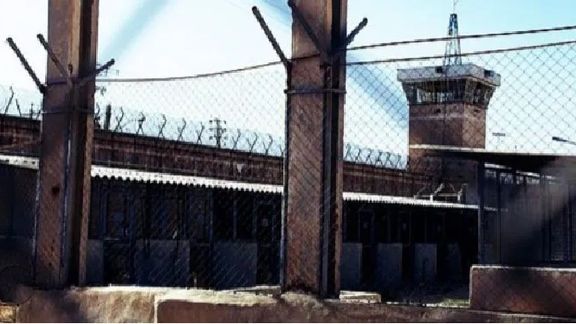
The Iran Human Rights Organisation has reported that authorities at Zabol Prison in Sistan and Baluchestan province have executed two prisoners, one of whom was an Afghan national.
The Iran Human Rights Organisation has reported that authorities at Zabol Prison in Sistan and Baluchestan province have executed two prisoners, one of whom was an Afghan national.
According to the organisation, both individuals had previously been sentenced to death by the judiciary of the Islamic Republic on charges of “premeditated murder.” The executions were carried out in the early hours of Thursday, 16 May.
The Afghan prisoner has been identified as Abdullah. The second individual, Reza Dahmardeh, was a 24-year-old Iranian of Baluch ethnicity who was reportedly sentenced to death three years ago.
To date, neither Iranian state media nor official sources have confirmed the executions.
The Iran Human Rights Organisation, which operates outside of Iran, has criticised the lack of murder classification in Iranian law, noting that death sentences are routinely issued for all types of murder, regardless of the circumstances or motives involved.
Human rights organisations based outside Iran have previously stated that executions of Afghan prisoners have increased since the Taliban assumed power in Afghanistan. According to these groups, more than 80 Afghan inmates were executed in Iran last year.

Russia is set to commence oil extraction operations in Afghanistan after signing a series of agreements with the Taliban government, officials from both sides have confirmed.
Rustam Khabibulin, head of Russia’s Trade Centre in Afghanistan, announced that the Russian company Inteco has conducted geological explorations in the country and will soon initiate drilling to extract oil. Speaking to Russia’s state news agency RIA Novosti, Khabibulin noted that the construction of an oil refinery is also planned, although no specific timeline was provided.
Nooruddin Azizi, the Taliban’s Minister of Industry and Commerce, told RIA Novosti on Saturday, 18 May, that a formal contract for oil extraction had been signed with Inteco Group. The agreement was finalised on the sidelines of the Russia–Islamic World Forum in Kazan.
On Friday, the Taliban confirmed that a total of five agreements spanning multiple sectors were signed with Russia. According to an official statement, the memorandums of understanding were signed in the presence of Abdul Ghani Baradar, the Taliban’s Deputy Prime Minister for Economic Affairs, and Alexey Overchuk, Russia’s Deputy Prime Minister, during the 16th Kazan Economic Forum.
The agreements cover cooperation in the transport sector, the expansion of trade relations, and collaboration between private companies on oil and gas extraction.
Baradar led a high-level Taliban delegation to Tatarstan to participate in the Kazan Economic Forum on Wednesday, 14 May. Upon returning to Afghanistan, Baradar described his four-day visit to Kazan as “full of achievements.”
In a significant diplomatic development, Russia has recently suspended its classification of the Taliban as a terrorist organisation and announced its acceptance of the Taliban’s ambassador in Moscow. Russia’s special envoy for Afghanistan has confirmed that the Taliban has nominated an ambassador, though the individual’s identity has not yet been disclosed.
The Taliban’s Foreign Minister, Amir Khan Muttaqi, and his Iranian counterpart, Abbas Araghchi, met in Tehran on Saturday to discuss security co-operation, water-resource management, migration and broader bilateral ties.
According to a statement from the Taliban’s Ministry of Foreign Affairs, both sides emphasised the need to strengthen diplomatic relations. Muttaqi welcomed Iran’s generosity in hosting Afghan migrants and called for their gradual, dignified repatriation to Afghanistan.
He further urged Iranian authorities to prioritise the transfer of Afghan prisoners from Iran and to ensure they receive appropriate support and facilities.
Araghchi described relations between Iran and the Taliban as “expanding” and said both parties were moving step by step into a new phase of co-operation. He highlighted recent advances in trade and transit links and reaffirmed Iran’s commitment to extending additional support and facilities to Afghan migrants. He also underscored that any return of migrants should preserve their human dignity at every stage.
Muttaqi travelled to Tehran to attend the 14th Tehran Dialogue Forum. In recent months, ties between the Islamic Republic of Iran and the Taliban have deepened across security and economic spheres, with Iran recognised as the Taliban’s leading economic partner; bilateral trade is estimated at around US$4 billion.
On a prior visit to Kabul, Araghchi announced the opening of a “new chapter” in relations, holding detailed discussions with Taliban security officials on intelligence-sharing to counter shared threats.
Iran remains particularly concerned about the activities of ISIS and Jaish al-Adl along its eastern border and the illicit trade in Afghan narcotics. While Iranian officials report a decline in opiate cultivation and production in Afghanistan, they warn that synthetic drugs continue to circulate widely.
General Qadam Shah Shahim, Chief of Staff of the National Resistance Front (NRF), has confirmed that the group’s military forces are present in various regions across Afghanistan.
Speaking to Afghanistan International, Shahim referred to recently circulated images of Khalid Amiri and Hasib Panjshiri, two prominent NRF commanders, in a mountainous area dressed in military uniforms and carrying combat gear.
“This is an instance of our forces’ presence inside Afghanistan,” Shahim said, emphasising the continued resistance against Taliban control.
In a video shared on his X (formerly Twitter) account, Hasib Panjshiri declared, “Our country is under the occupation of the terrorist Taliban.” He added, “We will continue our struggle to reclaim our land from the grip of this criminal group. We firmly believe in achieving victory.”
The statement coincided with a recent announcement from the NRF claiming responsibility for a targeted operation in Dara district of Panjshir province. According to the group, 13 Taliban fighters were killed and four others wounded during an attack around 9:00 p.m. on Friday, 17 May. The operation also resulted in the destruction of Taliban weapons and equipment.
Local residents reported hearing a loud explosion that night, with one source telling Afghanistan International that the Taliban had converted a tribal elder’s home into a military base, which was the site of the blast.
The Taliban has not commented on the reported incident.
The NRF, led by Ahmad Massoud, remains the most prominent organised armed opposition to Taliban rule, regularly claiming attacks in Panjshir and other northern provinces.
The National Resistance Front (NRF) has claimed responsibility for a targeted attack that killed 13 Taliban fighters and wounded four others in Panjshir province’s Dara district.
In a statement issued on Saturday, the NRF said the operation was carried out on the night of Friday, 17 May, against a base belonging to the Taliban’s 3rd Battalion special unit. The attack reportedly began around 9:00 p.m. and resulted in the destruction of Taliban weaponry and equipment.
Local residents in Dara district confirmed to Afghanistan International that they heard a powerful explosion that night. One source stated, “The Taliban had turned the home of a tribal elder into a military base, and the explosion occurred inside that house.”
The Taliban have not issued any official response regarding the incident.
The attack comes amid a growing media presence of key NRF figures. Newly circulated images show Khalid Amiri and Hasib Panjshiri, two prominent NRF commanders, armed and dressed in military uniforms in a mountainous location, reportedly within Afghanistan.
General Qadam Shah Shahim, former Chief of Staff of the Afghan National Army, told Afghanistan International that NRF forces continue to operate in multiple regions across the country.
The NRF, led by Ahmad Massoud, remains the most organised military opposition to the Taliban and continues to claim responsibility for sporadic attacks against Taliban positions, particularly in Panjshir and neighbouring provinces.
Indian officials have signalled a willingness to deepen engagement with the Taliban, stating they will “do whatever is necessary” to strengthen relations with Afghanistan’s de facto rulers, according to a report by The Hindu newspaper.
The statement comes in the wake of a phone conversation on Thursday between India’s External Affairs Minister, Subrahmanyam Jaishankar, and Taliban Foreign Minister Amir Khan Muttaqi. During the call, Jaishankar expressed India’s intent to increase its direct humanitarian assistance to Afghanistan.
According to The Hindu, Indian officials are reviewing a list of requests submitted by the Taliban, which was previously shared with India’s Deputy Foreign Minister, Vikram Misri, during a meeting with Muttaqi in Dubai on 8 January 2025.
While India does not officially recognise the Taliban as the legitimate government of Afghanistan, it maintains a functional relationship with the group. Analysts see the phone call as a significant development, particularly given its timing ahead of Muttaqi’s planned visits to Iran and China.
Discussions between the two ministers also reportedly touched on economic cooperation, including the strategic Chabahar Port in Iran, an important access point for Indian trade with Afghanistan, especially given restrictions through Pakistan’s border.
Following the call, India allowed 160 Afghan freight trucks carrying dried fruit to enter the country via the Attari border crossing.
India has gradually re-engaged with the Taliban after initially withdrawing all diplomatic personnel from Afghanistan in August 2021, following the collapse of the Western-backed Afghan government. Before the Taliban takeover, New Delhi had strong ties with Presidents Hamid Karzai and Ashraf Ghani, providing substantial development aid and security support.
Since 2021, India has delivered more than 50000 tonnes of wheat, 350 tonnes of medicines, 40000 litres of fertiliser, and 28 tonnes of relief materials to Afghanistan. Indian authorities have also allowed Taliban-appointed diplomats to manage Afghan embassies and consular offices in New Delhi, Mumbai, and Hyderabad.
Although the Indian Embassy in Kabul is currently operated by a technical team, consulates in Kandahar and Mazar-e-Sharif remain closed. India is also reportedly considering support for Afghan migrants deported from Pakistan, further signalling a broader shift in its approach to Taliban-ruled Afghanistan.