US Wars in Afghanistan, Iraq Lacked Clear Objectives, Says Defence Secretary
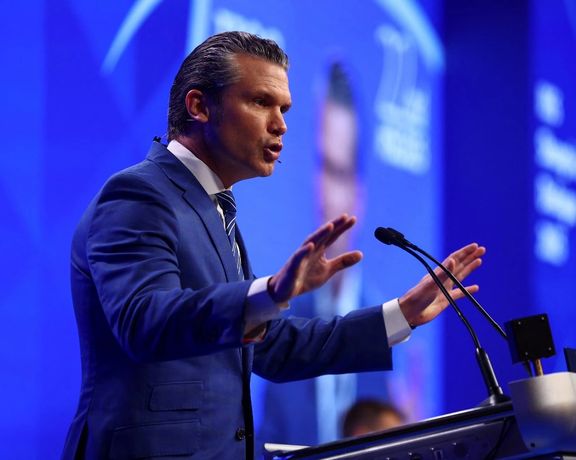
US Defence Secretary Pete Hegseth said on Saturday that America’s wars in Afghanistan and Iraq lacked clear and defined objectives, leading to years of costly involvement.

US Defence Secretary Pete Hegseth said on Saturday that America’s wars in Afghanistan and Iraq lacked clear and defined objectives, leading to years of costly involvement.
Speaking at the Shangri-La Dialogue in Singapore, Hegseth who served as a soldier in both countries, criticised Washington’s approach to the conflicts, which he described as “endless wars,” regime changes and misguided nation-building efforts.
“These costly deviations were not tied to the core and vital interests of the United States,” Hegseth said.
He argued that the wars diverted American focus from the Indo-Pacific, a region he called essential to the country’s future and prosperity.
“For an entire generation, we ignored the Indo-Pacific,” Hegseth said. “President Trump is changing that. We are not making the same mistakes.”
He added: “We’re focused on delivering for the American people, on safeguarding their security, on protecting their economic interests, and on using common sense to preserve peace in the Indo-Pacific.”
The Indo-Pacific region encompasses the Indian Ocean, the western and central Pacific, the seas connecting them, and surrounding lands.
Hegseth also described the US withdrawal from Afghanistan as “humiliating,” placing blame on the Biden administration, which he said had projected an image of a “weak and feckless” America to the world.
He cited several developments including the arrival of “21 million illegal” immigrants across the southern US border, Russia’s invasion of Ukraine, Hamas’s 7 October attack on Israel, an emboldened Iran, and the flight of a Chinese spy balloon over US airspace as consequences of what he called failures by the previous democratic administration.


Taliban Foreign Minister Amir Khan Muttaqi has welcomed Pakistan’s decision to restore full diplomatic relations with Taliban, calling it a “very positive development” for ties between the two neighbours.
The move, announced by Pakistan’s Foreign Ministry on Friday, will elevate Islamabad’s diplomatic representation in Kabul from chargé d’affaires to ambassador. The Taliban’s foreign ministry said it would reciprocate by appointing an ambassador to Pakistan.
The announcement follows a phone call between Muttaqi and Pakistani Foreign Minister Ishaq Dar. According to a statement from Pakistan’s Foreign Ministry on Sunday, the two sides also stressed the need for close cooperation on the Uzbekistan–Afghanistan–Pakistan railway project.
Dar and Muttaqi also reviewed progress on agreements reached during Dar’s visit to Kabul on April 19. Both ministers underscored the importance of building trust and maintaining regular diplomatic engagement.
Pakistan’s move comes after months of strained relations with Afghanistan’s Taliban rulers. Islamabad has accused the Taliban of harbouring militants from Tehreek-e-Taliban Pakistan, or TTP, a charge the Taliban denies. International reports, however, have found evidence of TTP fighters operating from Afghan soil.
Dar said Islamabad’s relations with the Taliban are now on a “positive trajectory” following his recent visit.

Russian Foreign Minister Sergey Lavrov has once again warned of the potential return of NATO forces to Afghanistan.
Speaking at the “Eurasian Assembly” in the city of Perm, Lavrov stated that, four years after their withdrawal, NATO is now seeking new avenues to reestablish a presence in the country.
Lavrov alleged that NATO intends to return to Afghanistan, though he did not elaborate on the specific mechanisms by which the United States or the alliance might attempt to re-engage.
This is not the first time the Russian foreign minister has voiced concerns over renewed Western involvement in Afghanistan. He has previously criticised the West’s engagement with the Taliban and warned of “hidden agendas” behind such initiatives. Lavrov condemned any efforts to restore NATO military bases in the region, describing such moves as unacceptable and likening them to “planting a new time bomb”.
“We have observed that the West is actively attempting to reenter the Afghan arena, from which it withdrew after the Taliban assumed control,” Lavrov said. “We do not object, provided that the participation of Western countries in these joint efforts is transparent and devoid of hidden motives.”
Lavrov’s remarks come amid repeated claims by former US President Donald Trump, who has expressed interest in regaining control of Bagram Airbase. Trump has argued that the United States should have maintained its hold on the base, which he claims lies only an hour from China’s nuclear facilities, and has alleged that China took control of Bagram following the US withdrawal.
The Taliban, for its part, has consistently rejected the presence of any foreign forces in Afghanistan. In response to Trump’s statements, Taliban spokesperson Zabihullah Mujahid reiterated that, under Taliban rule, foreign military forces will not be permitted on Afghan soil.
Despite Moscow’s concerns about a potential NATO return, Russia has in recent years cultivated closer ties with the Taliban. The Russian government has suspended the group’s designation as a terrorist organisation, and senior Russian officials including the Secretary of the National Security Council have visited Kabul.
In December 2024, Russian President Vladimir Putin remarked that Afghanistan’s situation was stabilising, and that Moscow had established bilateral relations with the Taliban administration that would continue to deepen.
Meanwhile, some Afghan political figures have also commented on the potential for renewed US involvement. Gulbuddin Hekmatyar, leader of Hezb-e-Islami, recently claimed in a statement that Moscow and Washington are pursuing a deal under which the United States would cede Ukraine to Russia in exchange for control over Bagram Airbase and access to American weaponry currently in Afghanistan.
Speculation intensified following a recent high-level visit to Kabul by a US delegation led by Adam Boehler and Zalmay Khalilzad. The Taliban reportedly requested that the United States transfer control of the Afghan embassy in Washington. Sources also indicated that discussions during the visit addressed the release of American hostages, the retrieval of US weaponry from Taliban hands, and other political and security matters.

Yousuf Wafa, the Taliban’s governor of Balkh province, has led a high-level delegation of northern governors to central Ghor province to assess the region’s security situation.
The delegation included Abdul Ahad Fazli, governor of Faryab; Mohammad Zarif Muzaffar, governor of Sar-e-Pul; Mohammad Shoaib Resalat, governor of Samangan; and other senior Taliban officials. They travelled to Firozkoh, the provincial capital of Ghor, with the aim of strengthening border areas and enhancing security coordination.
According to a statement from the Balkh governor’s office, the delegation met with Hayatullah Mubarak, the Taliban governor of Ghor; Ahmad Shah Dindost, commander of the 205 Al-Badr Army Corps for the south-western zone; as well as other civilian and military officials based in the province.
During the visit, the security status of Ghor’s Al-Farooq, Taywara, Allahyar, and Charsadda districts was reviewed. Officials exchanged plans and coordinated proposals to implement more effective security measures across the province.
Speaking during the meetings, Yousuf Wafa stressed the importance of safeguarding Afghanistan from all threats. He also called for the maintenance of positive relations with neighbouring countries, particularly other Islamic nations, in accordance with directives from Taliban supreme leader Hibatullah Akhundzada. Wafa added that fostering such international engagement could contribute to improvements in Afghanistan’s economic, political, and cultural landscape.
Ghor remains one of Afghanistan’s most underdeveloped provinces. Its mountainous terrain has long served as a corridor for militant movements between the country’s south and north. While previous reports highlighted the presence of ISIS in the region, the Taliban claimed last year to have dismantled the group’s network in Firozkoh.
Considered a close ally of the Taliban’s leader, Wafa has recently assumed a prominent role in convening regular meetings of northern governors. His visit to central Afghanistan underscores his growing influence within the Taliban administration.

The Taliban inaugurated two major renewable energy projects in Herat province on Saturday: a 43.2-megawatt wind power plant and a 5-megawatt solar energy facility.
According to Da Afghanistan Breshna Sherkat (DABS), the state-run power company, senior Taliban officials were joined by diplomats and representatives from 77 Turkish companies at the opening ceremony.
Speaking at the event, Mullah Abdul Ghani Baradar, Deputy Prime Minister for Economic Affairs, reiterated the Taliban’s commitment to promoting renewable energy as part of its efforts to protect the environment.
“These projects will provide clean and reliable electricity,” Baradar stated during the ceremony.
The Taliban’s push for renewable energy comes despite the group’s significant reliance on coal revenue in recent years. Reports suggest that unregulated and excessive extraction of thousands of tonnes of coal has caused considerable environmental degradation.
In November 2023, Bakhtar News Agency, controlled by the Taliban, reported that the group had registered 31 state-owned and 1,028 privately operated coal mines across northern provinces.
According to the report, approximately 1,000 tonnes of coal are extracted daily from these northern mines alone.
In December 2024, the Taliban’s Ministry of Industry and Commerce announced that roughly 654,000 tonnes of coal had been exported over an eight-month period to markets in Pakistan, China, Iran, India, and Türkiye, generating a total revenue of $605 million for the group.
The contrast between the Taliban’s coal-driven income and its promotion of green energy projects underscores the complex dynamics of the group’s economic and environmental policies.

The cabinet of Pakistan’s Khyber Pakhtunkhwa province has passed a resolution denouncing the federal government’s policy towards Afghanistan as “ineffective”. The cabinet members called for an immediate review of these policies.
According to the resolution, the current approach has fuelled rising terrorism, heightened tensions between the two countries, deepened public resentment, and disrupted cross-border trade.
The resolution was adopted during a cabinet meeting held on Friday, chaired by Chief Minister Ali Amin Gandapur.
Both the chief minister and cabinet members called for swift and concrete measures to rebuild trust between Pakistan and Afghanistan and to lay the foundation for lasting peace in the region.
Dawn newspaper reported that the resolution urged the provincial government to pressure federal authorities to urgently revise and reform its Afghanistan policy.
In addition, the cabinet demanded greater provincial autonomy to “play an effective role in resolving all outstanding issues through direct and meaningful dialogue with Afghanistan, so that lasting peace and stability in the region can be achieved.”
The resolution also underscored the fact that Khyber Pakhtunkhwa has endured terrorism for decades, and that its people continue to seek a lasting solution to this ongoing crisis.
Chief Minister Gandapur has previously called on the federal government to formally delegate to him the responsibility of negotiating with the Afghan Taliban, arguing that dialogue with the Taliban represents the only viable path to peace in Khyber Pakhtunkhwa.
In response, officials in Islamabad have maintained that provincial authorities do not have the mandate to conduct foreign policy or engage in negotiations with Taliban representatives.