• العربية
  • پښتو
  • فارسی
Brand
  • Afghanistan
  • Sport
  • Markets
  • Afghanistan
  • Sport
  • Markets
  • Theme
  • Language
    • العربية
    • پښتو
    • فارسی
  • Afghanistan
  • Sport
  • Markets
All rights reserved for Volant Media UK Limited
volant media logo

Arab & Islamic Nations Urge Immediate Ceasefire In Israel-Iran Conflict

Jun 17, 2025, 09:25 GMT+1

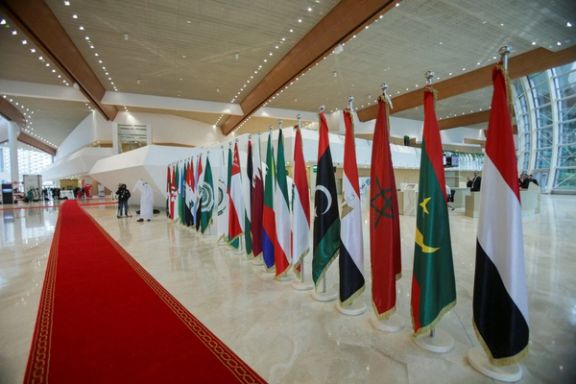
A coalition of Arab and Islamic countries has issued a joint statement condemning Israel’s attacks on Iran and calling for an immediate halt to hostilities, warning that continued conflict poses a grave threat to regional peace and stability.

The statement, released as the Israel-Iran conflict entered its fifth day, urged both sides to cease military actions and return to the negotiating table. It also called for all regional states to join the Treaty on the Non-Proliferation of Nuclear Weapons (NPT).

Signatories to the statement include Türkiye, Egypt, Qatar, Oman, the United Arab Emirates, Saudi Arabia, Bahrain, Iraq, Kuwait, Pakistan, and several other Arab and Islamic nations.

The countries underscored the urgent need to establish a Middle East free of nuclear and other weapons of mass destruction. They stressed that diplomatic engagement remains the only viable path toward a sustainable agreement on Iran’s nuclear programme.

“Military solutions cannot provide lasting answers to the region’s crises,” the statement read, urging international support for renewed negotiations and regional disarmament efforts.

Most Viewed

Female Ismaili Entrepreneur Shot Dead In Badakhshan
1

Female Ismaili Entrepreneur Shot Dead In Badakhshan

2

Afghanistan May Not Remain Intact In Future, Says Pakistani Analyst

3

French Parliament Hosts Two-Day Meeting On Afghanistan

4

Taliban, Iran Working On Surveillance App For Afghan Users, Say Sources

5

Pakistan Welcomes Local Ceasefire Agreement In Kunar & Nuristan Border Areas

•
•
•

More Stories

Kremlin Rejects Talk Of Regime Change In Iran, Cites National Cohesion

Jun 16, 2025, 15:49 GMT+1

The Kremlin on Monday dismissed suggestions of regime change in Iran, following remarks by Israeli Prime Minister Benjamin Netanyahu, and emphasised what it described as strong social cohesion within the Islamic Republic.

Netanyahu told Fox News on Sunday that regime change “could certainly be the result because the Iran regime is very weak,” referring to recent developments in the region.

In response, a Kremlin spokesperson said Russia had taken note of Netanyahu’s comments but observed no signs of instability within Iran. “We see strong cohesion in Iranian society,” the spokesperson said.

When asked whether Russian President Vladimir Putin could serve as a mediator between Israel and Iran, the Kremlin noted that Moscow maintains communication with both parties and is prepared to intervene diplomatically if needed.

The spokesperson also reiterated that Russia’s earlier proposal to transfer Iran’s uranium stockpile to Russian territory remains open, though acknowledged that ongoing hostilities have complicated the prospects for such a move.

French President Emmanuel Macron voiced scepticism about Moscow’s role as a neutral broker. “I do not believe that Russia, which is now engaged in a high-intensity conflict and has decided not to respect the UN Charter for several years now, can be a mediator,” Macron said on Sunday.

Nonetheless, Kirill Dmitriev, a senior Russian official, reiterated Moscow’s readiness to help resolve the crisis, stating that Russia could play a key role in mediating between Iran and Israel.

Meanwhile, former US President Donald Trump also weighed in, saying he would support Putin taking on a mediation role in the growing confrontation.
Iran Moves Toward Possible Withdrawal From NPT

Jun 16, 2025, 13:32 GMT+1

Iran’s Foreign Ministry announced on Monday that members of parliament are drafting legislation that could pave the way for Tehran to withdraw from the Nuclear Non-Proliferation Treaty (NPT), amid rising tensions over its nuclear programme.

Foreign Ministry spokesperson Esmail Baghaei confirmed at a press conference that the proposed bill is under development and that coordination between the government and the Islamic Consultative Assembly is ongoing.

“The proposed plans are being drafted, and necessary coordination with the parliament is underway,” Baghaei said. “Iran will make an appropriate decision based on developments. We are in close contact with the parliament, and any decisions passed by the Islamic Consultative Assembly will be binding for the government.”

Iran ratified the NPT in 1970. The treaty allows signatories to pursue peaceful nuclear energy while obliging them to renounce nuclear weapons development and cooperate with the International Atomic Energy Agency (IAEA).

Tensions over Iran’s nuclear activities escalated last week after Israel launched airstrikes, alleging that Tehran was close to acquiring a nuclear weapon. The Islamic Republic has repeatedly insisted its nuclear programme is solely for peaceful purposes.

However, the IAEA recently reported that Iran has violated its obligations under the NPT framework, further fuelling international concern over its nuclear ambitions.

India Urges Citizens To Leave Tehran Immediately

Jun 16, 2025, 11:46 GMT+1

The Indian Embassy in Tehran has issued an urgent advisory calling on all Indian nationals to leave the Iranian capital immediately and relocate to safer areas within the country, as tensions between Iran and Israel continue to rise.

According to reports, the evacuation of Indian students from three medical universities in Tehran has already begun. Indian officials stressed that the directive applies to all citizens, regardless of visa status, and noted that foreign nationals will not be permitted to accompany them during evacuation efforts.

With Iran’s airspace reportedly closed, Indian media have indicated that air evacuations are currently not feasible. Authorities are instead exploring alternative routes, including a potential sea evacuation via the port of Bandar Abbas in southern Iran.

There have also been reports that some Indian nationals may be able to exit Iran through its northern border with Azerbaijan. However, it remains unclear whether land routes through Azerbaijan or Armenia will be formally used as part of the evacuation strategy.

Officials have not ruled out the possibility of using Iran’s eastern border with Afghanistan as a contingency option. The Indian government has yet to release detailed plans for the evacuation process.

Iranian Foreign Ministry: 'We Will Continue the War'

Jun 16, 2025, 10:52 GMT+1

Esmail Baghaei, spokesperson for the Islamic Republic of Iran’s Foreign Ministry, declared on Monday that Iran would continue its military campaign, rejecting international appeals for restraint.

Speaking at a press conference, Baghaei said, “We have launched a valiant battle and will continue it with strength.” He dismissed calls for de-escalation, stating, “Ambiguous remarks calling on Iran to show restraint are nothing but nonsense.”

His comments come a day after Iranian Foreign Minister Abbas Araghchi stated that Iran would halt its operations if Israel stopped its attacks. The contrast between the two statements reflects apparent divisions within the government’s messaging as tensions in the region continue to escalate.

No response has yet been issued by Israeli officials regarding his remarks.

Israel Not Seeking Regime Change In Iran, Says Foreign Minister Sa’ar

Jun 16, 2025, 10:06 GMT+1

Israeli Foreign Minister Gideon Sa’ar has said that Israel is not pursuing regime change in Iran, stressing that the decision about Iran’s future lies with its people.

In an interview with CNN, Sa’ar stated, “The goal is not regime change. That’s for the Iranian people to decide. We, Israel, do not see the Iranian people as our enemies.”

His remarks come amid heightened tensions and ongoing hostilities between Israel and Iran. When asked whether the removal of Iran’s leadership, headed by Supreme Leader Ali Khamenei, was among Israel’s objectives, Sa’ar reiterated that Israel’s focus is not on toppling the regime but on defending itself.

Sa’ar acknowledged that Israel anticipated civilian casualties resulting from Iran’s retaliatory operations but said Israel had “no other choice.”

“When we made this historic, difficult decision, we knew we would face hard times and suffer losses,” he said. “But even so, we had no other choice.”

He further warned that Israeli intelligence assessments indicated Iran could potentially develop a nuclear weapon within six months.

The foreign minister also expressed appreciation for US military support but noted that Washington would make its own decisions regarding involvement in targeting Iranian military infrastructure.