• العربية
  • پښتو
  • فارسی
Brand
  • Afghanistan
  • Sport
  • Markets
  • Afghanistan
  • Sport
  • Markets
  • Theme
  • Language
    • العربية
    • پښتو
    • فارسی
  • Afghanistan
  • Sport
  • Markets
All rights reserved for Volant Media UK Limited
volant media logo

Iran Violating Afghan Refugees’ Dignity With Forced Deportations, Says Rights Group

Jul 1, 2025, 09:22 GMT+1

Iran is forcibly deporting Afghan refugees in breach of humanitarian principles and international law, the International Federation of Human Rights Defenders in Exile said Tuesday.

In a statement issued 1 July, the federation accused Iranian authorities of “force, humiliation and violent behaviour” toward Afghan asylum seekers, saying such actions “seriously violate human dignity.”

“The situation in Afghanistan remains critical and insecure, and the power structure that drove people to flee has not changed,” the group said. “The forced deportation of thousands of Afghan migrants without examining their asylum claims, humanitarian needs, health conditions or the life-threatening dangers awaiting them is a clear breach of the principle of non-refoulement, a cornerstone of international refugee law.”

The organisation urged the United Nations and other international bodies to condemn what it called Iran’s “systematic” human-rights violations and to take effective action to halt further expulsions.

Most Viewed

Explosions & Aircraft Activity Reported Over Kabul
1

Explosions & Aircraft Activity Reported Over Kabul

2

Nearly 23,000 Militants Operating In Afghanistan, Says Russian Security Chief

3

Afghanistan Instability Is A Direct Regional Security Threat, Says Russia

4

EU Again Calls For Lifting Restrictions On Afghan Women & Girls

5

More Than One Million Added To Afghanistan’s Poor Under Taliban Rule, Says UN

•
•
•

More Stories

Third Doha Working Group Meeting Opens With Taliban Participation

Jun 30, 2025, 17:13 GMT+1

The third round of the Doha Working Group meetings began Monday in the Qatari capital, with representatives of the Taliban and several foreign diplomats in attendance. The two-day event focuses on counter-narcotics efforts and private sector development in Afghanistan.

The Taliban delegation comprises seven officials from the Ministries of Public Health, Interior, Foreign Affairs and Agriculture. The meetings are part of the broader UN-led Doha Process, which seeks to facilitate dialogue and regional cooperation on Afghan affairs.

Mohammad Sadiq, Pakistan’s special envoy for Afghanistan, also confirmed his participation in what he described as an “important informal discussion” held on the sidelines of the meeting. In a message posted on social media, he said the dialogue involved special representatives and ambassadors from Pakistan, China and Russia, reflecting what he called a shared commitment to regional stability and cooperation.

Despite these developments, some analysts have questioned the political significance of the gathering. Ahmad Saeedi, a political commentator, said the low-level representation from the Taliban and the absence of senior diplomats from major powers had undermined the credibility of the talks.

“This meeting appears to be more of a low-profile event than a meaningful platform capable of bringing about change in Afghanistan,” Saeedi said.

Observers note that while Afghanistan continues to face escalating humanitarian, economic and human rights crises, the Doha meeting has so far failed to meet international or domestic expectations. Critics point to the lack of a clear framework for political dialogue and the narrow focus on technical issues as key shortcomings.

The Doha Process, launched following the Taliban’s return to power in 2021, has aimed to provide a space for international engagement on Afghanistan. However, the absence of inclusive political discourse and limited engagement with Afghan civil society have led some to question its long-term effectiveness.
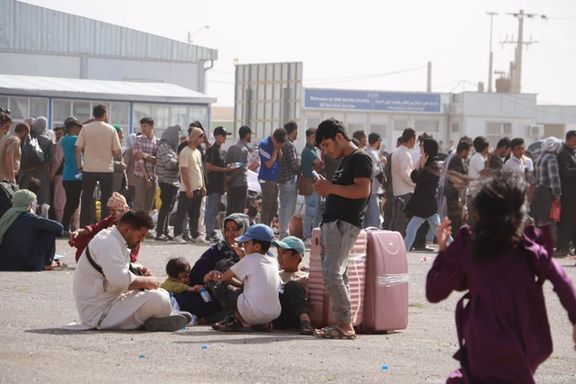
Over 70 Percent Of Afghan Migrants Are Being Forcibly Deported, Says Iranian Official

Jun 30, 2025, 16:22 GMT+1

More than 70 percent of undocumented Afghan migrants are being forcibly deported from Iran, according to a senior official from the country’s Foreign Ministry.

Ahmad Masoumifar, head of the Foreign Ministry’s office in Iran’s northeast, confirmed that the majority of recent returns are involuntary. Speaking on Monday, 30 June, he said that between 22 and 28 June, the first week of the month of Saratan in the Solar Hijri calendar, around 85000 undocumented Afghans were deported via the Dogharoun border crossing.

Masoumifar stated that only 25 to 30 percent of Afghan migrants return voluntarily, while the remaining 70 to 75 percent are deported by force. He added that the pace of deportations has intensified ahead of a 6 July deadline issued by Iran’s Ministry of Interior for undocumented migrants to leave the country.

According to Masoumifar, approximately 10000 Afghans were deported over two days, 27 and 28 June, and around 21000 were returned on 26 June alone.

He noted that Afghan migrants who opt for voluntary return are permitted to bring their personal belongings with them to the border for transfer into Afghanistan.

The remarks appear to contradict earlier claims by the governor of Taybad, who stated that more than 90 percent of undocumented Afghan migrants had left the country voluntarily.

Iran has seen a sharp rise in deportations in recent weeks, amid growing international concern over the treatment of Afghan migrants and the humanitarian implications of mass returns.

Efforts Underway To Redefine Ties With Taliban In Positive Direction, Says Pak FM

Jun 30, 2025, 14:53 GMT+1

Pakistani Foreign Minister Ishaq Dar has said that efforts are ongoing to redefine Pakistan’s relationship with the Taliban along a “positive trajectory,” while reiterating calls for the group to prevent the use of Afghan territory by insurgents.

Speaking on Monday at an event marking the 52nd anniversary of the Institute of Strategic Studies Islamabad, Dar emphasised that regional cooperation, especially through economic diplomacy, remains central to Pakistan’s foreign policy.

“In collaboration with China, a trilateral mechanism involving Afghanistan has been established to reframe our relations with Kabul in a constructive and forward-looking manner,” Dar said.

He highlighted his 19 April 2025 visit to Kabul and the China-Pakistan-Afghanistan Trilateral Ministerial Meeting held on 20 May 2025 in Beijing as significant steps towards fostering regional stability and cooperation.

Dar also confirmed that Pakistan has agreed to extend the China-Pakistan Economic Corridor (CPEC) into Afghanistan, a move he described as part of broader efforts to promote regional connectivity and economic integration.

“Having made sincere efforts in Afghanistan’s interest, it is our legitimate expectation that the Afghan Interim Government will take all necessary steps to ensure that Afghan soil is not used for terrorism against any country, especially Pakistan,” he said.

The foreign minister concluded by reaffirming that a peaceful, stable, united and prosperous Afghanistan is in Pakistan’s “vital national interest.”

Nearly 100000 Afghan Migrants Deported In One Week, Confirms Iranian Official

Jun 30, 2025, 11:16 GMT+1

An Iranian official has confirmed that nearly 100000 undocumented Afghan migrants were deported from Iran in the past week. The confirmation comes amid mounting criticism from rights groups over the treatment of Afghan nationals in Iran.

Hossein Jamshidi, governor of Taybad district in northeastern Iran, said on Sunday, 29 June, that more than 95000 Afghans had been identified across 11 provinces and deported via the Dogharoun border crossing with Afghanistan.

Jamshidi, who visited the border to oversee the return process, told reporters that approximately 8000 Afghans are being returned daily. “Undocumented Afghan nationals identified across the country are returned to Afghanistan through the Dogharoun border after legal procedures,” he said, adding that 250 buses are used daily to transport migrants.

He claimed that more than 90 percent of those deported had “voluntarily” left Iran. However, that assertion contradicts reports from human rights organisations and international bodies, which cite growing pressure and an intensifying wave of forced deportations.

While Iranian authorities insist that only undocumented migrants are being removed, numerous Afghan migrants, including those with valid passports and visas, have reported being detained and expelled. Testimonies collected by rights groups and media outlets also allege cases of violence, mistreatment, and the confiscation of personal belongings by Iranian security forces.

The deportations come amid a sharp increase in returns of Afghan migrants from Iran, with international agencies warning of a deepening humanitarian crisis at Afghanistan’s borders.

Afghan Migrants Not Linked To Enemy Spies, Says Former Iranian Diplomat

Jun 30, 2025, 10:17 GMT+1

A former senior Iranian diplomat has cautioned against conflating Afghan migrants with foreign intelligence threats, urging authorities to adopt a more humane and measured approach in dealing with migration issues.

Rasoul Mousavi, former Director General for South Asian Affairs at Iran’s Ministry of Foreign Affairs, wrote in an article published by a domestic Iranian outlet that Afghan migrants are “not aligned with enemy spies” and should not be treated as security threats.

“Managing issues related to Afghan migrants in Iran requires a patient, precise approach based on human dignity,” Mousavi stated.

His remarks follow a wave of arrests during Iran’s recent 12-day conflict with Israel, during which several Afghan nationals were detained on allegations of collaborating with Israeli intelligence. Iranian state media released footage of two Afghan men purportedly confessing to ties with Israel, though the conditions under which the video was recorded remain unclear.

In the aftermath of the ceasefire with Israel, the Iranian government significantly accelerated deportations of Afghan migrants, with returns reaching unprecedented levels.

Mousavi, a veteran diplomat with extensive experience in Afghan affairs, emphasised the longstanding cultural and religious ties between Afghans and Iranians. “As someone who has long been involved with Afghanistan and knows many Afghans personally, I can say with confidence that their hatred for Israeli spies and the enemies of Iran and Muslims is no less than ours, if not greater,” he wrote.

He urged Iranian authorities to carefully differentiate between genuine security threats and the broader undocumented migrant population. “There is a clear distinction between spies and those linked to enemy intelligence services, and ordinary Afghan migrants who have no connection to such activities,” he said.