• العربية
  • پښتو
  • فارسی
Brand
  • Afghanistan
  • Sport
  • Markets
  • Afghanistan
  • Sport
  • Markets
  • Theme
  • Language
    • العربية
    • پښتو
    • فارسی
  • Afghanistan
  • Sport
  • Markets
All rights reserved for Volant Media UK Limited
volant media logo

No Rush To Recognise Taliban, Says Pakistani Official
Jul 6, 2025, 14:41 GMT+1

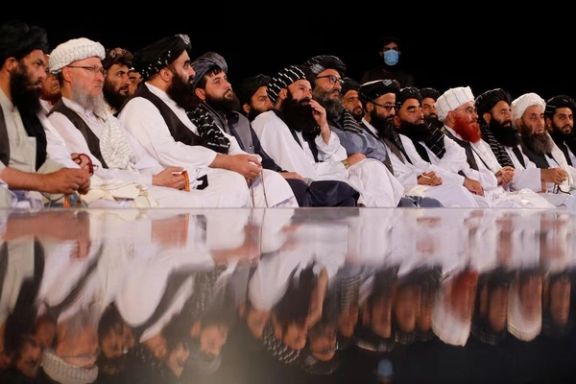
A senior Pakistani official has said there is no urgency for Islamabad to formally recognise the Taliban administration, despite maintaining extensive unofficial ties with the group.

“We, of course, will take a decision keeping in view our national interest. I can tell you there is no hurry,” the official told The Express Tribune on condition of anonymity.

The remarks come just days after Russia became the first country to formally recognise the Taliban as the official government of Afghanistan raising its flag over the Afghan embassy in Moscow. Some analysts believe the move could open the door for other regional powers to follow suit.

According to the report, Pakistani officials were not surprised by Russia’s decision, noting that Moscow had already signalled its acceptance of Taliban rule, seeing no viable alternative. Russia’s decision is also understood to be driven by its desire to counter terrorist threats and safeguard strategic interests in the region. Analysts say the Kremlin is concerned that disengagement could leave a vacuum to be filled by rivals such as the United States.

At a press briefing on Friday, a spokesperson for Pakistan’s Ministry of Foreign Affairs responded cautiously to Russia’s announcement, stating that such matters are between two sovereign states. While Islamabad has not yet formally recognised the Taliban regime, it has agreed to upgrade diplomatic ties.

Last month, following a trilateral meeting in Beijing involving the foreign ministers of Pakistan, Taliban, and China, Islamabad and Kabul agreed to elevate their diplomatic engagement, including the formal appointment of ambassadors in both capitals. China reportedly played a key role in brokering the agreement, hoping to promote regional stability and security.

Despite progress, one major factor behind Pakistan’s hesitation to formally recognise the Taliban is the ongoing concern over terrorist safe havens in Afghanistan. However, recent Taliban actions have been viewed by Islamabad as constructive. These include steps against Afghan nationals affiliated with Tehreek-e-Taliban Pakistan (TTP) and a decree from the Taliban’s supreme leader banning Afghans from participating in “jihad” against Pakistan.

There are also unconfirmed reports that the Taliban have disarmed militant groups near the Afghan-Pakistan border following recent terrorist attacks in North Waziristan.

Sources suggest the Taliban now see it in their interest to address the security concerns of Pakistan and other neighbouring countries.

Bilateral relations have gradually improved since Pakistani Foreign Minister Ishaq Dar’s visit to Kabul in April, with increased high-level exchanges underway. Taliban Foreign Minister Amir Khan Muttaqi is expected to visit Islamabad later this month to review bilateral ties and follow up on commitments made during Dar’s visit. His trip had been postponed due to the recent Iran-Israel conflict.

Most Viewed

Female Ismaili Entrepreneur Shot Dead In Badakhshan
1

Female Ismaili Entrepreneur Shot Dead In Badakhshan

2

Afghanistan May Not Remain Intact In Future, Says Pakistani Analyst

3

French Parliament Hosts Two-Day Meeting On Afghanistan

4

Pakistan Welcomes Local Ceasefire Agreement In Kunar & Nuristan Border Areas

5

Taliban, Iran Working On Surveillance App For Afghan Users, Say Sources

•
•
•

More Stories

More Than 26000 Afghans Deported From Iran In A Single Day, Says Taliban

Jul 6, 2025, 11:18 GMT+1

The Taliban’s High Commission for Migrants’ Issues has reported that 26320 Afghan migrants were deported from Iran on Saturday, 5 July, one of the highest daily figures recorded in recent months.

In a statement issued Sunday, the commission said 12574 individuals entered Afghanistan through the Islam Qala border crossing, while 13746 crossed via Pul-e Abrisham in Nimruz province.

The commission stated that the deported migrants collectively received 40.7 million Afghanis in humanitarian assistance. Of those returned, 1257 individuals have so far been relocated to seven northern provinces: Baghlan, Kunduz, Takhar, Balkh, Jowzjan, Badakhshan and Sar-e Pol.

Separately, the Taliban governor’s office in Nimruz reported that at least 65000 Afghan migrants entered the country through the Pul-e Abrisham crossing over the past week alone.

Iran has intensified its deportation of undocumented Afghan nationals in recent months, citing border security and economic pressures. Rights groups and humanitarian organisations have raised concerns about the scale of the returns and the lack of support services for returnees amid Afghanistan’s ongoing humanitarian crisis.

Gunmen Kill Aga Khan Foundation Religious Affairs Official In Badakhshan

Jul 6, 2025, 10:14 GMT+1

Armed men have shot and killed Fazl Ahmad Paeez, head of Religious Affairs for the Aga Khan Foundation in the Zebak district of Badakhshan province, local sources told Afghanistan International.

According to eyewitnesses, unidentified gunmen stormed Paeez’s home on the evening of Friday, 4 July, forcibly dragged him outside, and executed him. Graphic images obtained by Afghanistan International show his bloodied body at the scene.

Local Taliban authorities have not yet commented on the killing.

This marks the second targeted killing of individuals affiliated with the Ismaili community in recent months, fuelling concerns over mounting pressure and persecution faced by the religious minority since the Taliban’s return to power.

Last month, Sayed Qiyamuddin, a resident of Yamgan district in Badakhshan and an employee of the World Health Organization, was reportedly tortured and killed in Jalalabad under similar circumstances.

Multiple reports have surfaced in recent years alleging that members of the Ismaili community in Badakhshan have been harassed, threatened, and in some cases, forced to convert. Last year, Taliban-appointed district governor Jumakhan Fateh in Nusa was accused of coercing dozens of Ismailis into renouncing their faith.

Sources in the province claim the Taliban have also established “jihadist schools” in Ismaili-populated areas and deployed Sunni clerics to pressure the community into religious conformity.

Prince Karim Aga Khan, the spiritual leader of Ismaili Muslims worldwide, passed away last year in Portugal and was buried in Egypt. While international leaders, including the UN Secretary-General, issued public condolences, the Taliban offered no official response.

The targeted violence against the Ismaili minority in Afghanistan has drawn increasing concern from human rights groups, who warn that religious pluralism in the country is under grave threat.

Russia’s Recognition Of Taliban Risks Legitimising Abuse, Warns UN Rapporteur

Jul 6, 2025, 09:24 GMT+1

Richard Bennett, the United Nations Special Rapporteur on the human rights situation in Afghanistan, has voiced strong criticism of Russia’s recent move to recognise the Taliban administration, warning that it sets a dangerous precedent.

In a post on X (formerly Twitter) on Saturday, Bennett expressed disappointment over Moscow’s decision, arguing that recognising a regime with a record of systemic human rights abuses particularly against women and girls risks legitimising repression.

“Disappointed by Russia’s recognition that sets a dangerous precedent, emboldening regimes in Afghanistan & beyond that violate human rights with impunity,” he wrote.

Russia formally recognised the Taliban as the government of Afghanistan earlier this month, raising the group’s flag over the Afghan embassy in Moscow, becoming one of the first major powers to take such a step since the group seized control in August 2021.

Iran Arrests Two Afghans, Eight Europeans In Wave Of Post-War Detentions

Jul 5, 2025, 17:41 GMT+1

The Islamic Republic has arrested at least 900 people since the recent conflict with Israel, including two Afghan nationals and eight European citizens, according to a new report by the Hengaw Human Rights Organisation.

Despite a 10-day ceasefire, Hengaw reports that Iranian authorities continue to carry out mass arrests, accusing most detainees of espionage for Israel, spreading propaganda against the regime, or disturbing public order.

While details regarding the two Afghan nationals remain unclear, Tasnim News Agency previously released a video during the 12-day war that allegedly showed the pair’s confessions. Hengaw did not confirm the circumstances under which the confessions were obtained, raising concerns about due process and coercion.

The rights group also reported that at least 40 women were among those arrested across the country during the post-war crackdown. One individual reportedly took their own life while attempting to flee the country and avoid arrest.

Among the eight foreign nationals detained, at least one woman and three Ukrainian citizens were arrested in Iran’s Isfahan Province.

Meanwhile, Iran’s judiciary has passed new legislation imposing harsh penalties on individuals accused of collaborating with foreign media during wartime. Under the new law, those found guilty of sending images or videos to foreign outlets could face 15 to 25 years in prison and be permanently barred from government employment.

These cases are being fast-tracked through the Revolutionary Court system.

Hengaw described the legislation and ongoing detentions as part of a broader campaign to suppress free expression and independent reporting. The group noted that under the Islamic Republic’s revised legal code, collaboration or espionage involving US or Israeli intelligence services is punishable by death.

Kazakh PM Signals Willingness To Invest In Torghundi–Herat Railway At ECO Summit

Jul 5, 2025, 16:33 GMT+1

Kazakh Prime Minister Oljas Bektenov has announced his government’s readiness to invest in the Torghundi–Herat railway project, describing Afghanistan as a vital bridge between Central and South Asia.

Speaking at the 17th Economic Cooperation Organization (ECO) summit on Friday, Bektenov said the construction of the Trans-Afghan railway would boost regional development and connectivity.

The summit, held in the Azerbaijani city of Khankendi, brought together leaders and representatives from Iran, Türkiye, Kyrgyzstan, Tajikistan, Turkmenistan, Uzbekistan, and a Taliban delegation led by Deputy Prime Minister for Economic Affairs Abdul Ghani Baradar.

According to the Astana Times, Bektenov met with Baradar on the sidelines of the summit to discuss expanding cooperation in trade, logistics and agriculture.

Specifically addressing the Torghundi–Herat railway, Bektenov confirmed that Kazakhstan is prepared to proceed with the project, noting that a memorandum of understanding would be signed between the two parties in the near future.

The Taliban had earlier stated that Kazakhstan intends to invest $500 million in the broader Torghundi–Herat–Spin Boldak railway project.