Pakistan Police Issue 72-Hour Deadline For Afghan Migrants To Leave Balochistan

Police in Kalat, a city in Pakistan’s Balochistan province, have issued a 72-hour ultimatum for Afghan migrants to leave the country and return to Afghanistan.

Police in Kalat, a city in Pakistan’s Balochistan province, have issued a 72-hour ultimatum for Afghan migrants to leave the country and return to Afghanistan.
The warning, released Monday by local authorities, states that those who fail to comply will face serious legal action. Pakistan’s federal officials have not yet commented on the directive.
The announcement comes amid growing concerns among Afghan migrants in Pakistan, many of whom say the country’s Interior Ministry suspended the visa renewal process for Afghans three weeks ago.
Last week, reports surfaced of 150 Afghan nationals with valid Proof of Registration (PoR) cards being detained and deported from Islamabad.
Pakistan and Iran have both intensified deportation operations targeting Afghan migrants in recent weeks, raising alarms among humanitarian organisations.
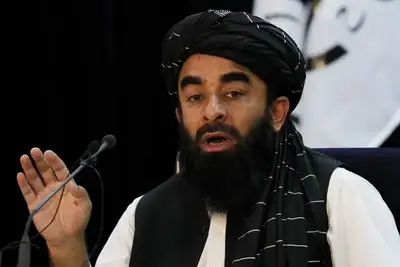
The Taliban have banned the sale of certain children’s toys in Kandahar, including dolls, according to local sources.
Officials from the Ministry for the Propagation of Virtue and the Prevention of Vice have reportedly declared the sale of a range of toys as impermissible. Shopkeepers in the province were instructed to remove the prohibited items from their shelves.
Since returning to power nearly four years ago, the Taliban have steadily restricted various recreational activities and entertainment products across Afghanistan. The recent ban is part of a broader campaign by the authorities to impose stricter interpretations of their social codes.
The ministry has also stepped up enforcement in Kabul, where dozens of girls have been detained in recent days. Authorities have not provided public justification for the arrests.

The Taliban have arrested Russian anthropologist Svyatoslav Kavurin in the northern province of Kunduz and transferred him to Kabul. According to Russian state media, the Russian Embassy is actively following the case.
Kavurin is affiliated with the Institute of Oriental Studies at the Russian Academy of Sciences. Reports indicate that his current whereabouts are unknown.
Prior to his detention, Kavurin reportedly posted a message on his Telegram account stating he had been arrested on suspicion of attempting to smuggle jewellery. He noted that he was intermittently allowed access to his mobile phone.
No further updates have been posted to his Telegram account since the original message, which was shared more than 24 hours ago. Relatives and colleagues have reported no contact with him since Saturday evening.
Russian media have confirmed that diplomatic efforts are under way to clarify the circumstances of his arrest. The Russian Embassy in Kabul stated it is monitoring the situation.

Pakistan’s Interior Minister, Mohsin Naqvi, arrived in Kabul on Sunday, leading an official delegation for talks with the Taliban.
He was accompanied by Mohammad Sadiq, Pakistan’s Special Representative for Afghanistan, and another senior official from the Interior Ministry.
Mohammad Nabi Omari, Deputy Interior Minister of the Taliban, welcomed the Pakistani delegation at Kabul Airport.
Sources earlier told Afghanistan International that Naqvi is expected to hold discussions with Taliban Interior Minister Sirajuddin Haqqani on security issues.
Relations between the Taliban and Pakistan have remained tense and inconsistent since the Taliban returned to power in Afghanistan. Islamabad accuses the Taliban of sheltering Tehreek-e-Taliban Pakistan (TTP) fighters, who allegedly use Afghan territory to launch cross-border attacks against Pakistan.
Taliban officials have consistently denied these allegations, claiming that Pakistan’s internal security failures are being unfairly blamed on Afghanistan.

The Taliban foreign minister has denounced the International Criminal Court’s decision to issue arrest warrants for the group’s leader and chief justice, calling it “unjust” and “politically motivated.”
Amir Khan Muttaqi said the ICC’s ruling was “unenforceable” and claimed the Taliban bears no responsibility for it.
Speaking at a gathering at the Taliban’s Foreign Ministry on Sunday, Muttaqi asserted that the group’s declaration of a general amnesty had saved hundreds of thousands of lives and ensured security across the country.
He also said the Taliban had begun what he described as a “constructive engagement agenda” with regional and international actors but had been met with threats instead of recognition.
Muttaqi reiterated the Taliban’s rejection of the court’s decision, stating that the group would not remain silent in the face of the arrest warrants and would voice its opposition globally.
On 7 July, the International Criminal Court issued arrest warrants for Taliban supreme leader Hibatullah Akhundzada and Chief Justice Abdul Hakim Haqqani. The court accuses the two of crimes against humanity, including the systematic persecution of women and girls in Afghanistan.
The ICC stated that there are reasonable grounds to believe the two senior Taliban figures committed crimes against humanity based on gender persecution.
Over the past four years, Akhundzada has issued dozens of decrees severely restricting Afghan women’s rights in both private and public life.

Taliban morality police have detained dozens of young women in the Qala-e-Fathullah and Kote Sangi neighbourhoods of Kabul in a continued crackdown on alleged violations of the group’s dress code.
Sources told Afghanistan International that the detentions took place on Friday and Saturday, with women being removed from restaurants, streets, and shopping centres and transported to unknown locations.
Eyewitnesses reported that Taliban officers used physical force during the arrests and said no female officers were present during the operations.
In Qala-e-Fathullah, women were reportedly taken into custody without explanation, with officers entering public venues and forcibly detaining them. In Kote Sangi, sources described women being beaten before being forced into vehicles.
The arrests are part of a broader campaign by the Taliban’s Ministry for the Propagation of Virtue and Prevention of Vice, which has been targeting women in several Kabul neighbourhoods in recent days.
Earlier last week, nearly 100 women were detained in the Shahr-e Naw and Dasht-e Barchi areas of Kabul under similar circumstances. Reports indicate that some women were apprehended in markets, streets, and even hospitals, with no formal charges disclosed.
Residents in other areas, including Reg Rishan and Taimani, have also reported increased Taliban patrols and further detentions of women.
The Taliban have not issued an official statement regarding the reasons for the latest arrests.
