Afghan Artist Farhad Darya Weeps For His Homeland In ‘Tired Soil’
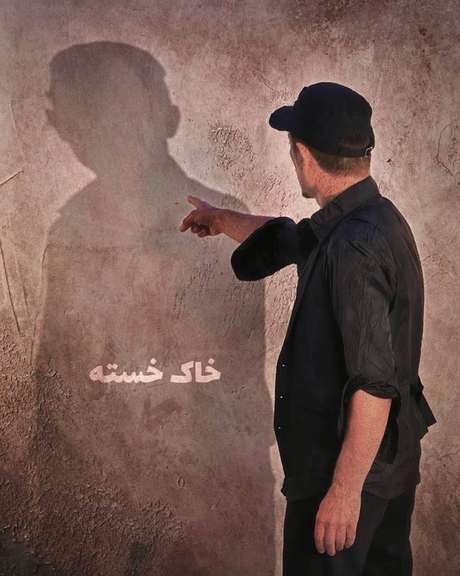
Renowned Afghan singer and composer Farhad Darya has released a new song, Khaake Khasta (Tired Soil), to mark the fourth anniversary of the Taliban’s control of Afghanistan.

Renowned Afghan singer and composer Farhad Darya has released a new song, Khaake Khasta (Tired Soil), to mark the fourth anniversary of the Taliban’s control of Afghanistan.
Announcing the release, Darya said not all stories can be told in words, which is why he has “wept Tired Soil.” In a message to his audience, he urged: “Watch it, feel it, share it, forgive this tired soil, and let us not lie to ourselves or to our land.”
Darya described the past four years under Taliban rule as a “bitter journey,” saying both he and the Afghan people have endured the exhaustion of their country.
The lyrics were written by Suhrab Sirat, a Balkh-born poet now living in exile. The song likens Afghanistan to a stranded and abandoned boat, portraying the exhaustion, heartbreak and displacement of its people. It describes today’s Afghanistan as “an old wound, a fresh wound, and the pain of a hundred battles.”
The release coincided with the Taliban’s own celebrations of their fourth year in power, a period marked by bans on music, singing and artistic expression. Since 2021, the group has removed the Faculty of Fine Arts from Afghanistan’s higher education system, outlawed the broadcasting of music, and arrested and tortured dozens for performing. Hundreds of musical instruments have been destroyed under their rule.


For the first time in four years, the Taliban did not hold a military parade at Bagram Airbase to mark the anniversary of their takeover of Afghanistan, instead celebrating their “victory” at the Loya Jirga Hall in Kabul.
The decision comes amid repeated criticism from former US President Donald Trump, who has condemned the Taliban’s use of American-made equipment in past parades. Trump has described Bagram as the world’s strongest airbase and argued the United States should have retained control of it, citing its proximity to China’s nuclear facilities.
On Friday, 15 August, the Taliban staged anniversary events across Afghanistan. In some cities, fighters carried yellow barrels symbolising suicide attacks and roadside bombs.
In previous years, the group showcased US-made weapons and vehicles seized from the former Afghan army during parades at Bagram and in major cities. Trump has repeatedly attacked the Biden administration for leaving behind military hardware, suggesting it could have been relocated to Pakistan instead.
In July, Trump criticised the Taliban’s annual displays, saying they took place on “very unattractive streets” and calling for the return of American equipment and the recapture of Bagram Airbase in Parwan province.
Taliban army chief Fasihuddin Fitrat recently dismissed Trump as “narrow-minded” about the group’s parades and vowed the Taliban would never hand over Bagram to any country.

The head of the Afghanistan Freedom Front’s political committee has described Taliban leader Hibatullah Akhundzada’s order to remove the word “acting” from government titles as a “final bullet to the heart” of those still hoping for engagement with the group.
In a post Friday on X, Dawood Naji said that for the past four years, some proponents of dialogue with the Taliban viewed the “acting” designation as a sign the group was open to change and could eventually accept an “inclusive government.”
He noted that Taliban supporters argued the group’s leadership regarded its administration as an interim arrangement.
“Today, Hibatullah, with a clear and explicit decree, shattered the illusions of those waiting for engagement, showing once again that engagement is nothing but a mirage, and the Taliban will not change,” Naji wrote.
The AFF political chief said he hoped advocates of engagement would now “choose between total surrender or full resistance, because there is no third way.”
On Thursday, marking the fourth anniversary of the Taliban’s return to power, Akhundzada announced that the “acting” title would be removed from all government positions, and ministers would henceforth be recognised as official cabinet members.

Taliban Interior Minister Sirajuddin Haqqani says the group remains committed to the Doha Agreement, rejecting allegations that Afghanistan has become a hub for international terrorism.
Speaking Friday at a ceremony marking the fourth anniversary of the Taliban’s return to power, Haqqani accused unnamed individuals of making such claims to advance their own personal interests. “If anyone has a problem with the current system, our door for dialogue is open, but they must resolve their internal issues themselves,” he said.
Haqqani did not identify any country or person, though his remarks appeared directed at Pakistan, which has repeatedly accused the Afghan Taliban of harbouring Tehreek-e-Taliban Pakistan (TTP) militants.
A recent UN expert report said the Taliban are providing a safe environment for foreign terrorist groups in Afghanistan, posing a serious threat to the security of Central Asia and beyond. The report claimed that several al-Qaeda-linked training camps are operating in the country.
Pakistan’s foreign ministry has alleged that Baloch militants and the TTP receive financial and logistical support from Afghan soil, stressing that Islamabad expects the Taliban to take decisive action against such groups.
Haqqani also urged Afghans living abroad to return, promising they could live “with dignity” and would not face questioning over their past activities.
The Doha Agreement, signed on 29 February 2020 between the Taliban and the United States, led to the withdrawal of international forces from Afghanistan and the collapse of the Western-backed Afghan government. Under the deal, the Taliban pledged that Afghan territory would not be used to threaten regional or global security and would not serve as a safe haven for terrorists. The agreement also called for intra-Afghan dialogue between the Taliban and other political and social groups.
In recent months, Taliban spokespersons have said the Doha Agreement applied to a specific phase and is no longer the group’s guiding framework.

Taliban leader Hibatullah Akhundzada has ordered the removal of the “acting” designation from all positions in the group’s administration, marking the fourth anniversary of its return to power.
In a statement released Friday, Akhundzada directed ministers and officials to stop using the term when referring to the Taliban government. Since the cabinet was announced in September 2021, its members have served as “acting” ministers, a title Taliban spokesperson Zabihullah Mujahid said in June was retained for political reasons.
“All ministers and cabinet members should avoid using the word ‘acting,’” Akhundzada said in the message, urging officials to “serve the Sharia system and Muslims.”
He described the Taliban’s return to power on 15 August 2021 as Afghanistan’s “liberation from American occupation and its allies” and claimed the country now enjoys nationwide security and has been freed from “corruption, oppression, land usurpations, narcotics, theft, looting, and plunder” under Sharia law.
Akhundzada, who has never appeared in public and communicates only through written and audio statements, also praised what he called the “sacred Sharia system” established since the end of the war.
The Taliban refer to 15 August as “Victory Day,” while many Afghans mark it as a “Dark Day” in the nation’s history.
Four years ago, then-President Ashraf Ghani fled to Uzbekistan, and later the United Arab Emirates, as the Taliban entered Kabul, sealing the collapse of the Western-backed Afghan Republic and its military. In the weeks prior, the group had already seized control of most major cities.
Since taking power, Akhundzada has issued decrees imposing sweeping restrictions, particularly on women and girls. Human rights groups have described the Taliban’s policies as a form of “gender apartheid.”
The Taliban have barred girls from attending school beyond grade six, closed universities to women, banned most forms of female employment, and prohibited women from travelling without a male guardian.

The United Nations has acknowledged that the Taliban interfere in the distribution of humanitarian aid in Afghanistan, responding to a report by the SIGAR that accused the group of diverting international assistance for its own benefit.
In a statement on Thursday, the UN said it takes the allegations “extremely seriously” and has implemented strict safeguards to protect aid deliveries.
SIGAR’s report, released Wednesday, alleged that Taliban officials have used force to seize aid and redirect it to serve their own interests. The watchdog estimated that only 30 to 40 per cent of aid sent to Afghanistan reaches the people most in need.
The report also claimed that the Taliban, in collusion with some UN officials, extort humanitarian projects. According to SIGAR, UN officials have demanded bribes from companies and NGOs seeking agency contracts, with payments calculated as a percentage of the contract value, allegedly ranging from 5 to 50 per cent.
Speaking to AFP, the UN Assistance Mission in Afghanistan (UNAMA) described aid distribution in the country as “extremely complex” and said it is aware of Taliban attempts to interfere with and restrict humanitarian work. The mission insisted, however, that it has “strong safeguards” in place to ensure assistance reaches intended recipients.
Based on interviews with 90 current and former US officials, UN officials, and Afghan aid workers, SIGAR said the Taliban “use every means at their disposal, including force” to control aid flows, directing them to areas they choose rather than those identified by donors. The report accused the Taliban of ethnic bias in distribution, favouring Pashtun-majority areas while neglecting minority communities.