Funds Running Out For Afghan Returnees, Says UNHCR
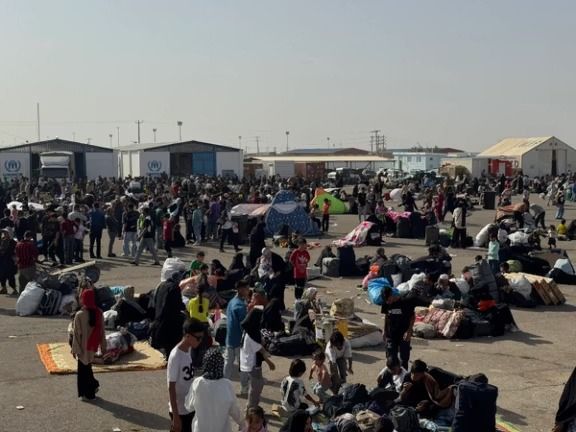
The UN Refugee Agency (UNHCR) has warned that funding to support Afghan families returning from Iran and Pakistan is rapidly running out, leaving many facing an uncertain future.
The UN Refugee Agency (UNHCR) has warned that funding to support Afghan families returning from Iran and Pakistan is rapidly running out, leaving many facing an uncertain future.
In a statement on Sunday, the agency said returnees were struggling to rebuild their lives amid growing humanitarian needs inside Afghanistan.
UN Secretary-General spokesperson Stéphane Dujarric said that 1.7 million Afghans have returned from the two neighbouring countries since the start of this year. He noted that most had limited ties to local communities and were finding it difficult to secure shelter and livelihoods.
Citing the UN Office for the Coordination of Humanitarian Affairs (OCHA), Dujarric stressed that additional funding for Afghanistan remains urgent. OCHA had already warned in June that aid operations in the country were facing a severe budget shortfall.

Pakistani officials and a broad group of Afghan opposition figures, including young leaders, women’s rights activists, and political representatives, are set to gather in Islamabad for a two-day conference on August 25–26.
The event, titled “Towards Unity and Trust,” will be the first public meeting of Afghanistan’s diverse political factions hosted in Pakistan since the Taliban’s return to power in 2021. It is organised by the South Asian Strategic Stability Institute in collaboration with Women for Afghanistan, which described the initiative as academic and trust-building rather than political.
According sources who spoke to Afghanistan International, participants will include Geneva-based Afghan envoy Nasir Ahmad Andisha; former economy minister Mustafa Mastoor; women’s rights activist and ex-MP Fawzia Koofi; Habib-ur-Rahman Hekmatyar son of Hizbe Islami leader; Hussein Yasa, spokesperson for the National Resistance Council for Salvation of Afghanistan; Zahra Joya, founder of Rukhshana Media; and Mawlawi Abdullah Qarluq, former governor of Takhar.
The Taliban and their allies have opposed the gathering, but sources said Islamabad has stressed that the group does not represent all Afghans. “This could mark a fundamental change in Pakistan’s stance, showing that Islamabad now wants to view Afghanistan not through the lens of one group, but as it really is,” one informed source told Afghanistan International.
Khalilzad Criticises Conference
Former US envoy to Afghanistan Zalmay Khalilzad criticised Pakistan’s hosting of the meeting, warning that some participants back the violent overthrow of the Taliban. On X, he called the move “immature, irresponsible and unfortunate,” describing it as a provocation that would deepen mistrust between Kabul and Islamabad.
He added he would view it the same way if the Taliban hosted Pakistanis seeking to topple their country’s military-led government.
Women’s Rights Groups Welcome Initiative
Fawzia Koofi welcomed the meeting, calling it an opportunity to build trust between Afghans and Pakistanis. She stressed the importance of including women, political figures and civil society in shaping Afghanistan’s future, noting that Afghan women live under “one of the most repressive realities in the world today.”
Responding indirectly to Khalilzad’s criticism, she wrote on X: “Some former diplomats object, is it because they want to be the architects of our country’s destiny forever? Isn’t it time to let us craft what is good for us?”
Taliban–Pakistan Relations Strained
The conference comes amid growing tension between Pakistan and the Afghan Taliban. Islamabad has accused Kabul of harbouring fighters from Tehreek-e-Taliban Pakistan (TTP), which has escalated cross-border attacks; claims the Taliban deny.
A senior adviser to former Afghan president Ashraf Ghani has claimed that secret annexes to the 2020 Doha Agreement between the United States and the Taliban outlined the transfer of power, sidelining the Kabul government in the process.
Fazl Mahmood Fazli, who also headed the Office of Administrative Affairs under Ghani, made the remarks in an article for Afghanistan International titled “From the 1990s to Taliban Oppression: Lessons from Afghanistan’s Political Failures and the Way Forward.”
Fazli wrote that prior to the collapse of the republic in August 2021, Washington prevented Afghan air force transport and combat aircraft sent abroad for maintenance from returning home. By July of that year, some Afghan officers had already been told they and their families would be relocated to the United States, he said.
Citing these moves, Fazli argued the republic order's downfall was primarily political, not military, because “ownership of the system did not rest with Afghans.” He said the government had been marginalised during the Doha negotiations, while “warlords” speculated in foreign capitals about their future roles in a new Taliban-led order.
He also noted that just two months before the fall, more than 100 American logistics contractors left Afghanistan without handing over responsibilities, creating an abrupt supply crisis for Afghan security forces.
While acknowledging that the Ghani administration could have sought internal consensus, Fazli maintained such efforts were futile, given the absence of widely accepted laws and political foundations and the overwhelming influence of the United States.
Four years after the Taliban’s return to power, more than half of Afghanistan’s population is in need of life-saving assistance, the United Nations said Friday.
UN Secretary-General’s spokesperson Stéphane Dujarric told reporters that Afghan women and girls remain especially vulnerable under Taliban restrictions barring them from education, employment and public life. He described aid directed at women and girls as a critical lifeline.
Dujarric also warned that the return of 1.7 million Afghans from Iran and Pakistan since the beginning of the year has sharply increased humanitarian needs. Most returnees, he said, have limited ties to local communities and are struggling to find shelter and livelihoods.
The UN Central Emergency Response Fund (CERF) has allocated $10 million to support returnees, while additional funding from the Afghanistan Humanitarian Fund is under review.
Citing the UN Office for the Coordination of Humanitarian Affairs (OCHA), Dujarric said more humanitarian funding for Afghanistan remains urgent. OCHA had already warned in June that operations in the country face severe budget shortfalls.
Karim Khurram, former chief of staff to ex-President Hamid Karzai, has rejected allegations made by former US National Security Advisor H.R. McMaster that he and Karzai were under the influence of Pakistan’s intelligence agency.
McMaster had described Khurram as a Pakistani agent in a recent interview.
McMaster, in an interview with Afghanistan International, alleged that Karzai and Khurram were influenced by Pakistan’s intelligence agency, the ISI, and described Khurram as a Pakistani agent.
Speaking to the same outlet on Saturday, Khurram categorically denied the claims, insisting that his and Karzai’s positions on the Afghan war, US night raids and other issues were not shaped by Pakistan. He argued instead that McMaster’s policies and those of his local allies deepened Afghanistan’s dependency on Islamabad.
“Everyone has been tested on Afghanistan’s battlefield,” Khurram said, while reiterating his opposition to US-Afghan security and strategic agreements. Khurram, seen by some Afghan and American officials as a source of friction between Karzai and Washington, maintained that his stance was based on opposition to a US war strategy that “killed innocent civilians and fuelled hatred and terrorism.”
He further alleged that McMaster, once tasked with combating corruption in Afghanistan, was selective in his approach and ignored the misconduct of those aligned with him. “One of our colleagues presented documents on this matter to him in the presence of the president,” Khurram said.
Khurram also claimed that as US national security adviser in 2017, McMaster authorised the use of the “Mother of All Bombs” in Afghanistan, and with support from allies inside Ghani’s government contributed to the Republic’s collapse. He did not provide further details.
McMaster, who served as US national security adviser from February 2017 to April 2018, played a central role in shaping Afghan policy. Khurram previously served as Afghanistan’s minister of information and culture before becoming Karzai’s chief of staff.
The Afghanistan Freedom Front said it carried out at least 88 attacks on Taliban positions over the past year, claiming to have killed 225 Taliban fighters and wounded 147 others.
In a statement released to mark the fourth anniversary of the Taliban’s return to power, the group said its operations targeted Taliban bases, checkpoints and gatherings across Kabul, Parwan, Balkh, Badghis, Herat, Kunduz, Takhar, Baghlan, Kapisa, Faryab, Panjshir, Sar-e Pul and Laghman provinces.
The front also said Taliban “morality police” from the Ministry for the Propagation of Virtue and Prevention of Vice have recently been added to its list of targets after allegedly harassing women and men. Fourteen such officials were killed or wounded in three provinces over the past year, it said.
“The people of Afghanistan are weary of Taliban tyranny and oppression, and resistance against this group will continue,” the statement read.
Afghanistan International could not independently verify the claims. However, the United Nations and local sources have previously confirmed several attacks attributed to the Afghanistan Freedom Front. The Taliban, which rarely comments on opposition offensives, has not responded to the group’s latest claims.
The Afghanistan Freedom Front launched its armed campaign against the Taliban in early 2022, months after the group seized power.