Gunmen Kill Six Relatives Of Ex-Afghan Soldier In Nangarhar Province
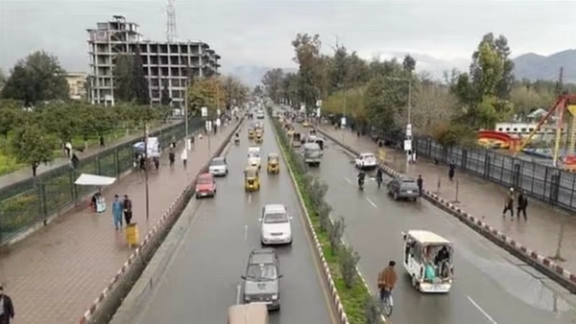
Six members of a former Afghan soldier’s family were killed in an attack in eastern Nangarhar province, local sources said.

Six members of a former Afghan soldier’s family were killed in an attack in eastern Nangarhar province, local sources said.
The killings took place two days ago in Sultanpur village, Surkhrod district, according to residents who spoke to Afghanistan International. The victims were relatives of Isfandyar Talwar, a former soldier in Afghanistan’s special counterterrorism unit.
The Taliban’s police command in Nangarhar confirmed the incident on Wednesday, saying “unknown armed men” had attacked the home and killed six members of the family with firearms and knives. Reports said the dead included Talwar’s father, wife, three daughters and a son.
Taliban officials said an investigation had begun and that the bodies were transferred for forensic examination.
A source familiar with the case said Talwar and his family had no personal enmities. The killings have sparked widespread reaction across Afghan social media.
Talwar, who had been living abroad, reportedly returned to Afghanistan after learning of the attack.
The incident comes amid rising concern for the safety of former Afghan soldiers, following recent revelations of UK Ministry of Defence data breaches that exposed personal details of thousands of Afghans who had worked with British forces.
Rights groups and former officials have accused the Taliban of detaining, torturing and, in some cases, killing members of the former security forces despite the group’s promises of amnesty.

The UN Security Council has warned that the Khorasan branch of the Islamic State group, known as ISIS-K, continues to pose a major threat to Afghanistan and regional stability, with growing reach into Europe and Central Asia.
Senior UN counter-terrorism officials briefed the Council on Wednesday during a review of the latest report by the secretary-general on ISIS and its global threat to peace and security.
Vladimir Voronkov, UN under-secretary-general for counter-terrorism, said ISIS remains among the most dangerous security challenges, noting that the group is exploiting new technologies such as cryptocurrencies and encrypted networks to expand its operations.
Natalia Gherman, head of the UN Counter-Terrorism Committee Executive Directorate, said ISIS-K is entrenched in Afghanistan while actively seeking recruits in Central Asia and Europe and soliciting funds through online propaganda.
Council members highlighted that the group’s increasing reliance on digital currencies has complicated efforts to disrupt its financial networks. They stressed that defeating ISIS-K would require broad international cooperation.
UN officials urged member states to adopt comprehensive, human-rights-based approaches and maintain global unity in the fight against terrorism.
The briefing also underscored that Africa remains heavily affected, with UN counter-terrorism chiefs warning the continent now faces the highest levels of ISIS activity worldwide.
In a recent report, UN experts wrote that the Taliban have provided a permissive environment for foreign terrorist groups in Afghanistan, heightening security concerns for Central Asia and beyond. The report added that multiple training camps linked to al-Qaeda are operating inside the country.

The UK Ministry of Defence has confirmed that 49 separate data breaches over the past four years exposed personal details of Afghan nationals who had applied for relocation to Britain after working with UK forces.
In each incident, names and personal information of dozens of individuals were disclosed, the ministry said. According to a BBC investigation, seven of the breaches were classified as serious and referred to the Information Commissioner’s Office, the UK’s data protection watchdog. Three of those cases had not previously been made public.
One of the most serious breaches occurred in 2022, when the personal data of nearly 19,000 Afghan former employees and collaborators of British forces was leaked. The disclosure prompted the government to launch a secret programme to bring thousands of Afghans to safety. More than 6,000 were eventually resettled in the UK under the initiative.
Defence Secretary Grant Shapps has apologised for the disclosures, acknowledging that the leaks placed Afghan allies at risk of Taliban reprisals.
The controversy has been further inflamed by reports in The Telegraph that some former Taliban fighters were flown to Britain on humanitarian evacuation flights. Among those relocated were individuals with records of sexual offences, corruption and imprisonment. Sources alleged that corrupt Afghan officials had helped place Taliban fighters on evacuation lists.
Experts warn that the breaches and alleged infiltration could endanger Afghan families who assisted British forces. Lawyers representing affected Afghans have accused the MoD of widespread negligence. The ministry insists it takes data security seriously and has implemented reforms since the incidents.
A former deputy defence minister described the leaks as a “devastating mistake.”
The fallout has continued for weeks in Britain. Prime Minister Keir Starmer has said former Conservative ministers must answer questions over the breaches.
Separately, a Daily Telegraph investigation reported that since the February 2022 leaks, more than 200 former Afghan soldiers and police officers have been identified and killed by the Taliban.

The Taliban have pledged to rebuild a monument to Amir Ali-Shir Nava’i in northern Afghanistan after Uzbekistan raised concern over the statue’s demolition.
The governor’s office in Balkh province announced Thursday that reconstruction had begun on the memorial in Mazar-e-Sharif, with a budget of 1.5 million Afghanis. The project will include restoring the statue, creating green spaces, building a recreational area, establishing a library and installing information boards about Nava’i’s life and works, officials said.
The move followed contacts between Uzbekistan’s Foreign Ministry and Taliban officials. Tashkent said the Taliban had expressed regret over the statue’s destruction and promised to construct a more elaborate complex dedicated to the 15th-century poet, scholar and statesman.
Abdul Rahman Hemmat, the Taliban mayor of Mazar-e-Sharif, said the project would be completed within a month. Uzbek diplomats, Taliban foreign ministry representatives in the north and other officials attended the inauguration of the work, according to Uzbekistan’s Foreign Ministry.
Foreign Ministry spokesperson Akhror Burkhanov said Tashkent immediately sought clarification after the statue’s demolition. Taliban officials reportedly responded that the location was “not worthy” of commemorating such a figure and that a more prominent memorial was needed. They assured Uzbek officials that Nava’i’s legacy was important for Afghanistan as well as Uzbekistan.
The statue had stood in Mazar-e-Sharif for around 17 years before it was torn down, provoking widespread criticism. Rahila Dostum, daughter of Uzbek leader Abdul Rashid Dostum, called the demolition a “symbol of the Taliban’s hostility toward the country’s cultural heritage.” Civil and social groups representing Afghanistan’s Turkic community also condemned it as part of what they described as the Taliban’s “anti-cultural and identity-erasing policies.”
It was not the first such incident. In 2022, the Taliban demolished another statue of Nava’i in the city, drawing criticism from Afghan citizens and Uzbekistan. At the time, Taliban officials similarly assured Tashkent that the memorial would be restored.
Amir Ali-Shir Nava’i, a celebrated figure of the Timurid era, is regarded as the founder of Chagatai literature and remains an influential cultural icon across Central Asia.

China, Pakistan and Afghanistan’s Taliban government have pledged to step up joint efforts against militant groups during high-level talks in Kabul, officials said Wednesday.
Mohammad Sadiq, Pakistan’s special envoy for Afghanistan, announced that the foreign ministers of the three sides agreed to cooperate against Tehreek-e-Taliban Pakistan (TTP), Baloch separatists and China’s Uyghur militant groups. All three factions are believed to have ties with the Afghan Taliban, though the group denies their presence inside Afghanistan.
Sadiq said the trilateral meeting focused on strengthening security, economic and political cooperation. Taliban officials confirmed the ministers discussed bilateral relations and common threats.
The ministers also emphasised closer collaboration in trade, transit, regional development, health, education, culture and counter-narcotics. They voiced support for extending the China–Pakistan Economic Corridor (CPEC) into Afghanistan.
Chinese Foreign Minister Wang Yi said Beijing sought to deepen trust with Afghanistan and expand cooperation in trade and agriculture. He urged the Taliban to take stronger action against militant groups, stressing that security was essential for economic initiatives to succeed.
According to the Taliban foreign ministry, Wang also said China would take “practical steps” this year to begin developing Afghanistan’s mining sector.
Taliban’s pledge against their own allies
Pakistan’s envoy said the three sides committed “to strengthen joint efforts against terrorist organisations including TTP, BLA, ETIM and other regional and international terrorist outfits.”
Islamabad has long voiced concerns over the presence of TTP militants in Afghanistan and accused the Taliban of sheltering its opponents. Following a deadly attack on the Jaffar Express train in Balochistan, Pakistan accused the Taliban of colluding with India to support Baloch separatists, who claimed responsibility.
China, meanwhile, has pressed the Taliban to address Beijing’s security concerns, particularly regarding the East Turkestan Islamic Movement (ETIM).
The Taliban maintain, however, that Afghan soil poses no threat to any country.

Taliban leader Hibatullah Akhundzada has reportedly told cabinet members that women should be barred not only from modern education but also from attending religious schools, sources told Afghanistan International.
Two Taliban ministers said Akhundzada made the remarks at a cabinet meeting two weeks ago, arguing that women’s attendance at religious schools had “no religious legitimacy.” He cited the era of Islam’s third caliph, when women were barred from going to mosques, as precedent.
Another minister confirmed the comments, saying Akhundzada’s stance has disheartened many in the cabinet. A source in Kandahar said none of the ministers present dared to oppose the supreme leader’s view.
“Until today, no cabinet member has had the courage to present reasons or arguments against the Sheikh’s opinion,” the source said.
The reported remarks have fuelled frustration and quiet dissent among senior Taliban officials. Two ministers told Afghanistan International that many had expected schools to reopen for girls this year, but Akhundzada now considers even religious education for women impermissible.
“This position is in clear contradiction with Quranic verses and the Prophet’s sayings. Religious education is obligatory for all Muslims, both men and women,” one minister said.
A Taliban official warned that if the restrictions continue, Afghanistan risks sliding back into conflict. “If the situation goes on like this, Afghanistan will once again become a battleground of warlords, and the religious and historical responsibility will lie on Hibatullah’s shoulders,” the official said.
The Taliban have already barred women and girls from secondary schools, universities and private education centres. Observers say extending the prohibition to religious schooling could trigger a new wave of domestic and international backlash against the group.
