US Names Don Brown As New Chargé d’Affaires For Afghanistan Mission
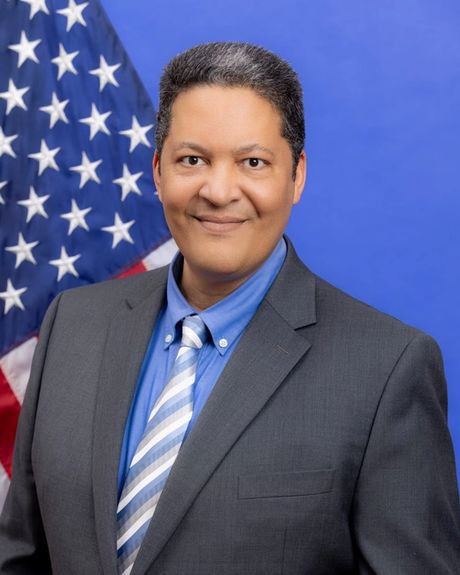
The United States has appointed Don Brown as the new acting head of its mission for Afghanistan, replacing Karen Decker, who has retired from the State Department.

The United States has appointed Don Brown as the new acting head of its mission for Afghanistan, replacing Karen Decker, who has retired from the State Department.
The US Embassy for Afghanistan, now based in Doha, announced the change on Thursday in a brief statement confirming Decker’s departure. Decker had served for years as chargé d’affaires and oversaw the mission during the tumultuous period following the collapse of Afghanistan’s Western-backed government in 2021. The US Embassy in Kabul remains closed.
Brown has served as deputy chief of mission for Afghanistan since November 2023. His biography, released by the embassy, describes him as a career diplomat specialising in counterterrorism, political-military affairs, and combating transnational and financial crimes, as well as political and economic issues.
Before his current role, he was deputy director of the Office of Analysis for Terrorism, Narcotics, and Crime in the State Department’s Bureau of Intelligence and Research.


Pakistan has formed a special committee comprising police and intelligence agencies to locate and repatriate Afghans holding Proof of Registration (PoR) cards.
The committee will use data from various institutions to determine the locations of Afghan refugees and share the information with police to implement the deportation plan, according to Dawn newspaper.
Members of the committee include the District Officer of the Rawalpindi Special Branch, the Deputy Superintendent of Police Security Rawalpindi, representatives from the Ministry of States and Frontier Regions (SAFRON), the Counter Terrorism Department (CTD), the Intelligence Bureau and other intelligence agencies.
The government has previously developed a comprehensive strategy to expedite the deportation of Afghans with PoR cards, instructing senior security officials to ensure their “voluntary” return without delay.
Forced deportations of PoR cardholders are scheduled to begin on 1 September. Dawn reported that all relevant agencies must identify PoR holders and submit their findings to the Interior Ministry.
Control rooms in various regions will be reactivated, and a complaints unit with a dedicated hotline will be established to address grievances related to the deportation process.
This move comes as Pakistan continues to deport Afghan migrants. Reports indicate that more than 30,000 undocumented Afghans have already been identified and sent back to Afghanistan through operations by border police and the Quetta district administration.
According to aid groups, on average, one Afghan migrant child is expelled from Iran and Pakistan every 30 seconds. Save the Children says more than 800,000 Afghan children have been forced to return from the two countries so far this year.

Pakistan’s security forces have launched an operation against militants in Bajaur district in Khyber Pakhtunkhwa (KP) province near the Afghan border, displacing more than 20,000 families, local officials said Tuesday.
Residents reported that helicopters targeted militant hideouts in remote areas close to the frontier. No official statement has been issued by the federal government on the start of the operation in Bajaur, a former stronghold of Tehreek-e-Taliban Pakistan (TTP) in Khyber Pakhtunkhwa province.
Saeedullah, a local government official, said the operation was not on a large scale and that only militant hideouts were being targeted to minimise civilian casualties. He estimated that more than 55,000 people, roughly 20,000 families, had fled their homes in recent days fearing the fighting.
Many of the displaced are sheltering in government buildings and schools, with authorities providing food and other basic supplies, he said.
Bajaur was the site of a major Pakistani military operation in 2009 against both domestic and foreign militants, which displaced hundreds of thousands of residents.
Khyber Pakhtunkhwa police chief Zulfiqar Hameed said officials are still gathering data on the displaced population, and that targeted operations against the TTP are continuing.
Earlier this week, Pakistan’s army said it had killed at least 50 Pakistani Taliban fighters along the Afghan border in a four-day operation.
Islamabad has repeatedly accused the Afghan Taliban of sheltering TTP militants and has called for their cooperation in tackling the group. The Afghan Taliban deny the TTP’s presence in Afghanistan, but international reports indicate senior TTP leaders are based there and directing operations from Afghan soil.

Pakistan’s army said Tuesday it had killed 50 members of Tehreek-e-Taliban Pakistan (TTP) during a four-day operation along the Afghan border in the Sambaza area of Balochistan.
The military said the operation, which began Thursday, also led to the seizure of weapons, ammunition and explosives from the militants.
The statement that security forces remain committed to protecting the country’s borders and neutralising efforts to undermine the peace, stability and progress of Pakistan.
Since the Taliban’s return to power in Afghanistan in 2021, Pakistan has faced a sharp increase in cross-border militant attacks, particularly in the border provinces of Khyber Pakhtunkhwa and Balochistan.
The Islamabad-based Pakistan Institute of Conflict and Security Studies reported that 78 terrorist attacks took place in June, killing at least 100 people. The dead included 53 security personnel, 39 civilians, six militants and two members of local peace committees.
The think tank said 189 people were wounded that month, among them 126 security personnel and 63 civilians.
In total, violence and security operations in June left 175 people dead, including 55 security personnel, 77 militants, 41 civilians and two peace committee members, according to the report.

The United States has designated the separatist militant group Balochistan Liberation Army (BLA) as a foreign terrorist organisation, the State Department said on Monday.It described the move as part of the Trump administration’s commitment to combating terrorism.
The BLA, which seeks independence for Pakistan’s Balochistan province, has claimed responsibility for numerous attacks in the country. In March, the group said it was behind the hijacking of a passenger train travelling from Quetta to Peshawar, an assault that left dozens of passengers and Pakistani soldiers dead.
In 2019, Washington also listed another anti-Pakistan Baloch militant faction, the Majeed Brigade, as a “Specially Designated Global Terrorist” entity.
Under the new designation, providing any form of support to the BLA within the United States is now a criminal offence. The previous designation targeted only the group’s financial assets.
Balochistan, Pakistan’s largest but least populated and most underdeveloped province, has seen at least five separatist uprisings since the country’s founding in 1947. Supporters of the movement accuse Islamabad of exploiting the region’s resources while neglecting its roughly 15 million residents.

Uzbek President Shavkat Mirziyoyev has called for the rapid implementation of the Trans-Afghan railway project, describing it as a vital regional initiative to enhance economic integration and transport connectivity.
Speaking Tuesday at a United Nations conference on landlocked developing countries in Turkmenistan, Mirziyoyev highlighted the strategic importance of the proposed Uzbekistan-Afghanistan-Pakistan railway line. He said regional infrastructure projects such as this would help create a new commercial and economic space and build sustainable transport networks.
The Trans-Afghan railway aims to link Central Asia with South Asia, facilitating trade and boosting economic cooperation across the region.
In July, the Taliban’s Foreign Ministry announced the signing of a feasibility study agreement for the railway line. The agreement was signed in Kabul between the Taliban’s Ministry of Public Works, Uzbekistan’s Ministry of Transport, and Pakistan’s Ministry of Railways. The foreign ministers of Uzbekistan, Pakistan, and the Taliban administration attended the signing ceremony.
Pakistan’s Foreign Minister Ishaq Dar said the railway project would open a new transit corridor between Central and South Asia and play a key role in promoting regional trade and economic growth.