Taliban Flog Seven People In Ghor On Charges Of Extramarital Relations
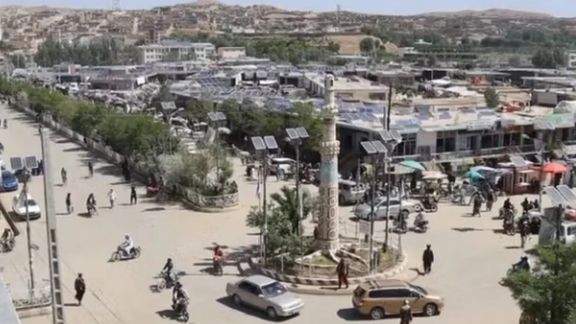
The Taliban flogged three women and four men in public in Ghor province after convicting them of extramarital relations and fleeing from home, the group’s Supreme Court said.

The Taliban flogged three women and four men in public in Ghor province after convicting them of extramarital relations and fleeing from home, the group’s Supreme Court said.
In a statement Wednesday, the court said a primary court in Saghar district sentenced the seven to between 30 and 39 lashes, carried out in front of local residents and Taliban officials. They were also handed prison terms ranging from six months to two years.
The Supreme Court said the punishments were implemented after its approval.
The Taliban have flogged 15 people, including two women, in public over the past week for various alleged offences.
Despite condemnation from international organisations that oppose corporal punishment and torture, the Taliban continue to stage public floggings, which the group describes as enforcement of “Islamic Sharia rulings.


Iranian and Taliban officials met in Kabul this week to discuss border cooperation, economic ties and the situation of Afghan migrants in Iran, both sides said.
The Iranian Embassy said Alireza Bikdeli, Tehran’s acting envoy, held talks with Noorullah Noori, the Taliban’s minister of borders, ethnicities and tribes. While the embassy released few details, the Taliban ministry said the discussions focused on building “mutual trust,” regional issues and strengthening political and economic relations.
According to the ministry, Bikdeli pledged continued cooperation with the Taliban and said Iran respects all neighbouring countries, particularly Afghanistan, while seeking closer ties.
The two sides also addressed the treatment of Afghan migrants in Iran. Noori urged that Afghans be treated “in line with Islamic and international principles,” the ministry said.
Iran has sharply accelerated deportations of Afghans since its war with Israel. Interior Minister Esmail Momeni said around 1.2 million have been expelled so far this year, with another two million expected to be deported by year’s end. He said an estimated six million Afghans currently live in Iran.
Earlier, Bikdeli said cooperation with Taliban officials had helped reduce delays and overcrowding at the Dogharoon border crossing for deported migrants.

A passenger bus overturned on the Kabul–Kandahar highway late Tuesday, killing at least 25 people and injuring 27 others, Taliban officials said.
Abdul Mateen Qani, spokesman for the Taliban’s Interior Ministry, said the crash occurred in the Arghandi area of Kabul when the bus veered off the road and plunged into a ravine. He said the bus, a 580-model coach, had been travelling from Kandahar to Kabul.
Taliban authorities said the incident is under investigation.
The accident comes just over a week after another deadly crash in Herat, where a bus carrying Afghan migrants deported from Iran overturned, killing 79 people.

Germany has resumed reviewing Afghan refugee cases and deployed staff to Pakistan to process applications, the daily Die Welt reported Monday.
The move comes amid mounting legal pressure in Germany and Pakistan’s intensified deportations of Afghan migrants.
According to the report, Berlin plans to relocate approved Afghans discreetly on regular commercial flights with stopovers in Dubai or Istanbul. It remains unclear how many applicants have been cleared for departure.
An estimated 2,000 Afghans have been stranded in Pakistan for months awaiting relocation to Germany after Islamabad’s new government suspended the transfer process. Pakistan has since warned it will expel Afghan refugees and migrants, prompting human rights groups in Germany and dozens of Afghan applicants to challenge the suspension in court.
In recent days, more than 450 Afghans with German admission commitments were detained in Pakistan. German officials said 245 were released from deportation camps following intervention from Berlin, while 210 others had already been deported.
Government sources told Die Welt that Germany has now reversed its position and will resume transfers, with the first Afghan families expected to arrive in the coming days.
The shift follows earlier remarks by Interior Minister Alexander Dobrindt, who said Berlin was not obligated to immediately relocate the 2,000 Afghans waiting in Pakistan. He argued that all applicants promised admission must first undergo security checks before transfer.

The Taliban have approved a five-year National Development Strategy that outlines priorities in governance, security and economic growth, spokesperson Zabihullah Mujahid said Monday.
Mujahid said the strategy brings together all Taliban-run agencies’ resources and programmes under a single framework. It is divided into three broad areas — governance and international relations, security and public order, and economic and social development.
The plan identifies 10 key sectors: economy and agriculture; natural resources and energy; housing and social affairs; transport and communications; religious and modern education; culture; health; social protection; and environmental conservation.
According to Mujahid, 15 programmes have been designated as top priorities. He said the strategy is intended to improve coordination among government agencies, reduce unemployment and promote balanced development.
He described the plan as “comprehensive, unified and long-term,” adding that all ministries and departments are required to align their activities with it. The Taliban believe implementation will allow citizens to “witness improvements and balanced growth” across sectors, Mujahid said.

Taliban spokesman Zabihullah Mujahid dismissed questions on girls’ education and the cancelled trip of the group’s foreign minister to India, describing both as “minor” issues.
Speaking at a press conference in Kabul on Monday, Mujahid declined to elaborate on whether the new development strategy included provisions for girls’ education beyond primary school and at universities. He said the document addressed education only in general terms.
The briefing came a day after the UN Security Council’s sanctions committee confirmed to Afghanistan International that India had withdrawn its request for a travel exemption for Taliban Foreign Minister Amir Khan Muttaqi, whose visit to New Delhi had been scheduled for 27–29 August.
When pressed on the issue, Mujahid again called the matter “minor.”
During the same briefing, the microphone of a female journalist was cut off as she attempted to ask a question. Under the Taliban’s interpretation of its “Promotion of Virtue” law, women’s voices are considered “awrah,” or intimate, and are restricted in public.
Since returning to power in 2021, the Taliban have barred girls from secondary school and university education, drawing widespread criticism from Afghans, rights groups and the international community.