• العربية
  • پښتو
  • فارسی
Brand
  • Afghanistan
  • Sport
  • Markets
  • Afghanistan
  • Sport
  • Markets
  • Theme
  • Language
    • العربية
    • پښتو
    • فارسی
  • Afghanistan
  • Sport
  • Markets
All rights reserved for Volant Media UK Limited
volant media logo

UN Security Council to Review Afghanistan Amid Human Rights, Terror Concerns

Aug 31, 2025, 12:09 GMT+1

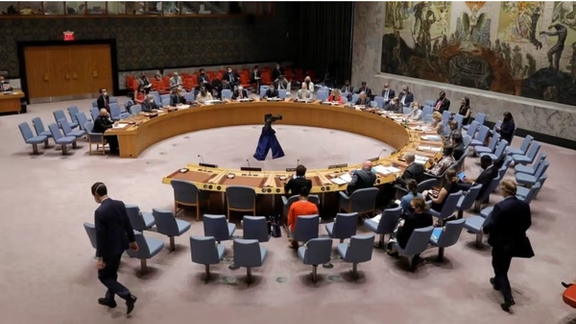
The United Nations Security Council will hold a meeting on Afghanistan in September, where Roza Otunbayeva, the UN secretary-general’s special representative, is expected to deliver her final report before the end of her mandate.

A civil society representative and the UN human rights commissioner are also scheduled to brief the Council.

The Council said Afghanistan’s human rights situation remains dire, particularly for women and girls. It cited UNAMA’s most recent report, which documented cases of arbitrary arrests of women and highlighted systematic abuses by the Taliban.

Independent UN experts on 14 August urged the international community to reject the Taliban’s authoritarian rule and resist efforts to normalise its regime. Richard Bennett, the UN special rapporteur for human rights situation in Afghanistan, said the Taliban have used the justice system to suppress women, girls and LGBTQ+ people.

The Council noted that the International Criminal Court has issued arrest warrants for Taliban leader Hibatullah Akhundzada and Abdul Hakim Haqqani, the group’s chief justice, on charges of crimes against humanity for gender-based persecution. UN Women has also warned that Afghan women are on the verge of being completely erased from public life.

The humanitarian crisis remains severe. The Council said 22.9 million Afghans, more than half the population, are expected to need aid this year, while 12.6 million faced crisis or emergency levels of food insecurity between March and April. It added that deportations from Iran and Pakistan have worsened conditions, with the International Organization for Migration reporting more than 1.5 million returns so far in 2025.

The Council also noted the Taliban’s efforts to end isolation, citing Russia’s recognition of the group and a recent trilateral meeting in Kabul with the foreign ministers of China and Pakistan. It stressed that UNAMA and participants in the Doha process are working on a roadmap for political engagement with the Taliban, though members warned that the group’s refusal to meet international commitments, especially on women’s rights, remains a central obstacle.

The Council reiterated concern about terrorism threats from Afghanistan. While all members voiced support for a peaceful, inclusive Afghanistan free of terrorism, the United States, Britain and France maintained that the Taliban must comply with international norms before gaining legitimacy or development assistance.
Most Viewed

Taliban Order Cut To Residential Fibre-Optic Internet In Kabul, Say Sources
1

Taliban Order Cut To Residential Fibre-Optic Internet In Kabul, Say Sources

2

Taliban Leader Adviser Arrested In Kandahar Over Alleged Bribery

3

Taliban Besieged TOLOnews Offices After Journalist Detentions, Say Sources

4

Taliban Urges Turkmenistan To Implement 24-Hour Operations At Torghundi Port

5

Exiled Media Watchdog Urges UN, EU To Seek Release Of Journalists Held By Taliban

•
•
•

More Stories

Photos Of Women On Afghan ID Cards Optional, Says Taliban

Aug 31, 2025, 09:38 GMT+1

The Taliban have ruled that photos of women on national identity cards will be optional, a decision that has drawn sharp criticism from women’s rights activists who say it strips Afghan women of basic recognition and equality.

In a decree issued by the group’s Dar al-Ifta, the Taliban’s religious authority, officials said photos would be mandatory only for Afghan women living abroad or travelling overseas for medical care. For women inside Afghanistan, the body declared that attaching photos to ID cards was “contrary to Sharia.”

The decision overrides earlier plans by the Taliban-run National Statistics and Information Authority, which had sought to make photos compulsory to verify identity, prevent fraud, ease travel and comply with international standards. The agency had set out 11 justifications for photos, but religious scholars dismissed 10 of them as “un-Islamic.”

Dar al-Ifta said for legal matters it was sufficient to include a woman’s name along with the names of her father and grandfather, as well as her address. It argued that international travel already required passports and visas, making ID cards unnecessary for that purpose.

“Placing a photo without a Sharia need is not permitted, whether full-length or just the face,” the decree stated. Women, however, may still choose to include their photo voluntarily.

The ruling triggered strong criticism from rights groups. On social media, users urged the international community not to remain silent. Activists said the Taliban’s decision represents another rollback of women’s rights, four years after the group barred girls from secondary schools and universities.

Protesting women have demanded that identity documents be issued without gender-based restrictions or discrimination.

Taliban Leader Outlaws Criticism & Love Poetry Under New Law

Aug 30, 2025, 15:52 GMT+1

Taliban leader Hibatullah Akhundzada has approved a law banning poets from criticising his decrees or writing love poetry, further tightening restrictions on free expression in Afghanistan.

The Ministry of Justice said Saturday the new legislation, published in the official gazette, sets out 13 articles regulating poetry gatherings. The law prohibits any criticism of Akhundzada’s orders and decisions and bars verses praising “boys and girls” or encouraging friendship between them. It also demands poetry be free of “worldly love, improper desires and inappropriate emotions.”

The Ministry of Information and Culture will enforce the law, with oversight committees to be established in Kabul and provincial centres. Each committee will include representatives from the ministry, the Taliban’s virtue and vice authority and the Ulema Council. They will be tasked with vetting poetry and speeches for compliance.

Violators, including poets, speakers and organisers, will face punishment “in accordance with Sharia,” the ministry said.

The law also declares feminism, communism, democracy and nationalism as “un-Islamic” and bans poets from referring to them. In its preamble, it instructs poets to use their work to defend Islam and interpret Sharia law. All provisions are addressed to “brother poets,” effectively excluding women.

The move follows earlier restrictions on literary gatherings. In June, Akhundzada issued directives on poetry events after the Taliban cancelled festivals in Parwan and Nangarhar provinces and arrested poets accused of writing critical verses.

Human rights groups say the new rules mark a return to the Taliban’s hard-line cultural policies of the 1990s and are part of broader efforts to curb civil liberties, silence critics and impose the group’s interpretation of Islam on Afghan society.

AFF Says It Targeted Taliban Intelligence Office In Kabul

Aug 30, 2025, 14:50 GMT+1

An anti-Taliban armed group said Saturday it attacked a Taliban intelligence facility in the heart of Kabul, claiming casualties among the group’s fighters.

The Afghanistan Freedom Front (AFF) said its fighters struck Taliban Intelligence Unit 40 in the Shash Darak area on Friday evening. In a statement, the group claimed at least one Taliban member was killed and four others were wounded.

The AFF described the site as a “notorious” office where former Afghan soldiers and innocent civilians, including women, are detained and subjected to “brutal and inhumane torture.”

Local residents reported hearing an explosion in central Kabul on Friday night.

The Taliban have not commented on the incident. The group routinely rejects claims of attacks carried out by opposition groups, including the AFF and the National Resistance Front.

Taliban Publicly Flog Man & Woman In Jowzjan For ‘Illicit Relations’

Aug 30, 2025, 11:01 GMT+1

A Taliban court said Saturday it publicly flogged a man and a woman in northern Jowzjan province after convicting them of “illicit relations.”

According to the Taliban’s judiciary, the pair were sentenced to prison terms ranging from six months to one year and 15 lashes each. The punishment was issued by the primary court in Aqcha district and carried out after being approved by the Taliban’s Supreme Court.

The Taliban have punished hundreds of people over the past four years on charges of “illicit relations” and have also resumed enforcing capital punishment. In several provinces, executions have been carried out in public in the presence of senior Taliban officials.

Human rights organisations have condemned public punishments as degrading and in violation of international human rights standards.

Observers say the Taliban are gradually reverting to policies from their 1990s rule, when public executions and floggings became defining images of their regime. Videos of women and men being executed in sports stadiums remain symbolic of that period.

In contrast, the Taliban have now banned filming or broadcasting of such punishments. Taliban forces routinely confiscate phones and cameras from people entering stadiums or public squares before punishments are carried out.

Funding For Resettlement Of TTP Members Suspended Over Transparency Concerns

Aug 29, 2025, 15:13 GMT+1

Financial aid from Gulf countries to the Taliban, intended to support the relocation of Tehreek-e-Taliban Pakistan (TTP) families, has been suspended due to concerns over transparency, sources told Afghanistan International.

The suspension followed the Taliban’s failure to provide financial details on how the money was spent on relocating families to Ghazni province, the sources said.

Under a pilot scheme, one Gulf Arab country provided $6 million to resettle about 2,000 TTP families. That country has now conditioned further support on accountability and clearer reporting from the Taliban.

According to the sources, the Taliban secretly moved dozens of families from the Gulan camp in Khost and border areas of Paktika to refugee settlements in Ghazni, paying each family member $40 a month.

The Taliban had earlier asked Pakistan to support relocating TTP fighters from eastern and southern Afghanistan to other provinces, but the broader international backing they sought has not materialised.

TTP forces are believed to be concentrated in Nangarhar, Khost, Paktia, Paktika and Kunar provinces. The Taliban promised to move them to Ghazni, Helmand and the north, but many TTP fighters reportedly refused the resettlement.

Pakistan had considered a 30-billion-rupee resettlement plan, but dropped it over distrust of Taliban leadership. Defence Minister Khawaja Asif said the Taliban had demanded 10 billion rupees to relocate fighters away from border areas, but declined to guarantee they would not return.

Islamabad accuses the Taliban of harbouring TTP militants and Baloch separatists. It claims some Afghan Taliban factions remain allied with the TTP, which Pakistan says fields about 6,000 fighters on Afghan soil.

Pakistan’s military has repeatedly struck TTP positions across the border. On Tuesday, Pakistani jets bombed sites in Khost and Nangarhar provinces. The Taliban condemned the attacks, warned of consequences and summoned Pakistan’s ambassador.