The United States has again listed Afghanistan among the world’s major drug-producing and transit countries, saying Taliban members continue to profit from the narcotics trade despite the group’s declared ban.
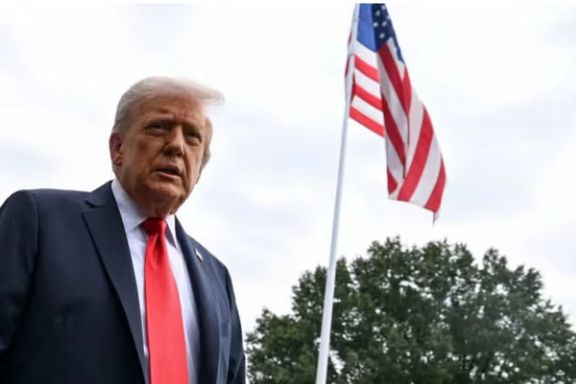
In his annual report to Congress, released Monday by the White House, President Donald Trump said Afghanistan’s persistent production and stockpiles of drugs keep international trafficking routes active.
The report also highlighted a rise in methamphetamine production in Afghanistan and warned that terrorist groups and international criminal networks benefit from the trade.
Trump said Afghanistan was being designated due to its “demonstrated failure” to meet counter-narcotics commitments and because the country’s drug industry poses a serious threat to US interests and global security.
Alongside Afghanistan, the list includes the Bahamas, Belize, Bolivia, Burma, China, Colombia, Costa Rica, the Dominican Republic, Ecuador, El Salvador, Guatemala, Haiti, Honduras, India, Jamaica, Laos, Mexico, Nicaragua, Pakistan, Panama, Peru and Venezuela.
The US also placed Afghanistan on a similar list last year.

Pakistan has unveiled a new plan to step up monitoring along its border with Afghanistan in a bid to block what it calls the supply routes of militant groups operating from Afghan territory.
According to a Monday report in Pakistan’s Dawn newspaper, officials said the new measures aim to sever all logistical support to “terrorists” from across the border.
Authorities said stricter surveillance will particularly target infiltration in Khyber and Bajaur, disrupting the flow of weapons, money and fresh recruits to militant groups, especially Tehreek-e-Taliban Pakistan (TTP).
They stressed that the strategy will only be effective if militants are prevented from entering Pakistan through insecure border crossings.
Officials believe the period from September to February is the most opportune time to curb infiltration, as militant groups typically return to their sanctuaries in Afghanistan during winter or seek “safe havens” in border areas to regroup and resupply.
The officials added that the new strategy would allow security forces to conduct intelligence-driven operations with minimal civilian casualties and less public opposition.
A Russian researcher who spent 52 days in Taliban custody said he was accused of spying for Moscow and engaging in anti-government propaganda.
Svyatoslav Kaverin told the Russian news agency TASS that upon his transfer to Kabul, the Taliban charged him with espionage and spreading anti-state propaganda. He said the group also accused him of smuggling jewellery and obtaining a tourist visa illegally when he entered Afghanistan from Tajikistan.
The Russian Foreign Ministry previously said the Taliban released Kaverin because of Moscow’s “friendly relations” with the group.
Kaverin said he intends to return to Afghanistan for “scientific research.” He explained that since the Taliban’s return to power, it has been possible to access remote areas where scientific studies had not been conducted for 50 to 100 years, or in some cases, ever. He noted that only German researchers in 1935, Soviet geologists in the 1960s, and a Russian biologist in 1924 had previously visited such locations.
The anthropologist said he was gathering information on language, culture and history, while also photographing plants, animals and other aspects of Afghanistan’s environment.
Kaverin added that one of his cellmates in Taliban custody was a Chinese national arrested for photographing a Taliban checkpoint. He said Chinese authorities secured that man’s release within 15 days.
Envoys from Iran, Pakistan, Russia and China held talks on Afghanistan on the sidelines of the Shanghai Cooperation Organisation’s (SCO) consultative meeting in Tajikistan, Iranian officials said Friday.
Mohammad Reza Bahrami, director-general for South Asia at Iran’s Foreign Ministry, posted a photo of the gathering on X and said all four countries had stressed the need to help Afghanistan overcome its current challenges.
Bahrami said that the important point for everyone was helping this country to overcome its existing challenges.
The meeting was attended by Bahrami, Russia’s special envoy Zamir Kabulov, Pakistan’s special envoy Mohammad Sadiq Khan and China’s special envoy Yue Xiaoyong.
Bahrami did not disclose further details but said the session was devoted exclusively to Afghan affairs and that each envoy shared their country’s perspective.
The four-way talks took place alongside the SCO’s two-day consultative meeting on Afghanistan, which opened Thursday in Dushanbe. Member states discussed Afghanistan’s current situation, its impact on the wider region and the need for greater coordination among SCO members in shaping policy towards the country.
The Shanghai Cooperation Organisation (SCO) on Thursday opened a two-day consultative meeting in Dushanbe to discuss Afghanistan’s situation, its impact on the region and ways to strengthen coordination among member states.
SCO Secretary-General Nurlan Yermekbayev said ahead of the talks that engagement between member states and the Taliban administration on security issues would be on the agenda. He noted that Afghanistan continues to face social challenges, restrictions on women’s rights and ongoing terrorist threats, and said SCO members share a consensus on these problems.
Reza Bahrami, Iran’s assistant foreign minister and director-general for South Asia, said the meeting would emphasise the importance of greater convergence among SCO members in dealing with Afghanistan.
On the sidelines of the summit, Pakistan’s special envoy for Afghanistan, Mohammad Sadiq, met with his Tajik counterpart, Khisrav Sohibzoda, to discuss the growing threat of terrorism in the region. Sadiq said both sides underlined the need for a joint, coordinated strategy to counter extremist threats effectively.
Pakistan’s jailed opposition leader Imran Khan has called for direct negotiations with the Afghan Taliban, instructing the chief minister of Khyber Pakhtunkhwa province to travel to Kabul for talks.
In a message posted Monday on his party's official account, the Pakistan Tehreek-e-Insaf (PTI) leader accused the country’s army chief of pursuing “short-sighted policies” and undermining his party’s peace efforts. His directive comes amid a surge in deadly attacks in Pakistan’s border regions.
Khan tasked Gandapur, one of the few PTI officials still in office, with leading the negotiations, a role traditionally held by Pakistan’s federal government. Many other PTI leaders have been arrested or removed from their posts.
Pakistani media described Khan’s order as a significant political and diplomatic shift. The former prime minister has long advocated dialogue with the Afghan Taliban and previously dismissed Pakistani military strikes on Tehreek-e-Taliban Pakistan (TTP) bases across the border as “foolish.”
Khan said earlier that Pakistan launches operations against the TTP, and they escape into Afghanistan. He stressed that without the support of the Afghan Taliban, one cannot succeed in these operations.
Faiz Hameed, the former ISI chief, was the first senior Pakistani official to visit Kabul after the Taliban returned to power in 2021 during Khan’s premiership. His visit coincided with the announcement of the Taliban’s interim cabinet, leading to his being described as one of its architects.
Gandapur has repeatedly sought authority to negotiate directly with the Afghan Taliban, but federal officials have blocked the move, insisting talks must be handled by Islamabad. In March, Gandapur said the Afghan Taliban had agreed to security discussions and formed a committee, but the federal government withheld cooperation.
The provincial government has argued that dialogue with the Afghan Taliban is essential to counter terrorism in border areas. In April, Gandapur asked the federal government to grant him official responsibility for talks and said he would meet Taliban leader Hibatullah Akhundzada if authorised.
He maintains that negotiations with the Afghan Taliban are the only viable path to peace in Khyber Pakhtunkhwa.