Afghan Carrier Expands India Route As Pakistan Borders Remain Closed
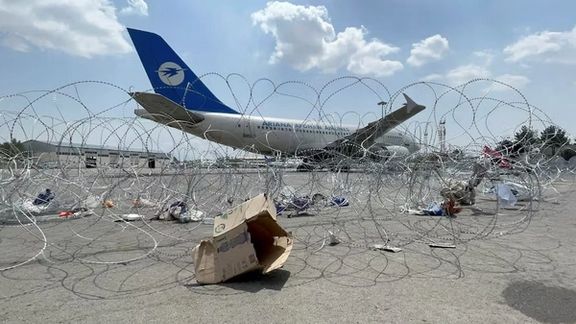
Ariana Afghan Airlines says it has increased cargo and passenger flights between Kabul and New Delhi in a move aimed at strengthening trade ties between Afghanistan and India.
Ariana Afghan Airlines says it has increased cargo and passenger flights between Kabul and New Delhi in a move aimed at strengthening trade ties between Afghanistan and India.
The airline said it will now operate six weekly cargo flights and two passenger flights on the Kabul–Delhi route.
In a post on X on Thursday, Ariana said the increase was intended to expand transportation capacity and reinforce commercial relations between Kabul and Delhi.
The expansion comes as trade between Afghanistan and Pakistan remains suspended, with border crossings and ports between the two countries still closed.
The Taliban, whose relations with Pakistan have deteriorated sharply, has shifted its economic focus toward cooperation with India and Iran. Taliban authorities have previously urged traders to seek alternative routes instead of relying on Pakistani ports.

A senior Russian analyst says the Taliban’s current policies suggest the group’s rule in Afghanistan may not be sustainable and could lead to public dissatisfaction and unrest.
Rajab Safarov, director of the Centre for Contemporary Iranian Studies in Moscow, told Afghanistan International that the Taliban’s political approach indicates their grip on power will not last.
Referring to a recent book by Russian researcher Andrey Serenko, head of the head of the Russian Centre for Contemporary Afghanistan Studies, Safarov said the Taliban had developed in an environment where they pursued any action within their reach.
“Given the Taliban’s current policies, this situation will not last long,” he said.
In his book Taliban Intelligence Secrets, Serenko wrote that the Taliban have not fundamentally changed but have become “more cunning,” warning that trusting the group is dangerous for Afghanistan, the region and the wider world.
Safarov said the Taliban’s current legitimacy and opportunity could fade over time. He added that the Taliban could either disappear from the region’s geopolitical landscape or push the wider region into crisis. However, he said the group has so far taken neither decisive positive nor decisive negative steps in regional affairs.
Safarov also said neighbouring countries have not taken serious action toward the Taliban because they are preoccupied with ongoing crises and geopolitical rivalries.
Serenko previously warned in an interview with Afghanistan International that regional and other countries should not trust the Taliban, describing the group as an unreliable structure posing risks to Afghanistan, the region and the world.
Despite such warnings, Russia has been the first country to recognise the Taliban administration.
Safarov said some in Russia believe recognising the Taliban may have been premature. However, he added that the Russian public generally trusts Kremlin policies and has not shown widespread protest over the decision.
Taliban authorities say they have seized nearly three tonnes of cannabis and opium in western and southern Afghanistan.
The Taliban’s Interior Ministry said 37 kilograms of opium and 2,700 kilograms of cannabis were confiscated in Farah and Uruzgan provinces.
In a statement issued Thursday, the ministry said four people were arrested while transporting opium along with equipment used for drug production in Bala Buluk district of Farah province.
It added that Taliban counter-narcotics officers discovered the cannabis shipment in Chinaratu district of Uruzgan province and later destroyed it by burning.
Earlier in the summer, Mohammad Narimani, director-general of international relations at Iran’s Drug Control Headquarters, said drug trafficking from stockpiles in Afghanistan to Iran and other countries was continuing. He said Iran, Pakistan, Tajikistan and Russia were on the frontline in efforts to combat trafficking originating in Afghanistan.
Taliban representatives told the fourth counter-narcotics working group meeting under the Doha Process in Kabul that poppy cultivation and the production of traditional drugs in Afghanistan had “almost reached zero”.
At the same meeting, they expressed concern about the production of synthetic drugs, saying equipment needed to manufacture such substances is smuggled into Afghanistan from abroad.
A Russian analyst has published a book claiming to reveal internal intelligence documents linked to the Taliban, including allegations of secret foreign contacts and security concerns surrounding the group’s leadership.
Andrey Serenko, head of the Russian Centre for Contemporary Afghanistan Studies, released a book titled Taliban Intelligence Secrets, which includes documents he says expose confidential aspects of the Taliban’s intelligence structures. The authenticity of the documents has not been independently verified.
Claim Of ‘Iron Dome’-Style Defence System
Serenko writes that the Taliban administration is seeking to establish an air defence system similar to Israel’s Iron Dome over Kandahar or above the residence of Taliban leader Hibatullah Akhundzada.
Citing what he describes as internal material, the author says Taliban leaders have emphasised training specialists in China to operate advanced air defence systems. He attributes the choice of China to its military-technical capabilities, particularly in air defence, and what he calls a high level of mutual trust between Kabul and Beijing.
According to the book, ensuring the security of Taliban leaders against potential air attacks has become increasingly urgent. Serenko says repeated flights by unidentified drones over Kandahar, where the Taliban leader is based, have heightened security concerns.
He adds that, according to his sources, Akhundzada’s close associates focused last summer on strengthening his security, including protection against possible air threats.
Alleged Contacts With The CIA
Serenko also claims Taliban intelligence maintains covert contacts with the CIA and has held secret meetings in Saudi Arabia and Qatar.
He writes that, within the framework of this alleged cooperation, the CIA is promptly informed of the results of Taliban intelligence visits to Moscow. Citing a document he says he published, Serenko claims that two Taliban intelligence officials met US intelligence representatives before travelling to Moscow.
The author adds that, according to his sources, the CIA is attempting to learn about Russian activities in Afghanistan through Taliban channels. He also writes that CIA intelligence activity within the Taliban administration has increased since Donald Trump returned to power.
Alleged Taliban Invitation Over Bagram
In another section, Serenko says the Taliban invited the United States officials to visit Bagram Air Base, claiming the aim was to influence US President Donald Trump’s position on the facility.
Trump has repeatedly said the Taliban should return Bagram Air Base to the United States. Serenko described the alleged Taliban initiative as a “new intrigue.”
Warning Of Regional Militant Threat
Serenko writes that Afghanistan hosts numerous small, autonomous armed jihadist groups that are seeking financial backers for attacks in Central Asia.
He says that after the fall of Bashar al-Assad’s regime in Syria, many foreign fighters began leaving the country and are increasingly choosing Taliban-controlled Afghanistan as a base.
Citing his sources, the analyst adds that al-Qaida and other jihadist groups in Afghanistan are attempting to regroup.
In an interview with Afghanistan International, Serenko said regional and other countries should remain vigilant and not trust the Taliban, which he described as an unreliable structure posing risks to Afghanistan, the region and the wider world.
Serenko said the documents were provided by what he called “patriotic Afghans” and that individuals in Russia, including some linked to the presidential office, have reviewed them.
He said some of the materials had previously been published in the Russian newspaper Nezavisimaya Gazeta. Afghanistan International has not independently verified the documents.
The Taliban said Sher Ahmad Haqqani, the group’s minister of information and culture, will attend the Russia–Islamic World Kazan Forum in the Russian city of Kazan at Moscow’s invitation.
The 17th Russia–Islamic World Kazan Forum is scheduled to take place from May 14 to May 19, 2026, in Kazan, the capital of Russia’s Republic of Tatarstan.
In a statement issued Thursday, the Taliban’s Ministry of Information and Culture said Haqqani will lead a delegation to the economic, cultural and tourism-focused meeting.
According to the Taliban, officials from Russia’s Ministry of Culture delivered the invitation to the group’s cultural attaché in Moscow.
Last year, a Taliban delegation led by the group’s minister of industry and commerce attended the 16th Russia–Islamic World Kazan Forum.
According to organisers, the upcoming forum will host the first international congress on “Energy Security in Eurasia” and presentations of investment projects from across Russia.
The programme traditionally includes an international forum of chambers of commerce and industry, an international exhibition on cooperation between Russia and the Islamic world, an Islamic fashion festival and other economic and cultural events.
Russia is the only country that has recognised the Taliban administration.
The United Arab Emirates has released 108 Afghan prisoners to mark the country’s National Day, the Taliban’s Foreign Ministry said.
In a statement that included a list of those released, the ministry said some of the prisoners had already returned to Afghanistan, while others would travel back after completing administrative procedures.
The ministry did not specify how long the individuals had been held in the UAE or what charges they had faced.
It thanked the UAE government and relevant institutions for what it described as a humanitarian gesture in securing the prisoners’ release.
In May 2024, the Taliban also announced the release of more than 40 Afghan prisoners in the UAE under what it said was a “leadership amnesty” decree.