UAE Releases More Than 100 Afghan Prisoners, Says Taliban
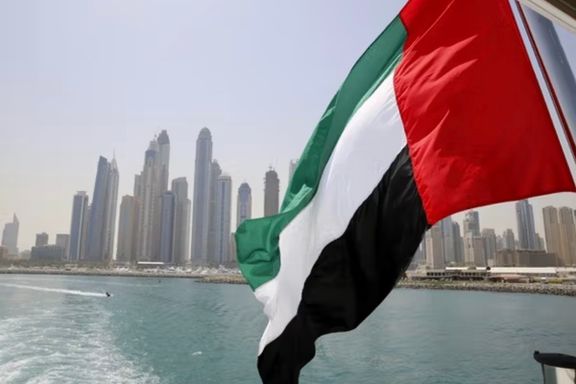
The United Arab Emirates has released 108 Afghan prisoners to mark the country’s National Day, the Taliban’s Foreign Ministry said.
The United Arab Emirates has released 108 Afghan prisoners to mark the country’s National Day, the Taliban’s Foreign Ministry said.
In a statement that included a list of those released, the ministry said some of the prisoners had already returned to Afghanistan, while others would travel back after completing administrative procedures.
The ministry did not specify how long the individuals had been held in the UAE or what charges they had faced.
It thanked the UAE government and relevant institutions for what it described as a humanitarian gesture in securing the prisoners’ release.
In May 2024, the Taliban also announced the release of more than 40 Afghan prisoners in the UAE under what it said was a “leadership amnesty” decree.

China and Pakistan voiced strong concern at the United Nations Security Council over the presence and activities of militant groups in Afghanistan, urging the Taliban to take action.
Asim Iftikhar Ahmad, Pakistan’s representative, said militants had gained a “new lease of life” under Taliban rule and were operating freely from Afghan territory. He said the groups were responsible for deadly attacks in Pakistan and stressed that his country remains on the front line of the fight against terrorism, having suffered more than 90,000 casualties and heavy economic losses.
Referring to recent attacks in Balochistan, Ahmad said 48 civilians, including five women and three children, were killed, adding that Pakistani security forces had killed 145 militants linked to Baloch separatist groups.
He said Pakistan is determined to eradicate the groups and expose their supporters and accomplices.
China’s representative, echoing concerns raised by other major Security Council members, highlighted the presence and activities of groups such as al-Qaida, Islamic State and Uyghur militants in Afghanistan, and called on the Taliban to take serious action.
Referring to an Islamic State attack on a Chinese restaurant in Kabul’s Shahr-e-Naw district, the Chinese envoy said militant activity on Afghan soil must be treated seriously.
The Taliban have consistently rejected reports about the presence and activities of militant groups in Afghanistan. Taliban officials say Afghan territory has not been used under their rule to threaten neighbouring or regional countries.
With the exception of India, however, neighbouring and regional states have expressed concern about militant activity in Afghanistan.
The Taliban have rejected claims that foreign militant groups are operating in Afghanistan, instead alleging that Islamic State fighters have established bases in neighbouring countries.
Zabihullah Mujahid, the Taliban spokesperson, made the remarks in response to a meeting of the United Nations Security Council, where several countries voiced concern about militant activity in Taliban-controlled Afghanistan.
Mujahid said Afghanistan is secure and that “no foreign or rogue groups exist” in the country. He claimed that Islamic State (ISIS), which he said had been defeated in Afghanistan, has “unfortunately established bases in our neighbouring countries.”
He described the security concerns raised at the United Nations as “unfounded” and said they stem from the absence of Taliban representation at the UN.
He did not name the neighbouring countries where he alleged Islamic State Khorasan had taken refuge. Taliban officials have previously said Islamic State fighters are based and trained in parts of Pakistan.
At the Security Council session on Wednesday, Alexandre Zouev, a senior UN official, warned that Islamic State Khorasan in Afghanistan remains a serious threat to the region and beyond, a view at odds with the Taliban’s assertion that the group has been contained.
Mike Waltz, the US ambassador to the United Nations, said the Islamic State threat in Afghanistan persists and requires coordinated international action. He added that the threat is expanding beyond Afghanistan to parts of Africa, the Middle East and South Asia.
Pakistan’s representative, Asim Iftikhar Ahmad, told the Council that since the Taliban returned to power, groups including Tehreek-e-Taliban Pakistan and Baloch separatists have gained renewed strength. He said these groups operate freely from Afghan territory and are responsible for major attacks in Pakistan.
Ahmad said Pakistan is on the frontline in the fight against terrorism, has suffered more than 90,000 casualties and endured heavy economic losses.
China’s representative also expressed concern about the presence and activities of militant groups such as al-Qaida, Islamic State and Uyghur militants in Afghanistan, and urged the Taliban to take action.
Referring to an ISIS attack on a Chinese restaurant in Kabul’s Shahr-e-Naw district, China’s envoy said militant activity on Afghan soil must be treated seriously.
The Taliban’s Supreme Court said at least 24 people, including one woman, were publicly flogged in Kabul and Kapisa province on charges including drug trafficking and sex outside marriage.
According to statements from the Taliban judiciary, 22 people were flogged in Kabul after being accused of selling and trafficking alcohol, cannabis, crystal meth and heroin. The punishments were carried out Tuesday by a Taliban counter-narcotics primary court.
In a separate statement, the court said a man and a woman were flogged in public in Alasay district of Kapisa province on accusations of extramarital relations. The punishments were carried out in the presence of local civilian and military officials.
Those punished received between 10 and 39 lashes and were also sentenced to prison terms ranging from seven months to three years, the statements said.
Based on announcements from the Taliban’s Supreme Court, the group has flogged at least 124 people across Afghanistan on various charges over the past 10 days.
Despite opposition from international organisations to corporal punishment and the treatment of detainees, the Taliban have continued to carry out public floggings of people convicted by their courts. Taliban authorities describe the punishments as the enforcement of Islamic law.
Grain exports from Kazakhstan to Afghanistan nearly doubled between September 2025 and the end of January 2026, the country’s national railway company said.
Kazakhstan Temir Zholy said shipments to Afghanistan rose from 216,000 tonnes to 416,000 tonnes over the five-month period.
During the same timeframe, Kazakhstan exported 5.8 million tonnes of grain worldwide, an increase of about one million tonnes compared with the same period a year earlier, the company said.
It said exports to Afghanistan increased by about 1.9 times as trade relations between Afghanistan and Pakistan remain suspended and Taliban authorities seek alternative trade routes.
Most of Afghanistan’s grain imports are currently supplied by Central Asian countries, particularly Kazakhstan. Following disruptions to trade and transit routes with Pakistan, Afghanistan’s reliance on imports from Central Asia has grown significantly.
Human Rights Watch said in its annual report that the Taliban expanded repression in 2025 by tightening restrictions on women and girls, increasing media controls and presiding over a deepening humanitarian crisis.
The watchdog said that it is while aid declined and migrants were expelled from neighbouring countries.
The report examines women’s and girls’ rights, corporal punishment, the treatment of people with diverse sexual orientation and gender identity, attacks on media and civil society, the situation of minorities, the economic and humanitarian crisis, and issues of justice and accountability.
Situation of Women and Girls
According to the report, the Taliban maintained the ban on girls’ education in 2025 and imposed further restrictions on women’s freedom of expression. It said the group’s morality police even barred women’s voices from being heard while reciting the Quran in public.
The report added that in September the Taliban banned the teaching of books written by women at universities and, through strict dress and behaviour rules, set up committees to monitor public spaces.
Corporal Punishment and Enforced Disappearances
Human Rights Watch said the Taliban carried out at least four executions last year in Nimroz, Badghis and Farah provinces. Citing the United Nations Assistance Mission in Afghanistan, the report said 414 people, including 83 women, were publicly flogged during the same period.
The report also documented 31 cases of arbitrary arrest and detention and eight allegations of torture and ill-treatment of former government officials and former members of the security forces.
Sexual Orientation and Gender Identity
The group said LGBT people in Afghanistan faced systematic abuse in 2025, with Taliban authorities targeting them for arrest and exploitation.
Attacks on Media, Civil Society and Minorities
The report said the Taliban continued to restrict the media, arbitrarily detaining journalists and critics, and banning political programming and reporting on human rights violations.
Activists, academics, writers and artists were also targeted and face a serious risk of arrest and abuse, it said. The report cited several cases of arbitrary detention.
It also said Taliban members used physical violence and death threats to pressure about 50 members of the Ismaili community in Badakhshan to convert to Sunni Islam, while pressure on Hazaras and other minorities persisted.
Economic and Humanitarian Crisis
The report said Afghanistan’s economic and humanitarian crisis worsened in 2025 following sharp cuts in foreign aid, Taliban restrictions and the mass forced deportation of migrants from Iran and Pakistan.
More than 22 million people faced food insecurity last year, over 400 health centres closed because of funding shortages, and millions suffered from malnutrition and required urgent humanitarian assistance, it said.
Return of Migrants
More than two million Afghans were forcibly deported from Iran and Pakistan in 2025, the report said. Many returnees faced the risk of arrest, torture and ill-treatment after returning.
It added that the suspension of resettlement programmes in countries including the United States, the United Kingdom, Germany and Canada left thousands of Afghan refugees in prolonged uncertainty.
Attacks on Civilians
Human Rights Watch referred to cross-border clashes between Taliban forces and Pakistani troops, saying fighting and Pakistani airstrikes last year killed and wounded civilians, including children, in eastern Afghanistan.
According to the report, the Islamic State group also claimed responsibility for several deadly attacks against civilians, including a suicide bombing at a bank in Kunduz province.
Justice and Accountability
Human Rights Watch said that in 2025 the United Nations Human Rights Council established an independent international accountability mechanism for Afghanistan, and the International Criminal Court issued arrest warrants for senior Taliban leaders on charges of crimes against humanity.
The report added that UNAMA’s mandate was extended last year, judicial investigations into alleged crimes by military forces continued in countries such as the UK, and international efforts to pursue accountability for systematic discrimination against Afghan women intensified in international courts.