Anti-Taliban Group Claims Deadly Attack In Herat
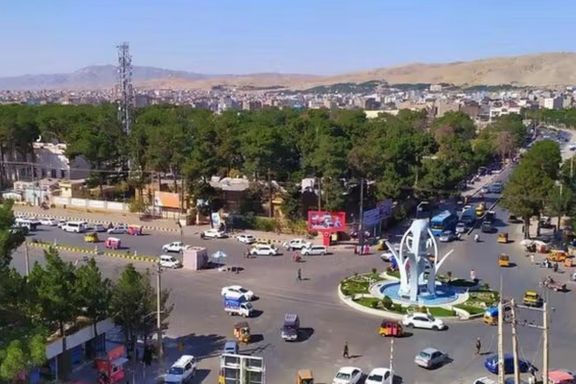
A little-known armed faction has claimed responsibility for an attack that killed two Taliban fighters in western Afghanistan, the group said Monday.

A little-known armed faction has claimed responsibility for an attack that killed two Taliban fighters in western Afghanistan, the group said Monday.
The Afghanistan People’s Liberation Movement said its fighters struck Taliban forces in Guzara district of Herat province on Sunday evening, around 9 p.m. local time. In a statement, the group said the attack took place near the UN mission’s office in Herat and targeted Taliban members linked to the Al-Farooq Corps training centre. It claimed the fighters seized weapons and equipment during the assault.
Local sources confirmed to Afghanistan International that clashes broke out in Guzara, though Taliban officials have not publicly commented.
The Afghanistan People’s Liberation Movement is a relatively unknown anti-Taliban group. It was recently mentioned in a report by the UN secretary-general, but little is known about its membership or operational capacity.


A classified Taliban intelligence report warns that rising public anger could reach breaking point and pave the way for the return of warlords unless the group changes course, according to documents obtained by Afghanistan International.
The report, sent to Abdul Haq Wasiq, head of the Taliban’s intelligence agency, cites a deepening legitimacy crisis, widening rifts within the movement’s leadership and the potential re-emergence of alternative power centres. It urges reforms to prevent further unrest.
The document warns that a comeback by warlords could attract public support, fuelled by frustration over harsh social restrictions, particularly against women, curbs on civil liberties and opaque economic policies.
It also highlights growing divisions within Taliban ranks over the country’s future direction, saying the internal crisis has reached a level “that can no longer be ignored.”
The Taliban administration has not commented on the report, and it is unclear whether it has been shared with the group’s reclusive leader, Hibatullah Akhundzada, in Kandahar.

A Taliban-run media outlet has condemned US President Donald Trump’s recent calls to retake Bagram Air Base, saying the comments violate Afghanistan’s sovereignty and insult its people.
Al-Emarah, one of the Taliban’s official publications, described Trump’s remarks as “an assault on national sovereignty and an insult to the feelings of the Afghan people.”
The outlet cited earlier comments from Taliban Foreign Minister Amir Khan Muttaqi, who warned that “any plan for the return of foreign forces, especially to Bagram, is a blatant violation of Afghanistan’s independence.”
Al-Emarah said Bagram remains a “symbol of occupation” for Afghans, and that renewed discussion of a US return amounted to “disrespect for national sentiments.” The article stressed that Afghanistan’s priorities are “peace, economic growth and the welfare of its people” and urged the international community to seek political, economic and cultural cooperation rather than a military presence.
It concluded: “Afghan soil will not host the military presence of any power.”
Trump has repeatedly said in recent days that Washington should regain Bagram, describing the base as strategically important due to its proximity to China, comments that have also drawn reaction from Beijing.

An explosion was reported Saturday near the fourth gate of Bagram Air Base in Parwan province, local sources said.
The blast occurred around 4:30 p.m. near Seh Dokan, on the eastern side of the base. A source told Afghanistan International that demining teams had carried out a controlled detonation of discovered explosives.
Earlier, the Taliban’s provincial police command said remnants of old explosives had been found and that engineering teams were conducting technical assessments and disposal work.
No further details were immediately available on the nature of the explosion.
The incident comes as US President Donald Trump has renewed calls for the United States to regain control of Bagram. He has warned that “bad things will happen” if the Taliban refuse to hand the base back to Washington.

The Taliban on Sunday urged US President Donald Trump to honour Washington’s commitments under the Doha Agreement, after he warned of “bad things” if the group refuses to hand Bagram Air Base back to American control.
In a statement, the Taliban recalled that the 2020 deal included a US pledge “not to use force or threats against the territorial integrity and political independence of Afghanistan.”
Adopting a conciliatory tone, the group said it sought “positive relations with all countries in light of Sharia principles, a balanced foreign policy and an economy-focused approach.” It added that during bilateral talks with Washington, Taliban negotiators had stressed that Afghanistan’s “independence and territorial integrity” were paramount.
“Instead of repeating the failed experiences of the past, a realistic and rational approach must be adopted,” the statement said.
Trump had earlier declared: “If Afghanistan does not return Bagram Air Base to those who built it, the United States of America, bad things going to happen.”

More than 60 percent of those missing after the recent earthquake in eastern Afghanistan are women, the United Nations said Friday, warning that female survivors face heightened risks of violence, exploitation and lack of access to health care.
Susan Ferguson, the UN’s special representative for Afghan women, said women and girls accounted for over half of the victims and the majority of those still unaccounted for. Speaking at a briefing hosted by UN Women, she said the disaster has left women facing a long-term crisis.
During a recent visit to Kunar province, Ferguson said she saw widespread destruction of infrastructure and a lack of sanitation facilities for women and girls. Many are forced to travel long distances, exposing them to violence and landmines.
She also warned of rising domestic violence, which often increases after disasters due to displacement, loss of livelihoods and other pressures. The UN has identified at least 463 female-headed households in the affected areas. Pregnant and breastfeeding women are among the most vulnerable, with all women and girls in need of health services.
Restrictions imposed by the Taliban, including bans on women working for NGOs, attending university and limits on movement, have left Afghanistan critically short of female health workers, further worsening the crisis. Women have also been disproportionately affected in accessing humanitarian aid.
Ferguson called for $2.5 million to fund a six- to 12-month emergency programme to expand women’s and girls’ access to essential services in quake-hit areas, stressing the “vital importance” of female aid workers.