Taliban Base In Takhar Targeted In Rocket Attack, AFF Claims
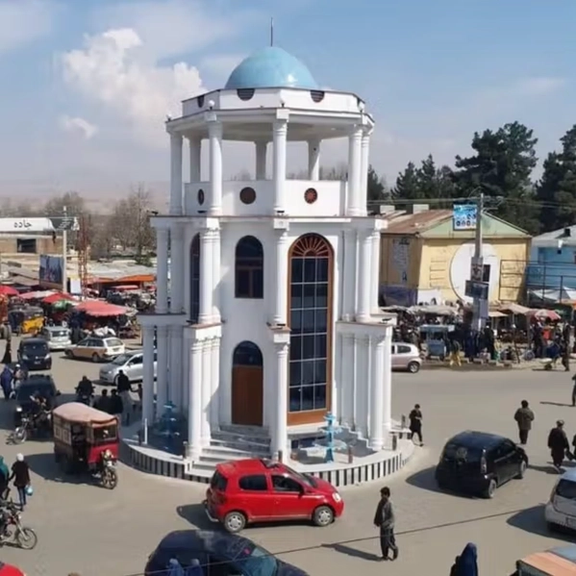
The Afghanistan Freedom Front said it carried out a rocket attack on a Taliban base in Takhar province, claiming two Taliban fighters were killed.
The Afghanistan Freedom Front said it carried out a rocket attack on a Taliban base in Takhar province, claiming two Taliban fighters were killed.
In a statement late Thursday, the group said its fighters struck around 10 p.m., targeting the former home of Malik Tatar, a police commander under the previous government in Yangi Qala, which the Taliban now use as a base in Lala Guzar village of Khwaja Bahauddin district.
Local residents confirmed to Afghanistan International that at least three rockets hit near the compound but reported no casualties. They said the rockets landed in the street and close to the base.
Taliban officials in Takhar have not commented.
The Afghanistan Freedom Front said it also attacked the Taliban intelligence office in Khwaja Bahauddin, wounding two members. The district has long been a hub for anti-Taliban groups and served as a stronghold of the resistance groups during the Taliban’s first rule.

Uzbekistan and Taliban have launched a joint transport company aimed at streamlining logistics and reducing delivery times for regional trade, Uzbek state media reported Friday.
The Uzbek transport operator said the new venture will organise shipments to Kazakhstan, Belarus, Russia and the Baltic states, while also opening new routes connecting Europe, the Commonwealth of Independent States, Afghanistan and Pakistan.
A representative office has been opened in Kabul to facilitate the project. The company said the office will simplify procedures and shorten delivery times.
Uzbekistan’s ambassador in Kabul, Obok Usmonov, said the joint investment would help expand cooperation in transport, trade, industry and other areas.
While Uzbekistan has not formally recognised the Taliban administration, it maintains broad diplomatic and economic ties with the group.
Earlier this week, Uzbek President Shavkat Mirziyoyev told the UN General Assembly that ensuring peace and stability in Afghanistan requires unified international efforts. He said the situation in Afghanistan cannot be ignored in the pursuit of global and regional security.
Taliban’s Ministry of Education has removed 51 lessons from school curriculum that dealt with freedom, women’s rights, human rights, national symbols, and other social themes, saying they contradict Islamic teachings and the group’s policies.
According to a letter issued by the ministry’s Kabul directorate on 15 September, the directive applies to grades one through twelve and was approved by the Taliban’s Prime Minister’s Office. Provincial education officials have been ordered to implement the changes immediately.
The letter, seen by Afghanistan International, instructed teachers to stop covering lessons on subjects including homeland, the national flag, democracy, peace, women’s rights, motherhood, the Buddha statues, the Red Flower festival, and humanitarian values.
The ministry also directed the Taliban’s Department of Preaching and Guidance to monitor compliance and report back.
Since returning to power, the Taliban have reshaped the curriculum by expanding religious instruction and establishing hundreds of new madrassas. Officials have repeatedly said that any content deemed inconsistent with Sharia or Afghan culture will be removed.
The curriculum overhaul has sparked concern among Afghans and international observers. Foreign Policy magazine recently described the Taliban-run education system as a “new Taliban army,” arguing that schools are being transformed into religious seminaries.
In higher education, Taliban officials have also reduced hours for core university subjects while tripling those devoted to Islamic culture, according to sources in the Ministry of Higher Education.
A senior Qatari official said Doha is prepared to ensure the Taliban’s “constructive engagement” with the international community and to help address Afghanistan’s humanitarian needs.
Mohammed bin Abdulaziz Al-Khulaifi, adviser at Qatar’s Foreign Ministry, made the remarks at the Organisation of Islamic Cooperation (OIC) foreign ministers’ meeting on Afghanistan, held on the sidelines of the 80th UN General Assembly.
He said Qatar would continue its diplomatic efforts to support stability in Afghanistan and stressed the importance of strengthening regional cooperation and providing comprehensive support to the Afghan people in what he called the country’s sensitive circumstances.
Al-Khulaifi noted that Afghanistan’s humanitarian, economic, and political challenges require a collective commitment to preserve stability. He reaffirmed Qatar’s commitment to sustained humanitarian, development, and diplomatic support for the Afghan people.
Qatar has become one of the main hubs of Taliban diplomacy and serves as a mediator between the group and Western governments. The Gulf state previously hosted the Taliban’s political office and played a key role in facilitating peace talks between the United States, the former Afghan government, and the Taliban.
Diplomatic and security sources from the UN and Europe have warned that Islamic State Khorasan (IS-K) may exploit the mass deportation of Afghan migrants from Iran and Pakistan for its own purposes.
Agence France-Presse (AFP) reported on Thursday, 25 September, that since the start of 2024, around 2.6 million Afghans have returned to the country; many after decades abroad, and some entering Afghanistan for the first time.
Hans-Jakob Schindler, former coordinator of the UN monitoring committee on militant groups, told AFP: “The risk that Islamic State Khorasan sees these newly arrived Afghans as a potential recruitment pool is high.”
He noted that since 2021, IS-K has recruited both disaffected Taliban members and Afghans excluded from the new governing structures.
A European diplomatic source told AFP: “We already know that some Afghans join terrorist groups not out of conviction, but out of economic necessity.”
Although Afghanistan’s security situation has improved since the Taliban takeover and the cessation of their insurgency, IS-K, based in the east, continues sporadic attacks that pose an ongoing threat to Taliban rule and regional stability.
In recent months, the Islamic Republic of Iran has intensified its anti-migration policies against Afghan citizens, expelling large numbers. Amnesty International in July urged Iran to immediately halt deportations of Afghans.
Deportees Face Poverty and IS Shadow
The UN High Commissioner for Refugees (UNHCR) estimates that up to four million Afghans may return by the end of 2025.
Indrika Ratwatte, the UN humanitarian coordinator in Afghanistan, said the returnees “face enormous challenges, without jobs, housing, or access to basic services.” He warned they could become vulnerable to “negative coping mechanisms, including exploitation by armed groups.”
According to the World Bank, nearly half of Afghanistan’s 48 million people live below the poverty line, and about one-quarter of young people aged 15–29 are unemployed.
The UN, in a July report, warned that Afghanistan offers ground for multiple terrorist groups, posing a serious threat to Central Asia and beyond. It said IS is the most dangerous, with roughly 2,000 fighters who have organised attacks in Russia, Iran, and Pakistan in recent years.
Amina Khan of the Institute of Strategic Studies in Islamabad noted that Afghans returning after decades abroad are often viewed as outsiders. She added that many, having lost businesses and property, are “fodder for these transnational terrorist groups that are operating within the region.”
Central Asian countries have repeatedly voiced concern in recent years about the growing strength of terrorist groups and their threat to regional security.
Russia says about 23,000 fighters from 20 different terrorist organisations are present in Afghanistan.
In August, Russia’s Security Council Secretary Sergei Shoigu, said that “The greatest concern is the activity of the Afghan branch of (Islamic State)… which has training camps, mainly in the east, north, and northeast of the country.”
Russia says it has recognised the Taliban authorities in order to bolster regional security and combat terrorist threats.
A Ticking Time Bomb
Schindler says “Many foiled attacks in Europe between 2023 and 2025 have been linked back to the Islamic State.”
A European diplomat described the situation as a real “ticking time bomb” for many European countries.
The UN concluded that the only way to prevent extremist recruitment among Afghan migrants is to build a future of dignity for them through foreign assistance.
Washington, however, has sharply cut humanitarian aid to Afghanistan to prevent funds from reaching the Taliban.
Taliban authorities in Spin Boldak district of Kandahar have banned residents from using smartphones after dark, locals said Thursday.
Residents told Afghanistan International that the order was issued without prior warning. They said Taliban members now confiscate smartphones from anyone found carrying one outside their home after sunset.
Asadullah, a resident, said two Taliban members seized his phone and told him to report to their command office the next day. “Since then, I have had no news of my phone. They keep telling me to go to intelligence or the district office,” he said.
Another resident said his phone was confiscated three days ago with a promise of return, but he has received no response. Residents reported that Taliban members not only seize devices but also demand passwords to check photos, conversations and personal documents.
Locals described the practice as a violation of privacy and personal rights. They said few phones have been returned, while most remain missing.
The restriction adds to a series of Taliban-imposed bans, including on music, women’s education and work, public gatherings, and high-speed internet.