Pakistan Closes Torkham Crossing After Afghanistan Internet Blackout
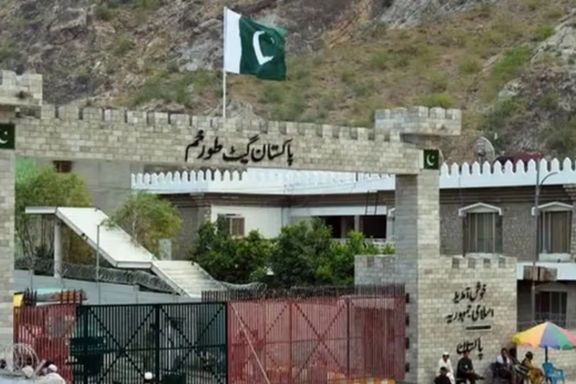
Pakistani media reported that the Torkham border crossing has been closed following the nationwide shutdown of internet and telecommunications services in Afghanistan.
Pakistani media reported that the Torkham border crossing has been closed following the nationwide shutdown of internet and telecommunications services in Afghanistan.
Local officials in Khyber Pakhtunkhwa province said the closure was prompted by administrative disruptions on the Afghan side.
A provincial official told Pakistani outlets that the lack of internet prevented Afghan border authorities from carrying out normal procedures, forcing the temporary closure.
Local media also reported that several travellers who had entered Afghanistan were turned back into Pakistan by Taliban officials after border systems went offline.

Residents in Afghanistan’s border provinces of Herat, Nimruz and Badakhshan who managed to make calls using Iranian and Tajik SIM cards said most Afghans had no idea what had happened during Monday night’s communications blackout.
From 5 p.m. on 29 September, fibre-optic services were cut nationwide, followed by a complete shutdown of all telecommunications, including regular phone calls.
Those able to contact Afghanistan International said no form of communication is currently functioning inside the country, leaving people in confusion and uncertainty.
Sources within the Taliban’s Ministry of Communications and the Afghanistan Telecom Regulatory Authority (ATRA) said the shutdown was carried out under a direct order from Taliban leader Hibatullah Akhundzada.
A foreign diplomat in Kabul said the Taliban has informed them that Afghanistan’s internet shutdown will remain in place “until further notice.”
The diplomat, who spoke to The Washington Post on condition of anonymity, said the Taliban abruptly cut internet access without official warning at around 5 p.m. local time on Monday.
The blackout has also disrupted phone services, according to NetBlocks, a global internet observatory. In countries with limited telecom infrastructure, phone networks are often routed through fibre-optic systems, which have now been disabled. Afghans abroad have reported being unable to reach their families inside the country.
Air travel has been affected as well. All Ariana Afghan Airlines flights to and from Afghanistan have been suspended, leaving dozens of passengers stranded. Two sources confirmed to Afghanistan International that Ariana flights were delayed, though it remains unclear how the issue will be resolved.
Separately, Kam Air flights to Istanbul, Türkiye, were cancelled. Reports suggest the airlines had scheduled departures without being informed by the Taliban of the nationwide internet shutdown.
Online broadcasts of most Afghan television stations have gone dark following a nationwide shutdown of internet and telecommunications services, Afghanistan International has learned.
Networks including TOLO, Lemar, TOLOnews, Shamshad, Tamadon and several provincial stations previously streamed programming online, but most have now gone offline. Taliban-controlled outlets such as Radio Television Afghanistan (RTA), Maarif and RTA Sport remain accessible.
TOLOnews earlier warned that the blackout would disrupt broadcasts from the Moby Group, which runs TOLOnews, TOLO, Lemar, Arman and Arakozia.
The suspension of internet and telecom services stems from a decision by the Taliban-run Afghanistan Telecommunications Regulatory Authority and the Ministry of Communications and IT. Sources told Afghanistan International that major providers including Roshan, Etisalat, Afghan Wireless and Afghan Telecom were ordered to halt all fibre-optic operations.
Technical experts said disabling the fibre-optic network has shut down telecom towers nationwide, effectively cutting Afghanistan off from global communications.
Some sources said limited services might eventually be restored, but high-speed internet and fibre-optic connections have been fully suspended under orders from the Taliban’s supreme leader.
Afghanistan was cut off from the global communications network on Sunday night after all fibre-optic internet services and telecommunications systems across the country were abruptly shut down.
The blackout left citizens without internet access or the ability to make phone calls nationwide.
Internet providers including Roshan, Etisalat, Afghan Wireless and Afghan Telecom had earlier warned customers that services would be “temporarily” suspended on orders from government authorities. A Taliban official confirmed that the directive came from the Afghanistan Telecom Regulatory Authority (ATRA) and the Ministry of Telecommunications.
The decision has effectively severed Afghanistan’s connection with the outside world, preventing people abroad from contacting those inside the country.
A source told Afghanistan International that a meeting between ATRA officials and service providers earlier in the day had been tense. According to the source, the Ministry of Telecommunications was angered by Taliban leader Hibatullah Akhundzada’s order but was instructed to enforce the nationwide cutoff “unilaterally.” Officials reportedly hope that the scale of the shutdown, and the public and international backlash, might prompt the Taliban leadership to reconsider.
A telecommunications technician explained that ordinary phone services collapsed because mobile towers rely on fibre-optic infrastructure. With those lines disabled, Afghans have been left without any form of communication.
The Taliban have ordered the shutdown of fibre-optic internet across Afghanistan on the instructions of the group’s supreme leader, Hibatullah Akhundzada, according to telecom industry sources.
Sources told Afghanistan International that the Taliban-run Afghanistan Telecommunications Regulatory Authority (ATRA) met with fibre-optic providers on 29 September and conveyed Akhundzada’s verbal directive. Providers were instructed to disconnect services in all provinces, including Kabul, until further notice.
“When company officials asked ATRA representatives what authority this action was based on, they were told it was a verbal order from Hibatullah and must be implemented,” one participant said.
Industry officials warned that a nationwide shutdown would not only disrupt household and business users but also paralyse critical services. Banks, customs offices and government institutions depend on point-to-point fibre connections, while telecom operators would face severe disruptions.
Taliban officials have not commented publicly on the move.
Earlier, a delegation from the Ministry of Economy, the Ministry of Finance and the Taliban Central Bank travelled to Kandahar to appeal against the decision, arguing that all operations of their institutions relied on internet connectivity.
According to sources, Akhundzada dismissed the concerns, saying the measure would be implemented gradually. He reportedly told the delegation: “During Mullah Omar’s rule, there was no internet, yet affairs progressed smoothly. Therefore, alternative methods must now be found.”