Etihad Airways To Launch Direct Abu Dhabi–Kabul Flights In December
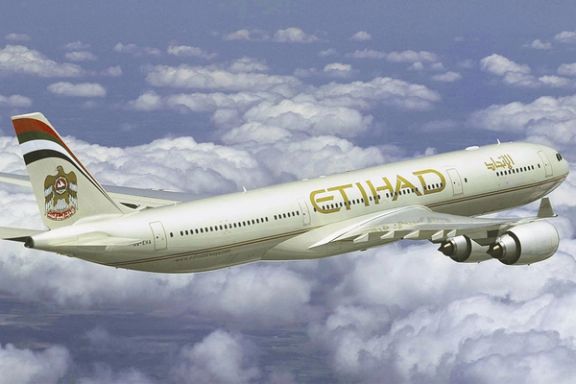
Etihad Airways has announced that it will begin operating direct flights between Abu Dhabi and Kabul from 18 December 2025, marking the airline’s return to the Afghan capital.

Etihad Airways has announced that it will begin operating direct flights between Abu Dhabi and Kabul from 18 December 2025, marking the airline’s return to the Afghan capital.
Company officials said there will be three round-trip flights per week, on Saturdays, Tuesdays and Thursdays, with return journeys scheduled for the same day.
Etihad Airways CEO Antonoaldo Neves said the addition of Kabul is part of the airline’s broader strategy to expand access to regional markets. He said that these flights will open new opportunities for trade, investment and family reunions.
According to the Afghan Business Council, nearly 300,000 Afghan citizens live and work in the United Arab Emirates, which remains one of the main hubs for Afghan migration, trade and business in the Gulf region.
Several UAE-based carriers previously operated flights on the Abu Dhabi–Kabul route before the Taliban’s return to power in 2021.

The United Nations Children’s Fund (UNICEF) has warned that Afghanistan’s education system faces immense challenges but said there are still opportunities for rebuilding. The agency described education for every girl and boy as “vital” to the country’s future.
In a post on X on Saturday, 11 October, UNICEF reiterated its call for the Taliban to lift the ban on girls’ education and urged greater investment in Afghanistan’s struggling education sector.
The continued denial of schooling for girls has drawn widespread international condemnation. Global leaders, rights activists and organisations, including Amnesty International and UNICEF, have repeatedly called on the Taliban to reopen girls’ schools.
Despite mounting pressure, the Taliban have ignored all appeals and, for the fourth consecutive year, continue to ban girls from attending secondary schools and universities, a policy that has left millions of Afghan girls deprived of education.

India’s Ministry of External Affairs (MEA) has denied any involvement in organising a press conference by Taliban Foreign Minister Amir Khan Muttaqi in New Delhi, after female journalists were barred from attending the event.
The move has sparked outrage among politicians, lawmakers and the Indian media community.
MEA spokesperson Randhir Jaiswal said on Saturday that the press conference was held inside the Afghan Embassy in New Delhi and that invitations were issued by the Afghan Consul General in Mumbai. He stressed that the venue was outside India’s jurisdiction and that no Indian institution played a role in organising the event.
Muttaqi, who arrived in New Delhi on Thursday for his first official visit to India, met Indian Foreign Minister Subrahmanyam Jaishankar the following day before attending the press briefing at the Afghan Embassy.
According to NDTV, female reporters from several leading Indian outlets, including India Today and Times Now, went to cover the event but were denied entry by embassy security staff.
Prominent Indian journalists and media advocates have condemned the incident and called on the government to respond. Suhasini Haidar, senior journalist and foreign affairs editor at The Hindu, said that by officially hosting the Taliban, India had “imported their misogynistic discrimination onto Indian soil.”
India is widely regarded as one of Asia’s freest countries for the press, where women journalists regularly participate in political and official events. The controversy has reignited debate over India’s diplomatic engagement with the Taliban and its implications for the country’s values on gender equality and press freedom.

Indian opposition leaders have criticised Prime Minister Narendra Modi after the Taliban barred female journalists from attending a press conference by Taliban Foreign Minister Amir Khan Muttaqi in New Delhi.
They called the incident an insult to Indian women and a test of the Indian government’s commitment to gender equality.
Priyanka Gandhi Vadra, a member of the Lok Sabha, urged Modi on Saturday to clarify his position on the exclusion of women journalists, asking why the Taliban were allowed to “insult some of India’s most accomplished women.”
In a post on X addressed to the prime minister, Gandhi Vadra said that if Modi’s support for women’s rights was not “an election gimmick,” he must explain how such an incident was permitted to occur in India. She added that women are the “backbone and pride of India.”
Rahul Gandhi, the leader of the opposition, also condemned the prime minister’s silence, accusing him of failing to defend Indian women from discrimination. He wrote on X that by allowing the Taliban to exclude female journalists, Modi was effectively signalling that Indian women were “too weak to be defended.”
Gandhi said the prime minister’s silence revealed the “emptiness” of his slogans about women’s empowerment, adding that women in India have “the right to be equally present in every field.”
The controversy erupted after the Taliban’s embassy in New Delhi barred female journalists from attending Muttaqi’s press conference on Thursday, 10 October. Several major outlets, including India Today and Times Now, had received invitations to cover the event, but embassy security refused entry to women reporters.
The decision has sparked widespread outrage across Indian media. Prominent journalists and commentators have called on the government to respond, with one CNN-News18 reporter describing the silence of Indian authorities as “deeply concerning.”
Muttaqi, who is on a six-day visit to India, attended the briefing as part of a diplomatic tour aimed at strengthening ties between Kabul and New Delhi.

Security guards at the Taliban embassy in New Delhi on Friday barred female journalists from attending a press conference by Taliban Foreign Minister Amir Khan Muttaqi, prompting widespread outrage among Indian reporters.
According to NDTV, female journalists from several major Indian outlets, including India Today and Times Now, arrived at the Afghan embassy to cover the event but were denied entry by embassy security. The guards reportedly told them there was an order prohibiting women from entering the premises, despite the journalists having official invitations and adhering to Islamic dress codes.
Efforts by reporters to speak with embassy officials or Taliban representatives were unsuccessful, as guards kept the gates closed and refused further explanation.
The incident has sparked condemnation across Indian media circles. Prominent journalists and commentators have urged the Indian government to respond, saying that such behaviour by a foreign mission on Indian soil undermines the country’s democratic values and press freedom.
A senior journalist from CNN-News18 described the government’s silence over the incident as “deeply concerning,” while analysts in New Delhi told NDTV that the episode reflects the Taliban’s broader policy of excluding women, a stance that appears to have extended into their diplomatic practices abroad.

The Taliban’s Ministry of Defence has accused Pakistan of violating Afghanistan’s airspace, calling recent strikes “unprecedented, violent, and hateful in the history of both nations.”
In a statement released on Friday, the ministry said Pakistani aircraft bombed a civilian marketplace in Paktika province and also breached Kabul’s airspace. It warned that Afghanistan reserves the legitimate right to defend its territory.
“We strongly condemn the violation of Afghanistan’s airspace and consider defending it our legitimate right,” the ministry said.
The Taliban’s Defence Ministry further cautioned that any escalation of tensions following Pakistan’s actions would be the responsibility of the Pakistani military.
Islamabad has not yet commented on the Taliban’s accusations. The incident marks the latest flashpoint in the increasingly strained relations between the two neighbours, who have traded blame over cross-border militancy and airspace violations in recent months.
