Pakistan Denies Civilian Casualties In Border Strikes With Afghanistan
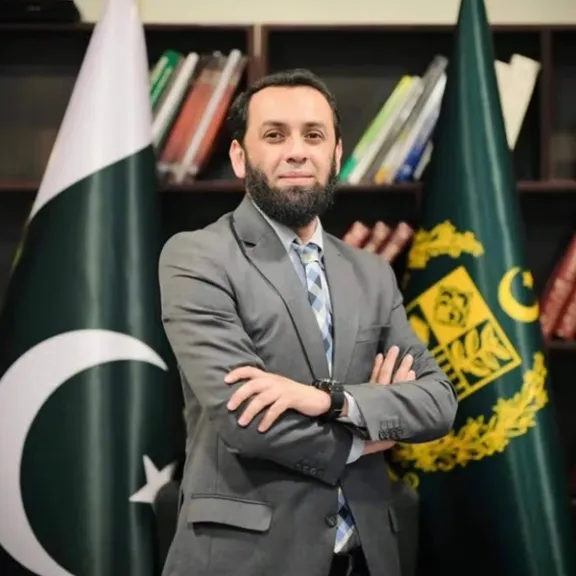
Pakistan’s information minister denied reports that civilians were killed in recent airstrikes along the border with Afghanistan, calling the claims “false and misleading.”

Pakistan’s information minister denied reports that civilians were killed in recent airstrikes along the border with Afghanistan, calling the claims “false and misleading.”
Attaullah Tarar said on Saturday that allegations of civilian deaths were being spread to support “terrorist groups based in Afghanistan.” He maintained that no civilians were harmed in Friday night’s air operations near the frontier.
His remarks followed reports by Afghanistan’s state-run television, controlled by the Taliban, which said at least 10 civilians, including women and children, were killed and 13 others injured in Pakistani strikes on Paktika province. The Afghanistan Cricket Board also claimed that several players were among the victims.
Tarar said the strikes targeted verified camps belonging to Hafiz Gul Bahadur, a commander of Tehreek-e-Taliban Pakistan (TTP), in North and South Waziristan. He claimed that between 60 and 70 militants were killed in the operation.

A senior Taliban official has said that ongoing clashes with Pakistan could pave the way for Afghanistan to “reclaim” territories across the Durand Line, describing the border as an “imaginary line.”
Taliban Deputy Interior Minister Nabi Omari made the remarks on Saturday during a ceremony introducing the new governor of Khost province. He expressed hope that “the old lands of Afghanistan, which remain with them [Pakistan],” could one day be recovered, saying, “By the will of Allah, this land will return to us.”
Omari also criticised Pakistani Prime Minister Shehbaz Sharif’s comments at the Sharm el-Sheikh summit in Egypt, where Sharif praised US President Donald Trump. “It is regrettable that such a person bears the name of a Muslim,” Omari said, accusing Pakistan’s government of acting “under Trump’s orders” rather than making independent decisions.
Addressing tensions between the Taliban and Pakistan over Tehreek-e-Taliban Pakistan (TTP), Omari said the Taliban had hosted peace talks between Islamabad and the TTP in Khost and Kabul two years ago, but Pakistan “failed to accept the logical, religious, and legal demands” of the group.
He blamed the failure of those talks on opposition from certain figures, including Pakistani lawmaker Mohsin Dawar, who, he said, “did not want their positions weakened.”
Omari further claimed that the TTP neither entered Afghanistan during the Taliban’s rule nor receives any support from the group.

Pakistan’s Foreign Ministry announced on Saturday that a high-level delegation led by Defence Minister Khawaja Asif has travelled to Doha for talks with senior Taliban officials from Afghanistan.
In a statement, the ministry said Pakistan does not seek to escalate tensions with the Taliban and that the purpose of the Doha talks is to find a peaceful solution to recent border clashes.
According to the statement, discussions in Doha will focus on immediate measures to end cross-border terrorist attacks originating from Afghan territory and on establishing peace and stability along the shared border.
Islamabad is urging the Taliban to honour their international commitments and address Pakistan’s security concerns through verifiable actions against militant groups, including Tehreek-e-Taliban Pakistan (TTP) and Baloch separatists.
The ministry also expressed gratitude to Qatar for hosting and mediating the talks. Earlier, Taliban Defence Minister Mullah Yaqub Mujahid and Intelligence Chief Abdul Haq Wasiq travelled to Doha to participate in the meeting.

The Taliban said it has ordered its forces to refrain from launching new attacks against Pakistan out of respect for ongoing negotiations in Doha, despite what it described as continued Pakistani aggression along the border.
Taliban spokesperson Zabihullah Mujahid confirmed on Saturday, that Defence Minister Mullah Yaqub Mujahid has travelled to Doha for talks with Pakistani officials.
In a post on X, Mujahid said that although the Taliban reserves the right to respond to Pakistani strikes, its forces have been instructed to hold fire while the talks are underway.
He said Pakistani military attacks on parts of Paktika province the previous night left several civilians dead and wounded, condemning the assaults as “an attempt to prolong the war.”
Mujahid reiterated that the Taliban remains committed to peaceful solutions and regional stability but added, “Whatever happens is the result of Pakistani aggression.”

Taliban intelligence officials have ordered the suspension of broadcasts by Shamshad TV, one of Afghanistan’s leading television networks, sources told Afghanistan International.
The directive reportedly came from Taliban supreme leader Hibatullah Akhundzada on Friday evening. The reason for the shutdown has not yet been officially confirmed.
According to sources, Taliban intelligence officers visited Shamshad TV’s office and halted all programming indefinitely. Another source suggested the decision may have been linked to content and programmes deemed inconsistent with Taliban policies.
Shamshad TV is one of Afghanistan’s most prominent broadcasters, with a large viewership across the country. Media freedom advocates and journalists expressed concern that the move would further restrict press freedom and intensify pressure on reporters.
The Afghanistan Media Support Organisation condemned the Taliban’s decision to suspend Shamshad TV and radio broadcasts, calling it further evidence of the group’s intolerance toward independent media and freedom of expression.
The organisation noted that over the past four years, the Taliban have severely restricted Afghanistan’s media environment by imposing sweeping limitations, closing outlets, and detaining and threatening journalists.
The Taliban have previously suspended the operations of several other media networks. Earlier, the Afghanistan Journalists Centre reported that Taliban directives banning the broadcasting of images of living beings had been enforced in more than 20 provinces.

The ceasefire between the Taliban and Pakistan has been extended, Taliban sources in Kabul told Afghanistan International on Friday. The sources said both sides agreed to maintain the truce until the conclusion of upcoming talks in Doha.
According to the sources, a Taliban delegation led by Defence Minister Mullah Yaqub is expected to travel to Doha on Saturday.
Taliban spokesperson Zabihullah Mujahid told Ariana TV that the ceasefire with Pakistan is indefinite, saying, “As long as Pakistan does not attack Afghanistan, the Taliban will not attack Pakistan.” Mujahid added, however, that no delegation from Afghanistan had yet departed for the talks.
Pakistani officials have not issued any official statement regarding the ceasefire extension.
