• العربية
  • پښتو
  • فارسی
Brand
  • Afghanistan
  • Sport
  • Markets
  • Afghanistan
  • Sport
  • Markets
  • Theme
  • Language
    • العربية
    • پښتو
    • فارسی
  • Afghanistan
  • Sport
  • Markets
All rights reserved for Volant Media UK Limited
volant media logo

Talks Could Resume If Taliban Shifts Stance, Says Pak Defence Minister

Oct 30, 2025, 13:55 GMT+0

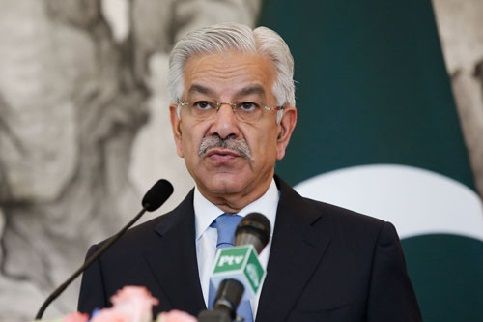
Pakistan’s Defence Minister Khawaja Asif said that peace talks with the Taliban could resume in Istanbul if the Taliban authorities show a change in attitude towards cross-border attacks.

Asif told Geo News that the Pakistani delegation remains in Istanbul, though negotiations have not yet formally restarted. The talks, which began on Saturday, stalled over disagreements about militant attacks launched from Afghan territory.

In an interview with Geo News, Khawaja Asif said that if there is a change in “Kabul’s attitude on the insistence of these two friendly countries [Turkiye and Qatar]”, there is a chance the talks will resume.”

He reiterated that Pakistan’s key demand remains unchanged: that the Taliban ensure no attacks are carried out against Pakistan from Afghan soil and that they do not support groups behind such assaults. “If an understanding can be reached on that, it will be a good thing,” he added.

Reuters, citing three informed sources, reported earlier that Pakistan and the Taliban are expected to resume talks in Istanbul after Turkiye intervened to prevent the collapse of the ceasefire and encouraged both sides to return to dialogue.

Asif confirmed that there has been no significant progress so far, but said defence ministers and intelligence chiefs from Turkiye and Qatar, who are mediating the talks, are working to break the deadlock.

He said the Pakistani delegation had been preparing to leave Istanbul, but Turkish and Qatari officials requested they extend their stay to give peace “another chance.”

Most Viewed

Taliban Ignore Afghanistan’s Interests By Backing Militants, Says Pakistan Army Chief
1

Taliban Ignore Afghanistan’s Interests By Backing Militants, Says Pakistan Army Chief

2

United Nations Delivers Education Kits To Four Million Afghan Children

3

Taliban Renews Call For China To Launch Aynak Copper Mine

4

Taliban Leaders In South-West Hold Security Meet In Kandahar

5

Afghan Deportations Is Strategic Mistake, Says European Parliament Member

•
•
•

More Stories

Senior Pakistani Taliban Commander Killed Near Afghan Border

Oct 30, 2025, 12:50 GMT+0

Pakistan’s military said on Thursday that Qari Amjad, also known as Mufti Muzahim, a senior leader of Tehreek-e-Taliban Pakistan (TTP), was killed during a security operation in Bajaur district near the Afghan border.

In a statement, the Pakistani army said the operation took place overnight between 29 and 30 October, after security forces detected movements by a TTP group attempting to infiltrate across the Pakistan–Afghanistan frontier.

According to the military, Amjad had been operating from inside Afghanistan and was involved in multiple terrorist attacks within Pakistan. He was previously the TTP’s deputy leader and a close aide to the group’s chief, Noor Wali Mehsud. Amjad also headed the group’s leadership council and was designated a global terrorist by the United States in November 2022.

The TTP has not yet confirmed his death.

Amjad, a native of Dera district in Pakistan’s Khyber Pakhtunkhwa province, had appeared in a video on 17 October claiming to be present in Bajaur. The Pakistani government had placed a bounty of five million rupees on his capture.

The army reiterated its long-standing position that the TTP leadership operates from Afghan territory and directs cross-border attacks into Pakistan. It urged the Taliban administration in Kabul to take “decisive steps” to ensure Afghan soil is not used for militant operations.

According to the US State Department, Amjad oversaw militant activities and coordinated violent operations across Khyber Pakhtunkhwa province.

Iran Sends First Fuel Shipment To Afghanistan By Rail

Oct 30, 2025, 11:31 GMT+0

Iran has exported fuel to Afghanistan by rail for the first time, marking what officials described as a milestone in bilateral economic cooperation.

Alireza Bikdeli, Iran’s ambassador to Kabul, said in a video statement on Wednesday that the inaugural fuel shipment reflects growing trade ties between the two countries.

Mostafa Rezaei, CEO of the Iran–Afghanistan Railway Development Consortium, said the first consignment, 1,120 tonnes of diesel carried in 20 wagons, entered Afghanistan earlier this week via the Khaf–Herat railway line and the Shamtigh border crossing.

Rezaei said the arrival of the train at Rozanak station in Herat province marks the beginning of a new phase in trade and transport cooperation between Iran and Afghanistan. He added that in the initial stage, the consortium is prepared to export more than 30,000 tonnes of fuel per month via the Khaf–Rozanak route.

He said rail transport would reduce dependence on road convoys and eliminate costly border delays, improving both efficiency and reliability.

Rezaei described the Khaf–Herat railway as one of the region’s key strategic corridors, linking Afghanistan to Iran’s transport network and beyond to Turkiye and Europe. The route, he said, strengthens regional trade, ensures a stable supply of fuel and goods to Afghanistan, and supports energy market stability, particularly in Herat province.

According to official data, nearly 60,000 tonnes of goods were exported or transited from Iran to Afghanistan through the same route and border crossing last year.

Iran is one of Afghanistan’s largest trading partners, with annual bilateral trade nearing $4 billion. The ongoing closure of Pakistan’s ports to Afghan traders has further increased Afghanistan’s reliance on Iranian routes for trade and transit.

Pakistan, Taliban To Resume Peace Talks In Istanbul After Mediation By Turkiye

Oct 30, 2025, 10:05 GMT+0

Pakistan and the Taliban have agreed to resume peace talks in Istanbul following mediation efforts by Turkiye, Reuters reported on Thursday, citing three informed sources.

The decision comes just a day after Pakistan officially announced the collapse of the Istanbul negotiations, which had aimed to resolve growing tensions between Islamabad and the Taliban in Kabul.

According to Pakistan’s Geo News, Islamabad agreed to return to the negotiating table at Turkiye’s request, in an effort to preserve the ceasefire and prevent further escalation.

The report said the Pakistani delegation, which had been preparing to leave Istanbul, has now extended its stay to continue discussions with the Taliban. It added that Pakistan decided to give peace “another chance.”

While the exact timing of the renewed talks has not been confirmed, Afghan media outlets have reported that delegations from both sides were expected to reconvene on Thursday.

The Taliban have not yet issued an official statement regarding the resumption of the negotiations.

The earlier round of talks, held over four consecutive days in Istanbul with mediation by Qatar and Turkiye, ended on Tuesday without an agreement. Both sides later blamed each other for the failure of the discussions.

Instability In Afghanistan Still Poses Regional Risk, Says CSTO Official

Oct 29, 2025, 16:21 GMT+0

Tolatbek Musadikov, Deputy Secretary-General of the Collective Security Treaty Organization (CSTO), has warned that threats emanating from Afghanistan have not yet been eliminated. He said that instability in the country continues to endanger the borders of CSTO member states.

Speaking on Wednesday at the Third Eurasian Security International Conference in Minsk, Musadikov said large-scale and potentially escalating conflicts were unfolding near the CSTO’s area of responsibility, including Afghanistan, the Middle East, and Eastern Europe.

“The situation in Afghanistan remains tense, and its challenges and threats have not yet been resolved,” he said, as quoted by Russia’s state news agency TASS.

Musadikov also noted that Western countries, in pursuit of geopolitical interests, are employing “complex forms of warfare” and new technologies, including artificial intelligence, to manipulate information and spread “fake and provocative content.”

The CSTO, a Moscow-led military alliance that includes Russia, Belarus, Armenia, Kazakhstan, Kyrgyzstan, and Tajikistan, has repeatedly expressed concern about security risks emanating from Afghanistan, particularly the presence of extremist groups such as ISIS and radical Central Asian groups.

CSTO member states, especially Tajikistan, have voiced alarm over the possibility of militant infiltration and instability spilling across their borders since the Taliban takeover in 2021.

Renewed Taliban Infighting Reported In Afghanistan’s Badakhshan Province

Oct 29, 2025, 14:52 GMT+0

Fighting has again broken out among Taliban forces in Afghanistan’s Badakhshan province.

Local sources reported renewed clashes early Wednesday in the Shahr-e-Buzurg district between Taliban units and fighters loyal to Abdul Rahman Ammar, the group’s former provincial head of mining.

Sources told Afghanistan International that casualties have not yet been confirmed, but Ammar’s fighters are currently surrounded by Taliban reinforcements sent to the area.

Fasihuddin Fitrat, the Taliban’s army chief of staff, reportedly travelled to Badakhshan on Tuesday to mediate and end the conflict. However, according to multiple sources, his efforts have so far failed to halt the fighting.

Ammar’s loyalists are said to have taken defensive positions in the mountains around Shahr-e-Buzurg, where the former commander enjoys significant local support.

The clashes, which have continued for several days, pit Ammar’s forces against those of Shafiqullah Hafizi, the Taliban’s current head of mining in Badakhshan, in what sources describe as a dispute over control of lucrative gold mines. Ammar is believed to have backing from senior Taliban figures, including Fitrat.

The Taliban authorities have not commented publicly on the confrontation.

On Monday, Taliban border battalion troops reportedly fought against Ammar’s forces in support of Hafizi. Additional reinforcements were later dispatched from the provincial capital to contain the violence.

Earlier reports from Badakhshan suggested that at least three people had been killed, including two fighters loyal to Ammar and one Taliban officer identified as Abdul Alim Hamidi, commander of operations for the group’s 1st Brigade. Taliban units are now said to be pursuing the “rebel commander.”

Both Ammar and Hafizi are influential Taliban figures in Badakhshan. Although Ammar no longer holds an official post, he is regarded as a powerful local commander with his own loyal fighters and funding network.

Since taking power, the Taliban have prioritised mining operations across Afghanistan. In Badakhshan, in particular, competition among commanders for control and profit from the province’s natural resources has repeatedly led to internal clashes.