Access To Telecom Services Has Expanded Nationwide, Says Taliban
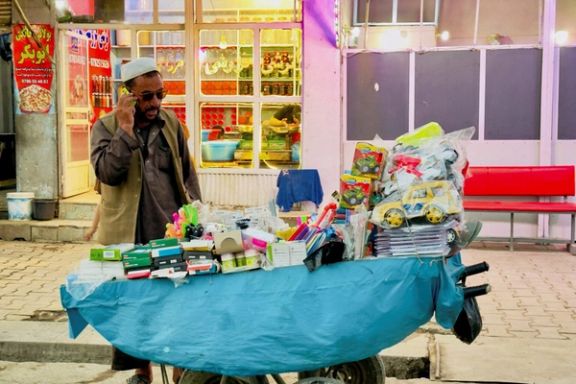
The Taliban’s Ministry of Communications and Technology says access to telecommunications services across Afghanistan has increased over the past four years.

The Taliban’s Ministry of Communications and Technology says access to telecommunications services across Afghanistan has increased over the past four years.
The ministry also reported that access to 3G internet services has grown from 6.2 million to 6.8 million users, while 4G service coverage has expanded from 1.6 million to 6.9 million users.
The announcement comes despite the Taliban’s decision last month to shut down telecommunications services nationwide for three consecutive days. The group had also previously cut fibre-optic internet services in several provinces. The disruptions severely affected banking, customs operations, trade, healthcare, education, aviation, transport and daily life.
The Taliban says it has invested 12 billion afghanis in the telecommunications sector over the past four years. According to the ministry, more than 22 million SIM cards have been re-registered nationwide and more than 1,400 new telecom sites have been activated.
Despite these claims, Afghanistan continues to have some of the slowest and most expensive internet services in the world.


Iran’s foreign minister has announced plans for a “regional meeting” to reduce tensions between the Afghan Taliban and Pakistan. Abbas Araghchi said on Sunday that Tehran is working to organise the gathering, though he offered no details on its format or timing.
Speaking to reporters at an event in Tehran, Araghchi said Iran had recently engaged in efforts to mediate and stabilise relations between Islamabad and the Taliban. He said the proposed regional meeting would be part of those broader initiatives.
He said Iran had held a series of telephone contacts in recent days and hoped the efforts would produce “significant results.” He did not clarify which countries might be invited or where the meeting would be held.
Ties between the Taliban and Pakistan have deteriorated in recent weeks amid disputes over Tehreek-e-Taliban Pakistan (TTP) and Pakistani airstrikes on Afghan territory. The two sides have held three rounds of talks mediated by Qatar and Türkiye, but the negotiations have ended without progress.
Last week, the Taliban said Pakistan had asked Taliban leader Hibatullah Akhundzada to issue a religious decree condemning the conflict in Pakistan. The Taliban responded that issuing fatwas falls under the authority of the Dar al-Ifta institutions, not the Taliban leader personally.
Pakistan has long accused the Afghan Taliban of supporting Pakistani militants involved in the insurgency against the state, an allegation the Taliban denies.

Traders, drivers and residents of Landi Kotal in Pakistan’s Khyber Pakhtunkhwa province staged a protest on Sunday against the continued closure of the Torkham border crossing, which has remained shut for more than a month.
Demonstrators called for the immediate reopening of the key transit point, saying the prolonged closure has inflicted heavy losses on the economies of both Afghanistan and Pakistan and has left thousands of people unemployed. They warned that factories in Khyber Pakhtunkhwa were now at risk of shutting down due to the disruption in cross-border trade.
Protesters said the closure had severely damaged the agriculture, trade and transport sectors, with Pakistan’s economy bearing the greatest losses. One participant said that even during wartime, trade routes typically remained open, adding that the current situation had driven people deeper into hunger and poverty.
The demonstrators warned that if the closure continues and economic pressures intensify, the security situation in the region is likely to deteriorate. They urged Pakistani authorities to take concrete steps to resolve the impasse and called on the Afghan Taliban to address disputes through dialogue.
Torkham and several other border crossings were closed to commercial and passenger traffic last month following deadly clashes between Pakistani forces and the Afghan Taliban. The shutdown has led to sharp increases in the price of imported goods in both countries.
Pakistani officials have previously said that under normal circumstances, the Torkham crossing alone facilitates more than US$3 million in daily trade, including about US$2 million in exports and roughly US$900,000 in imports.

Russia’s Foreign Ministry has called for de-escalation between Pakistan and the Taliban, urging both sides to address their differences through political, diplomatic and peaceful means.
Ministry spokesperson Maria Zakharova made the remarks at a press briefing, saying Moscow was prepared to take part in or mediate efforts aimed at reducing tensions and promoting long-term regional stability.
Zakharova said the growing strain between Pakistan and the Taliban was a concern not only for Russia but for the wider international community. She noted that Moscow stood with its regional partners in supporting dialogue.
Russia remains the only country to have formally recognised the Taliban.
Russian Foreign Minister Sergey Lavrov and Iran’s Foreign Minister Abbas Araghchi have previously called on Islamabad and the Taliban to continue talks, stressing that disputes should be resolved through diplomatic channels to safeguard regional security.
Moscow’s latest appeal follows the collapse of a third round of talks between Pakistan and the Taliban in Istanbul, which ended without progress.
Pakistan’s Defence Minister, Khawaja Asif, later said the negotiations had reached a complete deadlock and that no further talks were planned. He said the delegation’s return “empty-handed” suggested that even the mediators had lost confidence in the process.
Taliban spokesperson Zabihullah Mujahid subsequently confirmed the failure of the Istanbul talks. In a post on X on 8 November, he said the discussions had “produced no result,” adding that the Taliban administration would not allow Afghan territory to be used against any other country.

The UN High Commissioner for Refugees (UNHCR) office in Pakistan has announced that global funding constraints have forced the agency to halt cash assistance for most Afghans returning from Pakistan.
The agency said support will now be limited to vulnerable returnees and holders of Proof of Registration (PoR) cards.
In a statement issued on Saturday, UNHCR said worldwide financial pressures had affected its ability to deliver humanitarian aid. The agency confirmed that cash support for Afghan returnees was restricted beginning on Friday.
According to the announcement, only Afghans registered with UNHCR or holding PoR cards will be eligible for the reduced assistance. The agency acknowledged the hardships facing Afghan families and said broader support would resume if additional funding becomes available.
The reduction in aid comes as Pakistan intensifies its campaign to expel Afghan migrants, with authorities reportedly removing around 7,000 people in a single day. Human rights groups have criticised the mass deportations, and UN experts have warned of severe humanitarian consequences, urging Pakistan to adhere to its international obligations.
Iran is also deporting thousands of Afghan migrants each day. The UN Security Council has noted that efforts to deliver humanitarian assistance inside Afghanistan have become increasingly complicated as neighbouring countries continue to force out Afghan nationals.

Abdullah Mukhtar, the Taliban-appointed governor of Khost, has instructed border forces to remain prepared for any potential threat as tensions with Pakistan continue to escalate.
The governor’s office said on Friday that Mukhtar, leading a delegation, visited border areas near Babrak Tana adjacent to Pakistan.
According to the statement, Mukhtar described the defence of Afghanistan’s territorial integrity and population as a “sacred responsibility” and urged border personnel to perform their duties with vigilance and integrity.
The visit comes as relations between the Taliban and Pakistan reach one of their highest points of strain and mistrust. Recent talks between the two sides in Türkiye ended without progress, while trade and transit routes have been closed for more than a month with no indication of reopening.
Taliban fighters have clashed with Pakistani border forces more than 15 times over the past four years. In the second half of September 2024, relations between the Taliban and Islamabad deteriorated to their lowest level since the Taliban returned to power in 2021. In a highly unusual development, Pakistani aircraft recently entered Kabul’s airspace and struck targets in the Afghan capital.
Following the failure of negotiations, concerns have increased over the possibility of renewed border confrontations.