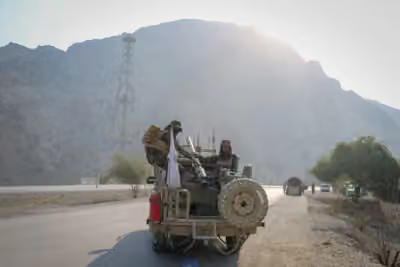
Mostaghfar Gurbaz, spokesperson for the Taliban-appointed governor in Khost, called on the public not to bring smartphones, cameras or weapons to the execution site.
The Taliban did not disclose details of the case, saying only that it stemmed from a “tragic incident” in the Alisher and Terezi districts.
If carried out, the execution will be the twelfth conducted publicly by the Taliban since returning to power. Eleven others have been executed in Farah, Laghman, Ghazni, Jawzjan, Badghis and Nimroz provinces, often before large crowds.
Following the execution of four people in Farah, Badghis and Nimroz, the UN Assistance Mission in Afghanistan (UNAMA) said the Taliban’s actions violated the fundamental right to life and called for an immediate end to the death penalty.
The Taliban’s foreign ministry later rejected UNAMA’s appeal as an “audacious insult” to Islamic rulings and said capital punishment was a non-negotiable part of Islamic Sharia. It urged UNAMA to refrain from such criticism.
The Taliban’s use of public executions has drawn widespread condemnation from international organisations and several governments.