Military Courts Jailed Over 1,000 People In Three Months, Says Taliban

The Taliban Supreme Court says more than 1,000 people were sentenced to prison by its military courts over a three-month period this year.
The Taliban Supreme Court says more than 1,000 people were sentenced to prison by its military courts over a three-month period this year.
According to the court, 1,163 individuals were jailed in the last three months. Taliban military courts handle cases involving personnel serving in military roles within the Taliban administration.
The figures were published in a report by the security and executive directorate of the Taliban Supreme Court. The report did not specify the alleged crimes, charges, length of sentences, identities of those imprisoned or the locations where they are being held.
The report said Taliban military courts also issued thousands of summonses, with some individuals reportedly contacted by telephone and ordered to appear before Taliban military and judicial authorities.
Taliban military courts have jurisdiction over cases involving employees of the ministries of defence, interior and intelligence.
In previous years, Taliban courts have tried cases involving allegations such as kidnapping, document forgery, murder and abuse of authority. In many cases, however, the Taliban have released little information about defendants, their positions, judicial proceedings or the rulings issued.
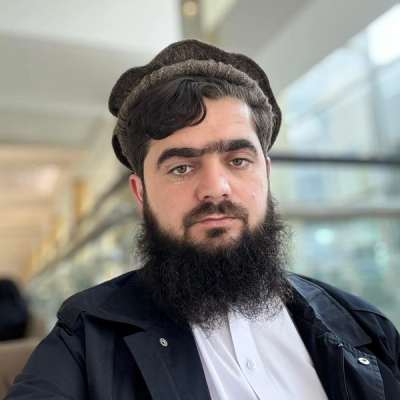
Security sources told Afghanistan International on Monday that one of the suicide attackers involved in the assault on the Wana military college in South Waziristan, Pakistan, was an Afghan national identified as Janullah Ayubi.
He was also known by the alias Zahid, and originated from Afghanistan’s Nangarhar province.
A photograph obtained by Afghanistan International shows a memorial ceremony held for him, in which he is described as a “martyred hero.”
The sources said Janullah was a resident of Kochiyano village in Mohmand Dara district of Nangarhar province. According to the information, several local Taliban officials attended his memorial service.
The attack took place on November 9, when four assailants stormed the military facility, killing three Pakistani soldiers. Pakistani authorities said two of the attackers were Afghans.
During the assault, the attackers rammed a vehicle packed with explosives into the main gate of the college and then engaged in a gun battle with security forces. The Pakistani government later said all the attackers were killed.
Pakistan claimed the attack was organised from inside Afghanistan. In a statement, Pakistan’s Ministry of Information and Broadcasting said that the attack on the Wana military college was planned and directed from Afghanistan. It added that the operation was designed in Afghanistan by a foreign national named Zahid, and Noor Wali Mehsud ordered its execution.
The statement added that all the attackers who carried out the assault on the college were Afghan nationals. The equipment used in the attack was also supplied from Afghanistan and included American-made weapons, it added.
On November 10, the Taliban’s Ministry of Foreign Affairs issued a statement strongly condemning the attacks in Islamabad and at the Wana military college in South Waziristan. The group has repeatedly denied that militants carry out attacks against Pakistan from Afghan territory.
More recently, Asim Munir, Pakistan’s chief of army staff, claimed that “70 per cent” of fighters from Tehreek-e-Taliban Pakistan (TTP) are Afghans. He told the Taliban administration that it must choose between Pakistan and the TTP.
A group of Pakistani clerics meeting under the banner of Jamiat Ulema-e-Islam criticised the Afghan Taliban for denying girls access to education, saying the policy has no basis in Islamic law.
In a statement issued after a meeting held on Monday in Karachi and chaired by Maulana Fazlur Rehman, the clerics said that “depriving girls of education has no justification in Islam” and urged the Taliban to immediately reopen educational institutions to girls.
The statement said education is a “religious obligation” for both men and women, warning that continued restrictions on girls’ education would harm Afghan society, future generations and Afghanistan’s international standing.
The Pakistani clerics said the ongoing ban on girls’ education in Afghanistan is “contrary to Islamic principles.”
Since returning to power, the Taliban have closed schools above grade six, universities and other higher education institutions to girls. Afghan citizens, Islamic countries and the wider international community have repeatedly condemned the Taliban’s denial of the right to education for women and girls and have called for the policy to be reversed. The Taliban, however, have remained unresponsive to these demands.
Criticism of Pakistan’s Attacks on Afghanistan
In another part of the statement, the clerics called on the Afghan Taliban not to allow Afghan territory to be used to carry out terrorist attacks against Pakistan.
They also urged that disputes be resolved through dialogue.
Participants condemned armed struggle and militant activities inside Pakistan, describing them as religiously and constitutionally illegitimate.
Meanwhile, Maulana Fazlur Rehman criticised Pakistan’s military strikes on Afghan territory during the gathering, saying regional tensions should be resolved through dialogue and restraint.
Relations between Islamabad and the Afghan Taliban deteriorated sharply after Pakistan carried out strikes in October on Kabul and other parts of Afghanistan, leading to deadly border clashes. Pakistan accuses the Afghan Taliban of sheltering Pakistani Taliban militants, a claim the Afghan Taliban deny. United Nations reports, however, have confirmed the presence of Pakistani Taliban fighters in Afghanistan.
Germany has relocated a further 141 Afghan refugees from Pakistan, nearly four years after the fall of Kabul, as part of efforts to complete long-delayed admissions promised by a previous government.
Germany’s Interior Ministry said the refugees arrived on Monday on a charter flight from Islamabad to the northern city of Hanover. The transfer is part of an accelerated process to relocate Afghans stranded in Pakistan who had received formal admission pledges from Berlin.
German media reported that the flight was organised by the federal government and included 123 people from Germany’s so-called human rights list, as well as 18 former local employees of German institutions or their family members.
After arriving in Hanover, the refugees are expected to be resettled across several German states.
According to available information, at least 45 former local employees and 246 Afghans deemed at risk because of their human rights or media work remain in Pakistan awaiting relocation.
Pakistan has given Germany until the end of the calendar year, eight days from now, to remove all Afghan refugees holding German admission pledges. Pakistani authorities have warned that those who remain could face deportation to Afghanistan.
Germany’s interior minister said the relocation process would be completed within the deadline, but acknowledged that the review of some cases and the transfer of certain individuals could be delayed until next year.
After the Taliban seized power in August 2021, Germany launched special programmes to evacuate Afghan local staff, activists and journalists. However, domestic political opposition to migration has since intensified. The Merz government, which came to power pledging to reduce refugee numbers, began implementing the transfer of Afghans with admission pledges after significant delays.
The government has said it will honour commitments made by the previous administration but has indicated it has no plans to relocate hundreds of other Afghan refugees who have been waiting for months to move to Western countries.
Former Afghan interior minister Omar Dawoodzai has criticised comments by Pakistan’s army chief, saying the Taliban represent only a small fraction of Afghanistan’s population and should not be equated with the Afghan people.
In a Facebook post on Monday, December 22, Dawoodzai responded to remarks by Asim Munir, who claimed that most fighters of Tehreek-e-Taliban Pakistan (TTP) are Afghans. Dawoodzai said that if Munir was referring to Afghans living beyond the Durand Line, the claim might carry some weight, but stressed that the Afghan Taliban make up less than 5 percent of Afghanistan’s population and do not represent the nation.
He said Afghans have repeatedly made clear that they harbour no hostility toward the people of Pakistan.
Dawoodzai, who also served as Afghanistan’s ambassador to Pakistan, said Islamabad’s primary conflict is with the TTP and possibly with the Afghan Taliban, and that the issue should not be framed as a confrontation with Afghan civilians or used to target Afghan migrants.
He recalled that thousands of TTP leaders were released from Afghan prisons in August 2021, noting that Pakistani Taliban fighters once fought alongside the Afghan Taliban against the former Afghan government but now seek to overthrow the Pakistani state.
Dawoodzai warned that broad generalisations and the avoidance of responsibility would only deepen tensions rather than resolve them. He said the situation requires transparency, honest policymaking and an acknowledgment of past mistakes, not collective blame directed at an entire nation.
Munir made his remarks at a national conference of religious scholars in Islamabad on December 10, which were reported by Pakistani media on Sunday, December 21. He warned that Pakistan would not tolerate threats to its security or sovereignty from TTP fighters based in Afghanistan.
Several government employees in Khost province say the Taliban have detained them for up to 24 hours and then dismissed them from their jobs for having what officials deem to be short beards.
Civil servants told Afghanistan International that officers from the Ministry for the Promotion of Virtue and the Prevention of Vice, acting on orders from the department’s head in Khost, have been visiting government offices to inspect employees’ appearance, particularly their beards.
According to the employees, staff in several offices have faced insults, threats and humiliation solely because their beards are considered too short, despite being civilian workers with no political or criminal background.
They said anyone whose beard does not meet the preferences of the local morality police chief or who lacks a personal relationship with him comes under pressure and risks dismissal.
A staff member at the Khost Telecommunications Directorate said officials had been told their beards must be at least a fist-length and that hair below the ears must not be trimmed.
Sources said the practice is under way in several departments, including Khost Municipality, the Telecommunications Directorate and the Department of Labour and Social Affairs.
The complaints come as Taliban morality police in Kandahar have reportedly detained about 15 young men over the past two days for having short or shaved beards, removing them from restaurants.