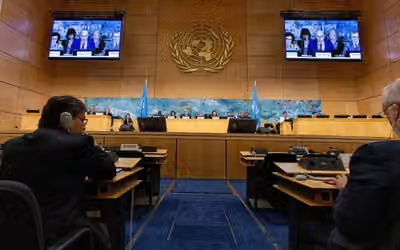
In an open letter addressed to the special rapporteurs of the UN Human Rights Council, the activists said the Taliban administration has pursued policies that deliberately marginalise and suppress the use of Persian, one of Afghanistan’s two official languages.
The letter raised concerns about what it described as linguistic and structural discrimination, accusing the Taliban of imposing Pashto across education, administration and other public spheres. The activists said these policies have deprived Persian speakers of equal participation, fair access to public services and social standing.
Among their demands are an independent international investigation into linguistic discrimination against Persian speakers in Afghanistan, proper documentation of such practices, formal recognition of the discrimination and accountability for Taliban leaders responsible for the policies.
Afghanistan’s 2004 constitution recognised Pashto and Dari as the country’s official languages. However, since seizing power in August 2021, the Taliban have imposed sweeping restrictions on the use of Persian.
According to the letter, the use of Persian has been significantly curtailed in official meetings, government documents, public signage and state media. In several provinces, Persian-language signs have been removed from government offices, while images of Persian-speaking poets have reportedly been taken down in the northern city of Mazar-e-Sharif.
The activists urged the international community to scrutinise the Taliban’s language policies and take action to protect linguistic rights as part of broader efforts to address human rights violations in Afghanistan.