Taliban Publicly Flog Three, Including A Woman, In Maidan Wardak
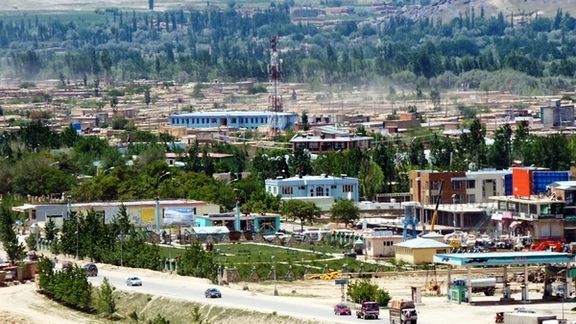
The Taliban’s Supreme Court said it publicly flogged three people, including one woman and two men, in Maidan Wardak province on charges described as “illicit relations”.
The Taliban’s Supreme Court said it publicly flogged three people, including one woman and two men, in Maidan Wardak province on charges described as “illicit relations”.
In a statement issued on Thursday, the court said the punishments were carried out by the Maidan Wardak city primary court. The individuals received between 30 and 39 lashes each and were also sentenced to prison terms ranging from four months to 12 years.
The Taliban Supreme Court said the floggings took place in the presence of local officials, court staff, visitors and members of the public.
The statement added that Taliban courts have publicly flogged at least 39 people across Afghanistan over the past week on various charges.
Since returning to power in August 2021, the Taliban have reinstated public corporal punishment, including floggings and executions, a practice widely condemned by human rights organisations and the international community but defended by the group as enforcement of its interpretation of Islamic law.

An Iranian lawmaker said a suspect has been arrested in connection with the killing of a former Afghan military officer in Tehran.
Fada Hossein Maleki, a member of Iran’s parliament and its National Security and Foreign Policy Committee, told Avash News Agency that the suspect in the assassination of Genenral Ikramuddin Sari had been detained in the Iranian capital. He said Iran would not allow Afghanistan’s security problems to spill over into Tehran or Mashhad.
Maleki said several Iranian institutions have investigated the killing of Sari and of Mohammad Amin Almas, another former Afghan military officer, stressing that Iran’s Interior Ministry is treating the case with particular sensitivity.
Maleki said that the assassinations of Taliban-opposed commanders in Tehran and Mashhad are regrettable and added that the cases are being “seriously pursued” by parliament’s National Security Committee and Iran’s security agencies.
Referring to the arrest, he said: “According to the latest information we have received, the perpetrator has been detained, but further details must be announced by the Interior Ministry.”
Sari, a former police chief of Takhar province under Afghanistan’s previous government, and Almas were shot dead on December 24, 2025, in Tehran’s Vali-e Asr district, near their office. The killings prompted strong reactions from Taliban opposition groups.
The National Resistance Front of Afghanistan, Jamiat-e Islami and the Afghanistan Freedom Front accused the Taliban of carrying out the assassinations on Iranian soil. The groups urged Tehran to conduct a “serious and transparent” investigation and to hold those responsible accountable.
Maleki said “most indications suggest the incident was directed from outside Iran”, adding that he found it unlikely the suspect acted on personal motives. He said reports from Mashhad suggested the operation involved planning and coordination. He did not comment directly on allegations of Taliban involvement.
Iranian officials have previously voiced concern over similar incidents. On September 13 last year, former Afghan commander Marouf Gholami, who was close to former jihadi leader Ismail Khan, was shot dead in his office in Mashhad.
Maleki warned that Afghanistan-related conflicts should not be allowed to be transferred onto Iranian territory, calling for heightened vigilance by security agencies.
The Taliban have suspended the operations of a gold mining company in Chah Ab district of Takhar province and detained two people on suspicion of murder following deadly clashes with local residents, a Taliban official said.
Abdul Mateen Qani, spokesperson for the Taliban’s Interior Ministry, told media that mining activities were halted after violence erupted between residents and company personnel. He said one local resident and one company official had been arrested in connection with the killings.
Qani said three local residents and one company employee were killed in the clashes. He added that security forces have brought the situation under control and that all mining operations in the area have been suspended.
He also said the Taliban’s deputy governor of Takhar, Mohammad Nader Haqjo, had been sent to the district to investigate the incident.
However, sources told Afghanistan International that following Monday’s clashes, Taliban forces detained several local residents and that others were reported missing. The sources said Haqjo travelled to Chah Ab on Tuesday, and issued threats to protesters during a meeting.
No official details have been released regarding the number of detainees or the whereabouts of those reported missing.
The Taliban had earlier confirmed that a delegation was dispatched to investigate the clashes, saying the violence resulted in casualties and financial damage but without providing exact figures.
Local sources previously told Afghanistan International that at least three residents and one Taliban member were killed and 16 others wounded during confrontations between Chah Ab residents and Taliban-linked companies. Protesters reportedly set fire to mining equipment, prompting company officials to leave the area.
Former Taliban commander criticises corruption
Separately, Salahuddin Salar, a former deputy intelligence chief at the Taliban Defence Ministry, issued a sharp critique of the group’s governance in a post on Facebook.
Salar accused Taliban officials of “corruption, ethnic favouritism and prioritising personal and tribal interests over justice and the public good”. He said the concentration of wealth and national resources in the hands of a small group had widened the gap between the public and those in power, undermining the legitimacy of authority.
He warned that governments often collapse when “greed and personal interest replace wisdom and concern for the public interest”, adding that only justice, accountability and respect for human dignity could prevent such an outcome.
Residents of Chah Ab say their protests were triggered by what they describe as excessive gold mining, severe environmental damage and water shortages caused by excavation by Taliban-linked companies. Despite the dispatch of a Taliban delegation, locals say tensions in the area remain high.
Bank Alfalah said it has accepted a proposal from Ghazanfar Bank to acquire its operations in Afghanistan, signalling a potential exit from the Afghan market after nearly two decades.
In a statement, Bank Alfalah said the move does not constitute a final sale but marks the start of a formal evaluation and negotiation process between the two sides. The proposal, it said, represents the first step in a multi-stage divestment process.
The bank said completion of due diligence, the signing of definitive transaction agreements and full compliance with legal and regulatory requirements will be required before the transaction can be finalised. No timeline for completion was provided, and the bank did not explain the reasons for seeking to sell its Afghan operations.
Bank Alfalah said it has formally notified the Pakistan Stock Exchange of the decision. It added that the State Bank of Pakistan has granted Ghazanfar Bank initial approval to begin a detailed review of Bank Alfalah’s Afghan business. Afghanistan’s central bank, Da Afghanistan Bank, has also approved and authorised the process, according to the statement.
Pakistani media reports say Bank Alfalah has been seeking to exit the Afghan market for several years. An earlier attempt to divest its operations failed in 2019, when Da Afghanistan Bank rejected an acquisition proposal from Azizi Bank.
Although Bank Alfalah and Azizi Bank had reached a preliminary understanding at the time, the deal could not proceed without regulatory approval. Following that setback, Bank Alfalah said it would continue operating in Afghanistan while exploring alternative options.
Bank Alfalah entered the Afghan market in 2005 and currently operates branches in Kabul and Herat.
A group of Afghan human rights activists, educators and women protesters have called for an end to what they describe as systematic discrimination against the Persian (Dari) language in Afghanistan.
In an open letter addressed to the special rapporteurs of the UN Human Rights Council, the activists said the Taliban administration has pursued policies that deliberately marginalise and suppress the use of Persian, one of Afghanistan’s two official languages.
The letter raised concerns about what it described as linguistic and structural discrimination, accusing the Taliban of imposing Pashto across education, administration and other public spheres. The activists said these policies have deprived Persian speakers of equal participation, fair access to public services and social standing.
Among their demands are an independent international investigation into linguistic discrimination against Persian speakers in Afghanistan, proper documentation of such practices, formal recognition of the discrimination and accountability for Taliban leaders responsible for the policies.
Afghanistan’s 2004 constitution recognised Pashto and Dari as the country’s official languages. However, since seizing power in August 2021, the Taliban have imposed sweeping restrictions on the use of Persian.
According to the letter, the use of Persian has been significantly curtailed in official meetings, government documents, public signage and state media. In several provinces, Persian-language signs have been removed from government offices, while images of Persian-speaking poets have reportedly been taken down in the northern city of Mazar-e-Sharif.
The activists urged the international community to scrutinise the Taliban’s language policies and take action to protect linguistic rights as part of broader efforts to address human rights violations in Afghanistan.
Pakistan’s defence minister has said Islamabad does not trust the Afghan Taliban, citing their growing ties with India. He warned that Pakistan is prepared to confront both India and the Taliban if required.
Speaking to Geo News, Defence Minister Khawaja Asif said Pakistan was concerned about the Taliban’s expanding relationship with New Delhi and was ready to respond to any aggression along both its eastern and western borders.
Asked whether Pakistan has the capacity to fight on two fronts simultaneously, Asif said the country was fully prepared.
Relations between Pakistan, India and the Afghan Taliban have deteriorated in recent months. Pakistan fought a four-day conflict with India in May last year and, several months later, clashed with Taliban forces in October.
The remarks follow comments earlier this week by Pakistan army spokesperson Ahmed Sharif Chaudhry, who accused the Afghan Taliban of aligning themselves with the government of Indian Prime Minister Narendra Modi.
As tensions with Pakistan have risen, the Taliban have expanded engagement with India. Over the past two months, several senior Taliban officials, including three cabinet ministers, have travelled to New Delhi. Taliban officials have said they hope India will help offset economic losses following a downturn in trade with Pakistan.
Asif also referred to last year’s conflict with India, saying Pakistani fighter jets were tested under real combat conditions during the fighting. He added that Pakistan has since received significant international orders for combat aircraft, describing the development as a sign of confidence in the country’s defence capabilities.