UN Security Council Condemns Attack On Chinese Restaurant In Kabul
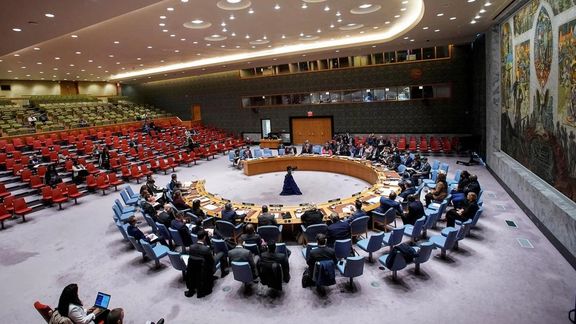
The UN Security Council on Wednesday condemned the Islamic State group’s terrorist attack on a Chinese restaurant in Kabul’s Shahr-e Naw neighbourhood.
The UN Security Council on Wednesday condemned the Islamic State group’s terrorist attack on a Chinese restaurant in Kabul’s Shahr-e Naw neighbourhood.
In a statement, the council expressed condolences to the families of the victims in Afghanistan and China and stressed the need to hold accountable those responsible for planning, carrying out and supporting the attack.
Islamic State’s Khorasan branch (ISIS-K) claimed responsibility for the attack, which took place on Monday in Kabul’s Shahr-e Naw area.
Six Afghan nationals and one Chinese citizen were killed in the explosion, while 13 others were wounded, including a child. Five Chinese citizens were among the injured.
The Security Council also urged all countries to strengthen cooperation in combating terrorism, in line with their obligations under international law and relevant UN resolutions.

The Taliban Ministry of Finance has warned that the customs clearance of Pakistani medicines will be completely halted at all border crossings from February 9, when a previously announced three-month deadline expires.
In a statement issued on Wednesday, the ministry urged traders and importers to complete all transactions and customs documentation for Pakistani medicines within the remaining 19 days.
The Taliban first announced the ban amid rising tensions and clashes with Pakistan. In November 2025, Abdul Ghani Baradar, the Taliban’s deputy prime minister for economic affairs, called on traders to finalise customs procedures within a three-month grace period.
Taliban officials said that once the deadline expires, medicines imported from Pakistan will no longer be processed by customs authorities.
The Taliban have claimed that millions of dollars are spent each year on what they describe as “low-quality” Pakistani medicines. Following the directive, the Taliban’s minister of industry and commerce travelled to Iran and India, with officials saying the administration plans to increase imports of Indian medicines, including through air corridors.
Earlier, on December 2, 2025, Noor-ul-Haq Anwar, head of the Taliban’s Administrative Affairs Directorate, said that more than 70 percent of medicines had previously been imported from Pakistan. He added that medicine shortages have been felt across Afghanistan since the closure of border crossings with Pakistan.
The Taliban’s minister for the propagation of virtue has claimed that the rights of Ismailis in Afghanistan are protected, despite multiple reports documenting abuses against the religious minority.
Khalid Hanafi made the remarks during a meeting with a delegation of Shia Ismailis, which the Taliban said was held to coordinate, hear concerns and cooperate on religious outreach.
In a statement issued on Wednesday, January 21, the spokesperson for the Taliban Ministry for the Propagation of Virtue said Hanafi had emphasised the need to address the religious concerns of the Ismaili community. According to the statement, Hanafi asserted that in an Islamic system the rights of all Afghans are protected and that responding to citizens’ religious issues is a core responsibility of the government.
Hanafi added that the Taliban administration would make every effort to “reform society” and stressed the role of religious scholars, tribal elders and the public in addressing social issues. He said eliminating what he described as social problems and improper customs requires collective cooperation.
The remarks come amid persistent reports of discrimination and abuse against religious minorities, including allegations of pressure to convert and the seizure of Ismaili land by Taliban authorities.
The United Nations Assistance Mission in Afghanistan, UNAMA, reported that in the first three months of 2025 the Taliban coerced more than 50 Ismailis into converting to Sunni Islam. According to the report, Taliban agents beat, intimidated and threatened with death those who refused to convert.
A study by the rights group Rawadari, published in December 2025, found that since the Taliban’s return to power Ismaili Shias have faced forced conversion, forced displacement, exclusion from state institutions, land and property seizures, and increasing restrictions on religious practices.
Local sources in Takhar and Badakhshan provinces also told Afghanistan International in late December 2025 and early January 2026 that three Ismaili men had been killed by armed individuals in the two provinces within the space of a month.
Human rights activists say harassment, forced conversions and killings of members of the Ismaili community stem from the Taliban’s exclusionary ideology, contradicting official claims that minority rights are being upheld.
Taliban provincial governors from across Afghanistan have held a meeting in Kandahar to discuss political, security and economic issues, the office of the Taliban governor in the province said.
In a statement released on Wednesday, the governor’s media office said the meeting brought together governors from seven zones, including Kabul, Balkh, Herat, Nangarhar, Kandahar, Kunduz and Paktia.
According to the statement, the discussions focused on security developments, counter-narcotics efforts, challenges facing Afghan migrants returning from neighbouring countries, and measures to facilitate trade and economic activity.
The statement said the governors, who under a decree by Taliban leader Hibatullah Akhundzada are responsible for provincial administration at the zonal level, also stressed the importance of implementing his decrees consistently across all provinces.
It added that several key issues raised during the meeting were referred to Akhundzada’s office in Kandahar for final guidance and instructions.
Richard Lindsay, the UK’s special envoy for Afghanistan, met on Tuesday with Sardar Ahmad Shakeeb, the Taliban’s representative in Islamabad, to discuss regional security and the impact of Taliban policies on Afghan women and girls.
Lindsay said the meeting took place during his visit to the Pakistani capital and focused on security developments in the region as well as restrictions imposed by the Taliban on women and girls in Afghanistan.
During the same visit, Lindsay also met Mohammad Sadiq Khan, Pakistan’s special envoy for Afghanistan. The two discussed regional security concerns, including cross-border militant attacks.
Britain, like most Western countries, does not recognise the Taliban administration. However, through its special envoy, London continues to engage with Taliban officials and regional governments on issues including counterterrorism, human rights and humanitarian access for Afghans.
In public remarks, the British envoy referred to Shakeeb as the “Taliban representative in Pakistan,” reflecting the UK’s policy of engaging with the Taliban as a ruling group rather than recognising them as Afghanistan’s legitimate government.
Some human rights organisations and activists have criticised official meetings with Taliban representatives, arguing that such engagements risk normalising the group’s rule.
The Taliban’s Ministry of Foreign Affairs has repeatedly rejected claims that the group is internationally isolated, saying it maintains broad relations with various countries, which it says refrain from announcing formal ties due to pressure from the United States.
Donald Trump has again criticised the administration of Joe Biden over the manner of the United States’ withdrawal from Afghanistan, saying Washington should not have left Bagram Air Base.
Speaking at a White House press conference on Tuesday, Trump described the withdrawal and the killing of 13 US service members in the Kabul airport bombing as “the lowest point” in American history.
Referring to his previous term in office, Trump said he had also been in the process of withdrawing US forces from Afghanistan but would have done so “with dignity and strength”. He added: “We were the boss. They wouldn’t do a thing against us.”
Trump said the United States should not have abandoned Bagram Air Base, which he described as a major military installation spanning hundreds of acres.
He also said Washington handed over large amounts of military equipment to the Taliban, calling the outcome a “disaster”. Trump said it was shameful to see the Taliban parading annually through streets with American military equipment.
At the same time, Trump said that during his previous presidency he rebuilt the US military, and that the equipment left behind in Afghanistan represented only a small fraction of that effort. He added that he continues to rebuild the US armed forces.
Trump has repeatedly criticised the Biden administration’s handling of the Afghanistan withdrawal, both before and after returning to the White House.
Following the US withdrawal, large quantities of advanced American military equipment were left behind and fell into Taliban hands. According to a US Department of Defense assessment, the value of the equipment is estimated at more than $7 billion and includes military vehicles, advanced weapons, biometric devices and other technologies.
The Taliban have since repaired and reused some of the damaged US military equipment.