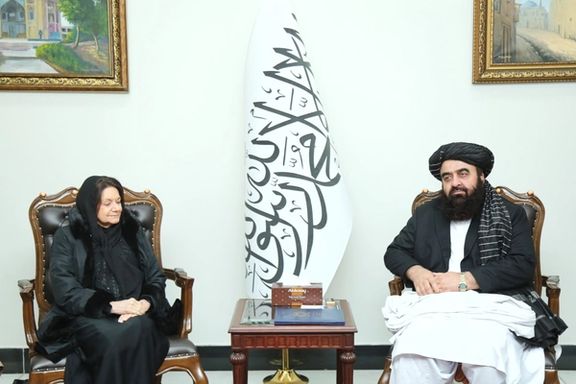
In a statement, the ministry said the two sides held extensive talks on engagement and coordination between the Taliban administration and the United Nations, as well as on Doha process meetings. Discussions also covered counter-narcotics efforts, support for the private sector and the return of migrants.
Muttaqi called on the UN official to help lift banking sanctions on Afghanistan and to facilitate the release of the country’s central bank assets, according to the statement.
He also raised concerns about drug cultivation in some countries in the region, warning that production outside Afghanistan would harm not only Afghanistan but also the wider region and the world. He did not name any country, although Taliban officials have previously alleged that drugs are cultivated in Pakistan.
DiCarlo emphasised cooperation within the framework of the Doha process working groups and described the continuation of the Doha meetings as beneficial for all sides, the statement said.
The United Nations and the Taliban have previously discussed counter-narcotics and private sector support during Doha talks and have established technical working groups in those areas.
The UN has sought to create conditions for meaningful dialogue between the Taliban authorities, regional representatives and Afghan stakeholders, including women, civil society members and human rights activists. The Taliban, however, have shown little interest in talks with their opponents.
According to the Taliban statement, DiCarlo also expressed hope that joint cooperation could be strengthened through the Doha process.
The UN Assistance Mission in Afghanistan established the first counter-narcotics working group under the Doha process in November 2024. A second working group focused on economic issues was later formed to help coordinate economic assistance to Afghanistan under Taliban rule.
The United Nations has said a fourth Doha meeting would be held following the establishment of these two working groups.
At the third Doha meeting, held on July 1 and 2, 2025, with the participation of countries’ special envoys for Afghanistan, Taliban representatives attended, but women, civil society and political opponents were excluded, drawing widespread criticism.
At the time, the United Nations said the meeting aimed to increase international engagement with Afghanistan in a coherent and structured manner.