Taliban Intelligence Detain Shia Cleric In Ghazni, Family Denied Access
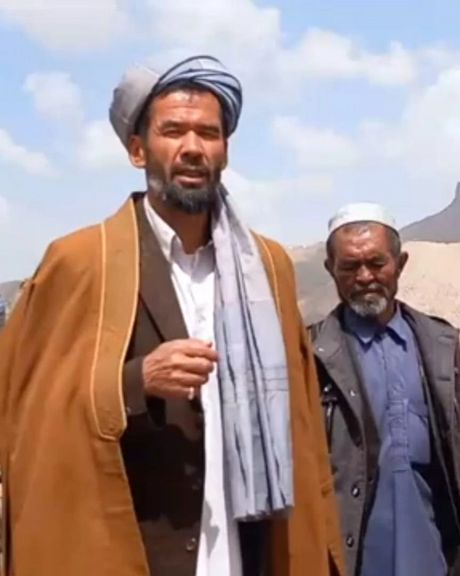
Taliban intelligence forces have arrested Jan Ali Akbari, the former deputy head of the Ulama Council in Malistan district of Ghazni province, according to local sources.
Taliban intelligence forces have arrested Jan Ali Akbari, the former deputy head of the Ulama Council in Malistan district of Ghazni province, according to local sources.
Akbari, who also serves as a school principal, was detained last week in Ghazni city, the sources said.
Informed sources said the Taliban have not allowed his family to visit him since his arrest on January 18, and no further information has been released about his condition or whereabouts.
Relatives told Afghanistan International that Akbari was initially detained on suspicion of possessing military equipment linked to a former local commander, but the allegation was not substantiated during investigations.
According to a source close to him, the Taliban later held the cleric on accusations of document forgery at the school where he works as principal.

The Taliban Supreme Court said it had flogged 18 people in Kabul on charges including the sale and trafficking of alcohol, cannabis, methamphetamine and prohibited tablets.
In a statement issued Thursday, the court said the sentences ranging from 15 to 39 lashes and prison terms of seven months to two years were carried out on Wednesday, January 28. It did not provide details on how the punishments were implemented.
The Taliban authorities regularly carry out floggings, often in public.
Over the past 10 days, the Taliban have flogged 87 people across Afghanistan, including women, on various charges, according to official statements.
Despite opposition from international organisations to corporal punishment and the torture of detainees, the Taliban has continued public floggings.
The UN Food and Agriculture Organization and the Asian Development Bank have launched a $100 million food security project in Afghanistan.
The project is aimed at strengthening food security and restoring agricultural livelihoods for more than one million vulnerable people.
In a statement, FAO said the two-year programme would support more than 151,000 families, including returnees from Pakistan and Iran, host communities and households affected by recent earthquakes and floods.
Repeated natural disasters have destroyed crops, livestock and irrigation infrastructure, while large-scale returns of migrants from neighbouring countries have placed additional pressure on already vulnerable communities, the agency said.
The project seeks to mitigate the impact of successive climate-related crises by restoring rural livelihoods, protecting livestock and rebuilding agricultural production systems.
FAO said agriculture remains the backbone of Afghanistan’s rural economy, but low productivity, limited access to equipment, damage to irrigation systems and mass migrant returns have put severe strain on the sector.
While emergency assistance in recent years has helped prevent a broader spread of food insecurity, projections indicate that more than 17 million people in Afghanistan will face acute food insecurity in 2026. Of those, 4.7 million are expected to be in an emergency phase marked by major food consumption gaps and high levels of acute malnutrition.
FAO assessments indicate that continued drought, bringing below-average rainfall and above-average temperatures until early 2026, could further increase risks.
The initiative, centred on climate-smart and community-focused solutions, aims to boost agricultural production, improve food and nutrition security and diversify rural livelihoods. Female-headed households and provinces most affected by climate and economic shocks are being prioritised.
The Asian Development Bank said it has provided about $265 million in grants through FAO since 2022 to support Afghanistan’s agricultural sector. More than 5.6 million people have benefited from agricultural and food assistance under the partnership, it said.
Australia’s foreign minister said her country, alongside international partners, is continuing legal action against the Taliban over violations of the Convention on the Elimination of All Forms of Discrimination Against Women.
Penny Wong wrote Thursday that Canberra is pursuing legal avenues with partners over what she described as the ongoing breach of the convention in Taliban-controlled Afghanistan. She said Afghans are enduring one of the world’s worst protracted humanitarian crises.
Last year, Australia, Canada, Germany and the Netherlands jointly announced plans to take the Taliban to the International Court of Justice in The Hague over alleged widespread human rights violations. The United Nations and more than 20 countries have expressed support for the move.
The development comes as the International Criminal Court has issued arrest warrants for the Taliban’s leader and the head of its supreme court over alleged human rights abuses and crimes against humanity.
$50m Allocation
Australia’s foreign ministry said it had allocated an additional $50 million to help address the worsening situation in Afghanistan.
In a statement, the ministry said the aid would focus on support for women and girls, food security, health care services and the protection of human dignity. It said Australia would work through UN agencies to ensure the assistance reaches people in need rather than Taliban authorities.
The ministry said Taliban restrictions on women and girls including limits on access to employment, health care, education and public life have had a disproportionate impact.
Since the collapse of the former Afghan government and the Taliban’s return to power, Australia has provided $310 million in assistance, according to the statement.
Australia says the humanitarian crisis in Afghanistan has been worsened by the Taliban’s failure to provide basic services to the population.
Taliban Foreign Minister Amir Khan Muttaqi criticised internal disputes and public messaging within the group, saying inaccurate statements and media hype could harm the administration’s standing.
Addressing a gathering of cultural figures affiliated with the Taliban at the presidential palace in Kabul on Thursday, Muttaqi said the conduct of Taliban officials is closely watched by Afghans and the international community.
He warned that “manufacturing news and creating hype” damages the administration and that even a single incorrect news report, post or public remark could create problems for the Taliban system.
Muttaqi added that “speech without action” amounts to lying from a religious perspective and said failure to honour commitments leads to distrust.
He said members of the former Afghan government’s security forces had surrendered before the fall of Kabul based on promises and guarantees given by the Taliban.
In part of his remarks, the foreign minister questioned why some individuals, through their conduct, harm the Taliban administration, the public and people’s livelihoods.
Muttaqi stressed that under Taliban rule, reform should begin at the individual level.
A member of the European Parliament has criticised the Taliban’s newly issued penal code, saying it legitimises gender apartheid and the enslavement of women and girls, and argued that normalising relations with the group is unacceptable.
Hannah Neumann wrote on X on Wednesday that accountability for Taliban actions was overdue, adding: “No normalisation with the Taliban!”
The penal code has prompted a wave of domestic and international reactions. Stéphane Dujarric, spokesperson for the UN secretary-general, has urged the Taliban to repeal discriminatory laws and decrees.
Pakistan’s Council of Islamic Scholars has also said the Taliban’s penal code was not drafted in line with Islamic teachings and is “contrary to the Quran and Sunnah”.
The Taliban’s Ministry of Justice has warned that objections to the group’s laws would be treated as a crime and that critics would be referred to judicial authorities.
The code, signed by Taliban leader Hibatullah Akhundzada, includes provisions that critics say fail to criminalise the beating of children, recognise slavery, criminalise dancing, define Sunnis as Muslims while labelling others as heretics, and allow the killing of Taliban opponents.